 To integrate a washing machine into a smart home system and thus control it remotely and monitor its status, it needs sensors to record its operating states. A current meter installed on the power cable can determine if current is flowing. If the current level is also recorded, both readings can be assigned to different operating states (filling, heating, spinning, draining). Vibration and acoustic sensors further refine the recording. A 32-bit microcontroller with a power-saving function and integrated transceiver is recommended for this purpose. This type of microcontroller has multiple inputs and outputs and supports a range of wireless protocols. “It is practical to implement such a concept with the widest possible reach using open-source tools,” explains Harald Naumann, Wireless Field Application Engineer at Rutronik Elektronische Bauelemente GmbH. "It's consistently demonstrated that open-source software ultimately prevails and becomes the foundation of a standard. This is also the key point in home automation. That is, a standard on which all devices are based, so they can communicate with each other and the user can obtain all status information and control all devices through a single device and user interface. Android@Home is the first step in this direction. Unlicensed accessories for smartphones are available. A Google 6LoWPAN stack should also be available as open source by the end of the year. However, there are plenty of alternatives for those who don't want to wait that long or who don't want to rely on Google."
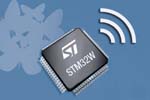
The STM32W offers an interesting possibility. This wireless microcontroller is based on a 32-bit ARM Cortex M3 core and features a 2.4 GHz IEEE 802.15.4 transceiver. This makes it suitable for ZigBee, RF4CE, Contiki 6LoWPAN, and other network protocols based on the IEEE 802.15.4 standard. “6LoWPAN is particularly interesting because it is license-free and the protocol description is publicly available,” explains Naumann. The protocol is based on IPv6 and was developed to enable the easy and energy-efficient integration of wireless Personal Area Networks (PANs) into existing networks. The open-source Contiki operating system is also optimized to ensure minimal power consumption. Those wishing to compare the 2.4 GHz 6LoWPAN with the 868/915 MHz 6LoWPAN should purchase an evaluation kit containing the 2.4 GHz STM32W and the 868/915 MHz ZWIR4512. Both modules are freely programmable.
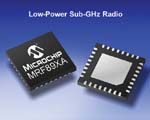
For those requiring a lower-capacity wireless protocol, the Microchip MRF89XA transceiver is an option. This efficient multi-channel transceiver operates in the unlicensed 863-870 MHz ISM frequency bands and the 900 MHz frequency band. A good application example is battery-powered smoke detectors that transmit an alarm via the GSM module in the master unit in the event of a fire. For redundancy, the alarm can also be sent to a USB dongle in the router. Both the router and the GSM module will then transmit the message to the alarm control panel.
Social Networks as a User Interface:
The following process description, using a washing machine as an example, has already been tested practically with a "tweet" weather station. Using the STM32W, the washing machine communicates via IP using the new IPv6 standard, enabling it to exchange data with all IP-based devices, whether smartphones, tablets, older laptops, or mobile phones with web browsers. To do this, the STM32W sends a UDP/IP signal to a gateway on the router. The router then transmits the UDP/IP signal to a server, which generates an email. This email can then be sent to a free blogging service such as Posterous (www.posterous.com) or WordPress (de.wordpress.com). For WordPress, there is an application programming interface (API) that automatically sends the data to Twitter. Posterous offers greater flexibility. Here, control words can be used to precisely specify which message to send, when, how, and to whom. Posterous also supports many different formats. In this case, the Cronejob would send an email to Posterous on the server, which would then transmit the blog post via email to the Twitter API. “The advantage of Twitter is that free clients are available for Apple OS, Android, Windows, Linux, and also RIM, and virtually all end-user products are compatible with Twitter,” explains Naumann. “This will be even more convenient in the future with Google+, once the appropriate API is available.” Google’s new social network differs from Facebook because users can create user groups. For example, a group called “My Personal Machines” could display the status of various household appliances. It can be set up so that only the residents of the house can see the messages. Furthermore, it is also possible to create public groups, for example, for weather station data. This data can then be automatically accessed by anyone without having to be “friends,” as is the case on Facebook.
If you intend to distribute messages to many users, Google's new Messaging Service for Android is available. This service transmits messages via IP to Android smartphones. The free Google Engine can be used for this purpose.
Multiple protocols to choose from.
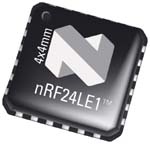
This allows you to retrofit all your household appliances for a Smart Home network. This makes it possible to combine new smart devices with older appliances. If a device has a microcontroller like the STM32W installed or is powered by DC voltage, it can also serve as a router for other 6LoWPAN modules and as a bridge for Bluetooth Low Energy or "Gazell," the Nordic Semiconductor protocol. Gazell is available free of charge. The Nordic protocol is found in many wireless PC keyboards and mice, among other things, and works with ICs from the nRF24LE1 series. Complete, affordable, and authorized wireless modules for the STM32W are also available for this series. The nRF24LE1 has a derivative of the 8051, which processes one command per cycle. Those who don't want to incur the expense of the Keil Compiler can use the Small-Device-C-Compiler. The nRF24LE1 also operates at 2400 MHz. Those who prefer a standard rather than a proprietary protocol of this type can turn to Nordic Semiconductor's nRF8001. When combined with Panasonic's PAN1720 modules, it's possible to easily configure a wireless network on the body or bicycle for applications in sports, medicine, or ambient assisted living.
The nRF8001 is compatible with Bluetooth Low Energy, whose main advantage is that it's installed in virtually all new smartphones, laptops, and PDAs.
 Redpine Signals WiFi modules or ICs offer the fastest way to achieve your goals. The Redpine Connect-io-n family of 802.11n Single Stream modules includes all the functionality required by a WLAN client, thus complementing embedded solutions with WiFi connectivity. Some Connect-io-n modules also contain a complete network stack, enabling connection to multiple existing embedded systems without overloading their microcontrollers. Corresponding drivers are available for higher operating systems, such as Windows (CE 5.0, embedded 6.0, XP, Seven, embedded Compact 7 (from Q1/12)), Linux, or Android (from Froyo 2.2). Redpine modules are compatible with the N standard for WiFi, which consumes less power than the G standard. “My favorite is the Microchip Android@Home-Board with Redfly WiFi adapter board based on Redpine technology,” says Harald Naumann. "This combination kills two birds with one stone. The Android@Home-Board has USB controllers as its core component for Android. This allows users to connect their Android smartphone or tablet without needing a license. The pushbuttons, potentiometer, and LEDs interact with the end device on the printed circuit board. The only prerequisite is that Android 2.3.4, Android 3.1, or a higher version is installed. Android 4.0 is compatible with both Bluetooth Classic and Bluetooth Low Energy, enabling Android@Home to be wireless."
In addition to the wireless technologies and protocols presented, GSM, GPRS, UMTS, and 3G can also be used for Smart Home applications. These cellular technologies are recommended when a Smart Home gateway for mobile telephony is used in the home instead of a DSL router. The variety of protocols and the properties of the different devices that can be integrated into such a Smart Home system make its implementation a complex matter. In this case, distributors with the experience gained from numerous customer projects and the manufacturer's neutral perspective provide invaluable support. If, as is the case with Rutronik, for example, they have a Wireless Competence Center, customers can rely on solid and expert advice. Rutronik also offers components for the full range of technologies and protocols, as well as all the additional building components needed for the smart home of the future.