The numerous new features are available to users across all platform-based products, including CIM Database PLM, Projekt Office, and CONTACT Elements for IoT.
The new backup feature simplifies the division of labor within teams. Sub-workflows enhance the overall overview and flexibility of complex processes. With the expansion of the Elements Universal Classification module, relationships between requirements and items can be visualized and stored using digital mock-ups.
With the Requirements Engineering and xBOM Manager modules, CONTACT provides two completely revised modules for CIM Database PLM.
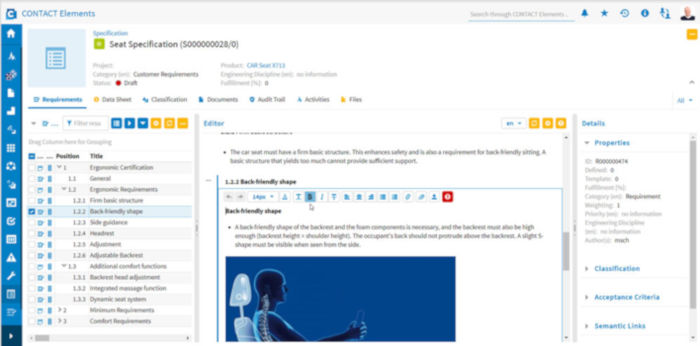
Requirements Engineering is a standard component of the Elements platform. The new editor simplifies requirements definition. Users attach images and sketches, create specifications in multiple languages, and build a comprehensive overview. Developers can link their requirements catalogs with those of other locations, making the product development process as transparent as possible.
The xBOM Manager extends bill of materials synchronization beyond the production level. Users can directly compare development bills of materials with those associated with the service or production plant. Differences between development and production are also visible for each plant. This allows companies with multiple production facilities to plan their production as efficiently as possible. Elements 15.4 also integrates 3D preview directly into the xBOM Manager.
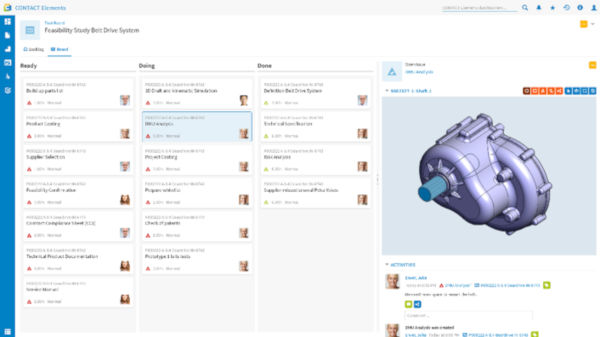
 Taskboards are an important tool for efficient team task organization, and with the new version of CONTACT Elements, they enable the use of agile methodologies. The new Sprint Boards allow you to work with Scrum Sprints, and tasks can be moved and prioritized using drag and drop within the to-do list. In addition to tasks, predefined actions can also be performed on the task board, and all changes are documented via an audit trail.
Version 15.4 CONTACT Elements for IoT brings many innovations and extensions to its components for networked products and digital business models. The IoT platform is easy to configure, capable of meeting most business needs without requiring coding, and allows users to quickly deploy IoT solutions and enterprise applications, as well as optimally add value to their data using the Digital Twin.
The new event engine provides greater transparency into the real-world status of devices. Status changes or failures are automatically detected, documented, and managed through the Digital Twin using predefined system actions. Devices of the same type can be grouped, monitored, controlled, and evaluated via the Fleet Manager. The Multi-Tenancy model allows companies to provide multiple customers with a single digital environment for managing their digital assets or products.
The version also includes methods for storing data, a comprehensive event detection engine, and numerous additional dashboard widgets. "With Elements for IoT, companies can deploy comprehensive, professional IoT solutions in a matter of days instead of weeks or months," says Dr. Jan Kickstein, Head of IoT Development at CONTACT Software.