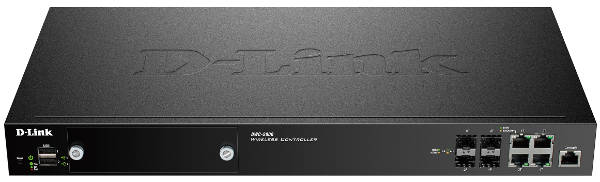
Furthermore, it can manage up to 1,024 APs in a multi-controller cluster configuration, making the DWC-2000 an ideal solution for medium to large-scale environments such as university campuses, hotels, multi-story offices, and more. Among the DWC-2000's advanced features are automatic RF channel configuration, AP output power settings, HotSpot, Captive Portal, self-healing, advanced security, and redundancy.
Setting up the DWC-2000 controller takes just minutes using the Setup Wizard Interface, which automatically adds compatible D-Link Unified Access Points and allows you to configure settings centrally with a single click. This eliminates the need to perform complex configurations on each access point individually. For the visibility network administrators need, a dashboard displays real-time monitoring of access points. Customizable widgets also display network resources for efficient control.
The DWC-2000 Wireless Controller optimizes corporate access with multiple SSIDs. For businesses such as hotels or retail stores that need to offer Wi-Fi to a large number of people, whether free or paid, the HotSpot and Captive Portal features (with branding customization) allow for optimized guest access services. Furthermore, guest segmentation, ticket generation, and user monitoring enable control over the resources that guest or temporary accounts can access.
The Wireless Intrusion Detection System (WIDS) detects unauthorized access points or rogue clients, and can anticipate wireless threats by preventing potential breaches, helping to block possible attacks from unauthorized users and devices.
Furthermore, the DWC-2000 wireless controller features advanced functions such as self-healing, which can detect if an access point fails and boost the power of adjacent access points to compensate and minimize the impact, thus adding greater robustness to the Wi-Fi network. All of this is combined with the ability to create redundancy in a 4+4 wireless controller configuration with automatic switchover of the failing controller to its backup controller.