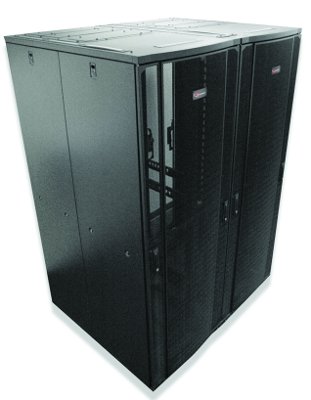
Like the original 1000 mm deep VersaPOD VP1, the new 1200 mm deep VersaPOD VP2 integrates modular cabinets with zero-U vertical patching space and cable management capabilities. The VersaPOD VP2's combination of front cabinet space and zero-U patching space savings is ideal for high-density data centers, enabling greater cabling and equipment density while maintaining excellent accessibility and thermal efficiency.
The expanded VersaPOD VP2 maintains the same 760 mm width as the original, leveling the vertical space between cabinets assembled for patching, cable management, or vertically mounted 19-inch standard PDUs, without using horizontal mounting space for connectivity. VersaPOD Zero-U Vertical Patch Panels (VPP) for copper and fiber provide up to 24U of mounting space between two cabinets, while end-of-row panels provide an additional 8U of vertical space for end units. The top and bottom of the vertical patch units are always fully populated, regardless of whether the assembled space is occupied by patching, cable management, or the 19-inch PDU mounting rack. The increased depth also generates additional vertical cable management space at both the front and rear of the cabinet for more efficient management of high-density cabling, eliminating the need for cable management arms and providing a cleaner, more aesthetically pleasing cabling solution.
The highly configurable VersaPOD VP2 design provides customized options for a wide variety of data center equipment needs and layouts, making it an ideal solution for central patch zone, horizontal distribution, and main distribution area configurations. Its 1200 mm depth accommodates today's deepest IT equipment, such as the popular Cisco Nexus 7000 connector, and allows for both front and rear connections, reducing the number of cabinets required for connectivity and freeing up valuable data center space. Additionally, the VersaPOD VP2 design offers thermal advantages by distributing cable channels in designated cabling areas, away from equipment air intakes and exhaust areas. By utilizing the vertical space adjacent to equipment mounting rails, the Zero-U configuration provides optimal patching proximity to equipment connections, minimizing patch cord runs and slack congestion that can obstruct critical airflow.