In most standard applications, discrete stranded or solid cables are usually adequate. However, if the system has space or weight constraints, more optimized interconnect solutions should be considered.
The advantages of FPCs:
FPCs have experienced exponential growth in recent times. In them, intricate circuit layers are etched directly onto an ultrathin, copper-clad polymer substrate. Offering even lower profiles, as well as considerable weight reduction, FPCs have already become a popular choice in the consumer electronics segment. They are now also being used increasingly in modern satellite, robotics, and avionics designs.
A key attribute of FPCs is their ability to withstand much sharper bends than other forms of wiring. Furthermore, they are better able to withstand dynamic movements when subjected to bending. This is especially important in relation to linear actuators, rugged laptops, and flight control surfaces, where there are continuous periodic movements on a single axis.
The design of an FPC (Filter-on-Cable) allows it to bend at right angles to the cable plane, but not in other directions. Using them results in the loss of the ability to bend simultaneously on multiple axes.
Which option to choose?
The suitability of opting for an FPC-based cable assembly or discrete cables will depend on the system's operating parameters and the application environment. These are the main issues to consider:
1. What current level will you need?
As mentioned, FPCs are based on ultra-thin copper traces. Therefore, their regular and peak current levels will be lower than those of other types of cabling, so this must be taken into account before making any decisions about the cabling option to specify. FPCs are unlikely to exceed 1A per circuit. The only way to increase their current capacity would be to thicken the copper circuits, which would affect the FPC's flexibility. In contrast, discrete cables are capable of supplying currents at least three times higher than FPCs. This means they are suitable for both power supply and data transmission.
2. Is keeping the overall system weight to a minimum a priority?
Wiring can significantly contribute to a system's total weight. Therefore, if you are developing a high-speed (Hi-Rel) system that runs on batteries or relies on stored fuel reserves, weight will be a concern, and specifying the appropriate wiring is vital. For example, consider an unmanned aerial vehicle (UAV). For this application, deploying FPCs (Fuel Protection Circuits) may be advisable to help reduce weight, provided the current levels handled are within the range of this type of connection.
3. What are the space limitations?
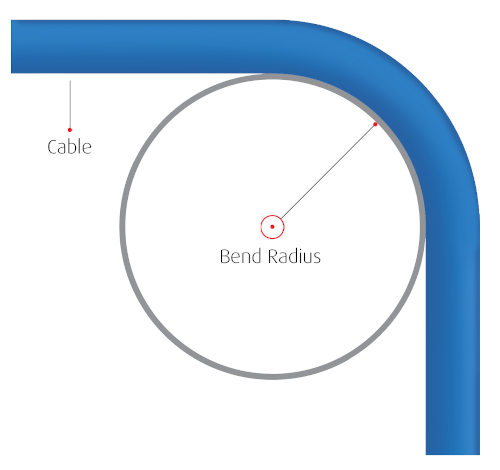
When considering the space requirements for a connection between printed circuit boards and cables, two elements must be taken into account. First, the height of the cable connector itself must exceed that of the equivalent board-mount connector. Second, the cables exiting the back of the connection vertically must have adequate clearance to allow for the bend radius. It may even be necessary to add padding to the opposite device, board, or enclosure to ensure that the bent wiring does not wear out during field use. With FPCs, leaving the SMT connector at a right angle will mitigate these connection space concerns.
4. What bend radius can the cabling withstand?
A bend radius of 6 to 10 times the cable insulation thickness is typically acceptable. Thanks to its much thinner structure, an FPC can withstand much sharper bends than discrete cable assemblies. However, it's important to note that this only applies in one direction (along the cable). Consider another example: a robotic arm with multiple axial joints that allow it to perform complex movements. For use cases like this, a discrete cable-based assembly that can twist and turn might be a better option.
5. Will the bend remain constant, or will the cable have to cope with changing bends throughout its lifespan?
If the cable is expected to undergo many bending cycles, the durability of FPC is likely to stand out from other types of cabling, whereas discrete cable materials will become more brittle when subjected to repeated bending.
6. Where exactly will the cabling be located in relation to the system?
This is an important consideration because FPCs have thinner external shielding and are therefore more exposed. Ideally, they should be inside a case to ensure continuous operation. In contrast, discrete cable assemblies have thicker polymer sheathing around their wires, providing better protection from potential sources of damage. Therefore, they should be used in a cable bundle if they are located outside a system. Cable assemblies are also easier to secure with cable management accessories. This helps prevent unwanted vibrations, as well as wear against other components and the case. It also makes it easier to add additional shielding around the cable bundles.
7. What materials should be specified?
Connectors, cables, FPCs, and accessories are available in a wide variety of materials. Establishing temperature requirements from the outset and verifying that all materials comprising the chosen cable or FPC connection can withstand them can prevent problems later on. The effects of electromagnetic or radio frequency interference (EMI) should also be considered when deciding on materials. Working directly with the supplier allows you to verify that the final product is suitable for all relevant factors. If the environment is too harsh, shielding methods may be necessary. External braiding of the cable bundle may be required to combat EMI, but flexible connections might be a better option in this case, as they are less susceptible to EMI emissions. Testing may be necessary to confirm the best options for a given application.
8. What other factors need to be considered?
When dealing with satellite hardware, it is essential to pay attention to the outgassing properties of the assembly, as otherwise, substances could be released into the vacuum of space that could affect the operation of critical electronic circuits. If there is a possibility of contamination by oils, fuels, and other chemicals, or the possibility of fungal growth, precautionary measures must be taken.
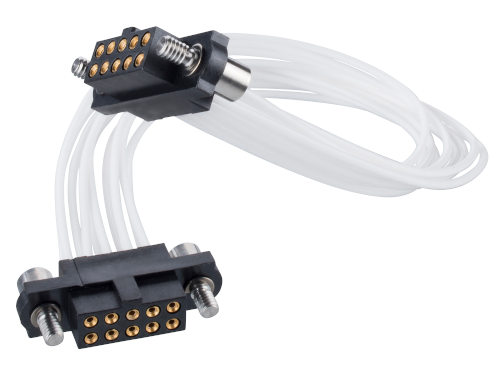 To complement its portfolio of discrete cable assemblies, Harwin now offers Hi-Rel connectors with FPCs. Available for its Datamate J-Tek (2 mm pitch) and Gecko (1.25 mm pitch) products, these FPC options are well-suited for space-constrained system designs. Their low profile allows boards to be stacked much closer together. Furthermore, thanks to the use of right-angle connector components, access to all cabling is easier, as terminations can be positioned at the edge of the board rather than closer to the center.
The FPCs used in these assemblies have a copper-clad polyimide core with an adhesive layer. The rigid area at the free end is designed to be compatible with various types of FPC connectors (ZIF and LIF).
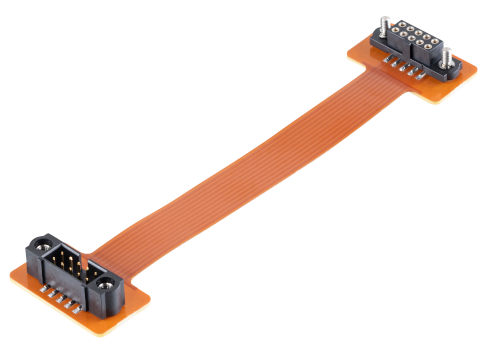 Harwin's FPC assemblies have a 0.5 mm pitch and a current rating of 0.4 A for Gecko, or a 1 mm pitch and a current rating of 1 A per trace for Datamate. A wide range of operating temperatures can be supported, depending on the connector specifications. In addition to the existing range of examples, other FPC assembly designs (with different sizes and lengths) can be supplied to meet specific customer requirements.
A wide range of discrete cable assembly options are available directly from stock. With PTFE insulation, they fully comply with the internationally recognized IPC WHMA-A-620 wiring standard. They are available in various cable lengths, with a choice of single or double ends. Furthermore, custom assemblies can be supplied to precisely meet specific customer requirements. Low minimum order quantities mean these assemblies can be supplied for development and prototyping work.
It's clear that in environments where space is limited, or where the overall system weight must be kept as low as possible, both FPCs and discreet cabling will prove advantageous. Each has its respective advantages over the other in certain areas. The choice between one or the other will depend on the specific circumstances. Contacting the experts at Harwin will provide you with informed advice to help you make the right decision.
Author: By Wendy Jane Preston, Interconnection Specialist, Harwin