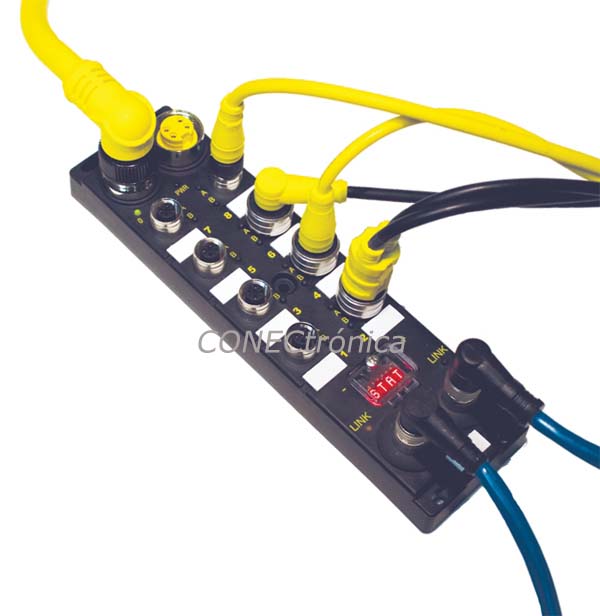
When equipment downtime is a direct result of harsh operating conditions, approximately 20% of cases are due to cabling or connection problems. Few engineers realize that the adverse environment in which their equipment operates plays a significant role in the selection of network cables and connectors; however, by paying closer attention to detail, efficiency can be significantly improved by reducing downtime.
Connections can be consolidated across all types, regardless of the manufacturer, resulting in significant material cost savings and increased overall efficiency. The traditional point-to-point wiring method involves certain inherent costs, including material costs for conduits, pipes, and individual cables, wires, and fittings; the necessary conduits, such as larger ducts for multiple cables or thicker cables; and the conduit separators required by standards to separate cables of different voltages. Finally, labor costs are incurred for individual terminations and, if necessary, pipe bending by licensed electricians.
Criteria for an Efficient and Economical Solution:
Considering the size of the equipment, the complexity of the system, and the number of inputs and outputs required, as well as the costs associated with installation, on-site acceptance testing, and equipment scalability—in the event of plant expansion—the total cost can be substantial. There are several criteria to consider when creating a more efficient and economical solution.
The first step is to define the application environment in which the equipment must perform. This environment can be characterized by ambient and operating temperature thresholds; vibrations and mechanical shocks; exposure to electromagnetic interference (EMI) and radio frequencies (RF); humidity; exposure to sunlight, lubricants, solvents, and cutting fluids; as well as fuels and welding residue. Variable conditions, such as high-pressure hoses and periodic immersion, which are common in food and beverage applications, must also be considered. Once the environmental aspects of the application are defined, it will be easier to select the appropriate cabling solution for the equipment.
Next, the input and output positions on the device must be determined, as using a junction box facilitates the consolidation of connections. Thousands of manufacturers worldwide offer pre-assembled input and output connectors for their devices. Then, the approximate lengths from the end device to the input/output point and the return distance to the junction box consolidation point must be calculated.
The key to success lies in your relationship with your connector and cable supplier. A supplier like Molex can help you define the bill of materials for your equipment. They can also provide a plug-and-play connection strategy for your control devices. This is vital to the overall success of your implementation. Equally important is defining the appropriate molded connectors and cables, as well as the sealed junction box, to suit your specific operating environment.
Combining the power and signal of an end device in a fieldbus topology will further reduce costs and maximize the performance of your operating machine. Numerous networks offer original equipment manufacturers (OEMs) the ability to combine power and signal communication over the same cable. There are fieldbus networks to suit many needs, each with its own advantages and disadvantages depending on the application requirements. Choosing the right fieldbus network should be part of your overall equipment and plant development strategy to achieve optimal performance and provide real-time information to management.
Cost savings can be achieved by combining individual power circuits when establishing a network and communication system. Reduced space requirements, a greater number of connection points, fewer cables and connectors, and the elimination of bent conduits and expensive labor for wiring all contribute to direct cost savings. Indirect savings are achieved through faster implementation, reduced maintenance needs, increased plant availability, and improved information on equipment performance, which facilitates control and strategic decision-making by management.
Connectors can be essential for the overall optimization of equipment control systems. Contact and sheath materials, as well as the contact design, determine the integrity of data flow in communication between the panel and the device. Contact termination methods, such as soldered, crimped, or even wired connections, in combination with individual connector types—whether solid core or stranded—also determine the reliability of power and signal transmission in industrial environments. Furthermore, the design of the connector's mechanical coupling—whether printed, clamped, snap-on, or even threaded—can be a decisive factor in maintaining a secure male-female connection during equipment operation. Finally, depending on the environment, the sealing techniques and wired connector terminations, whether applied at the factory or molded in the production plant, can affect not only installation and startup but also system performance throughout the equipment's lifecycle.
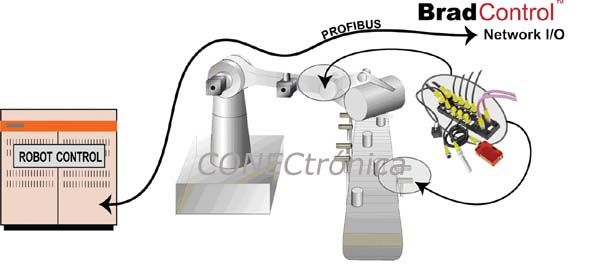 Optimizing equipment uptime is another important consideration. What is the true cost of five minutes of downtime? A quick calculation of lost production during this time can give you an idea of the lost revenue and profits if a line fails or requires maintenance. Plug-and-play power distribution and control systems enable operators and maintenance personnel to replace faulty motors or damaged sensors in a matter of seconds or minutes, instead of traditional rewiring.
Selecting the correct materials for robust equipment and electrical installations is absolutely essential. PVC is generally suitable for high-pressure hose applications and high-humidity environments, while PUR and TPE are better suited to environments where oils, cutting fluids, solvents, welding residue, and chemicals are prevalent. To meet user requirements, ensure that the cables and connectors you select have the appropriate certifications and approvals. UL, CSA, Factory Mutual, and ATEX are globally recognized organizations that certify product suitability for specific applications and environments.
Factory-molded connectors and cables solve a number of long-standing problems on the production floor. The first is connection errors; even the best electrician can have an off day. The second problem is protecting the connector interface from the external environment. The International Electrotechnical Commission (IEC) has issued detailed manufacturing guidelines for specific global connector configurations and designs, providing a roadmap for manufacturers to produce interconnectable connectors.
Although standardization committees establish tolerance standards for connector configurations, not all connectors are created equal. It will be important for the connector manufacturer to understand the specific characteristics of their application environment to specify a product that performs with high levels of safety and predictability in that environment. Leading connector and fieldbus network suppliers, including Molex, will have test data on applications and performance to demonstrate product suitability for the specific operating environment.
With regard to the end user, when negotiating the final contract, the features and advantages offered by plug-and-play connector solutions for control systems and electrical installations should also be considered. These essentially translate into the total cost of ownership during the decision-making process. The cost of the equipment is an asset that is depreciated; daily business operations determine the company's productivity and profitability.
When evaluating potential network solutions, four key areas should be considered. By far the most important is diagnostic functionality—the ability to determine your network's performance. Secondly, performance and speed are crucial, leading to the following questions: What is your optimal performance threshold? Is your network option suitable for the number of inputs and outputs, the network link, power requirements, and other specific needs? Thirdly, predictive maintenance is also important. Is it possible to anticipate network bottlenecks in the event of line failures, and is there sufficient time to schedule routine maintenance to assess these risks? Finally, the connection interface: Are the male-to-female connectors and cabling designed to withstand the rigors of the industrial environment where the equipment operates and continue to meet the performance requirements of your process system?
Molex is constantly developing products that offer users ever-increasing levels of speed and density, more compact form factors, and reduced overall costs. We are seeing a trend toward industrial Ethernet networks, in the form of Ethernet IP, Ethernet TCP, and Profinet, which are being implemented even at the device level. Given these trends, we are facing a demand for ruggedized, hybrid industrial connectors that combine Ethernet and power in a compact, IP-rated form factor.
We also address the need for connectivity options across a wide temperature range, while simultaneously meeting the demand for environmentally friendly materials. Furthermore, we observe a growing trend toward minimizing or eliminating costly enclosures and automating equipment operation. Finally, we see the integration of safety, power, and communications into a single set of connectors and cables.
Author: Article provided by Molex