 This industry, and humanity as a whole, has faced a year unlike any other in the modern era of communications and the internet. The world has remained active thanks to technology and, of course, to the fiber optic cables that crisscross the planet both on land and underwater.
Since March 2020, the robust telecommunications infrastructure has largely eased the necessary adaptation to the dramatic changes we are all experiencing. It provided the infrastructure for our new, mostly virtual lives and amplified the modern world's interaction with technology. Fiber optics has been a silent protagonist.
A study by Research & Markets indicated that the compound annual growth rate for the Fiber Optic market should reach 8.5 percent annually until 2025, meaning that more industries will seek to incorporate the solutions and benefits offered by this connectivity technology.
From healthcare systems, through various production sectors, to the marine environment; the Fiber Optic cable is a crucial component of the communications infrastructure.
But what is the true capacity of this type of technology, and what would its reach be?
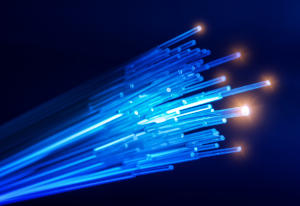
Fiber optic cables consist of one or more thin strands of glass, protected by a transparent, flexible sheath. Instead of using electrical pulses to transmit information, this technology uses pulses of light. As a result, it offers technically unlimited performance capabilities.
That's why the capacity can be even greater than imagined. For example, the prestigious National Geographicpublished a report and research revealing that the newest transatlantic cable is capable of transmitting 100 hours of digital video or 30 million telephone calls from one side of the ocean to the other in a single second.
There are many applications for fiber optic cable assemblies, and their uses are only growing. This technology is the backbone of military networks, medical imaging and laser practices, and public and private cable and internet networks.
If we are soon to face a post-pandemic and hyper-connected world, the amount of data that will be handled in this new reality will be immense, and the question of its security will be commonplace.
Fiber optic cables have experienced exponential growth and are widely used because one of their key features is their extreme security. This technology does not contain an electromagnetic field, so data cannot be intercepted, slowed down, or mixed with other signals.
The speed and security of fiber optics come at a higher cost compared to other cable options on the market. However, relative to the rising cost of copper, which is used in other cable technologies, it remains competitively priced and affordable.
Furthermore, metallic cabling is naturally thicker, which reduces its load-bearing capacity and makes installation more difficult in challenging environments. Fiber optics provides the clarity and security that modern homeowners and business leaders expect in infrastructure and communications projects.
Is fiber optics an element of what are now called “Essential Industries”? In reality, telecommunications and cloud services are not only “essential” during the pandemic, they are vital.
For example, telecommunications networks are essential for collecting, managing, and disseminating medical information. Furthermore, this technology is also critical for shipping logistics, materials handling, and many other processes that are increasing due to antivirus procedures.
In addition, telecommunications networks are experiencing increased load due to other pandemic-related phenomena. Corporate work-from-home policies are driving up traffic. The shift from classroom-based to online education is also increasing data consumption and transmission. And people staying home are using more internet applications: social media, video conferencing services, online games, and entertainment videos, for example.
With all this happening, operators say network usage has increased, and with it, bandwidth requirements. This means activating more fibers and wavelength channels, which in turn contributes to the continued demand for cable assemblies and other products that incorporate fiber terminations.
Looking back over the past 20 to 30 years, the demand for optical cables and components has increased at significant annual growth rates, often exceeding 10%. The fiber optic market, in general, has grown faster than other industries, even during economic downturns.
This is why, during and after Covid-19, Fiber Optics is proving to be not only an asset of great importance for the new world that is approaching us; but it has become the essential input and factor that provides us with the support, like a backbone, so that humanity can continue to advance, whatever crises we face today and in the future.