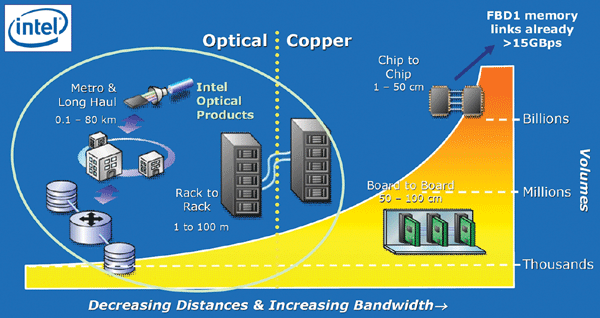
 Optical interconnect technology is evolving rapidly due to the dramatic increase in network and system bit rates. Copper cables linking servers and routers are becoming increasingly limited, and fiber ribbon connections are becoming more and more common. According to an Ovum report, this market is expected to double in size by 2012, reaching €150 million. This forecast includes sales of POP4 and SNAP12 transceivers, 4- and 12-channel InfiniBand active optical cables, and electro-optical converters.
Optical fiber signal transmission is typically carried out using serial transmission, especially for long-distance links. However, the arrival of 40 and 100 GbE (Conectrónica no. 120, September 2008) could significantly stimulate demand for parallel optical interconnects. Table I shows some examples of parallel interfaces. The replacement of copper cables with optical fiber has always been driven by cost, bandwidth, and distance considerations. But a new factor that has recently come into play is energy consumption. It is estimated that connecting data centers to end users via telecommunications infrastructure accounts for 9%  of global energy production. For example, a 10GBase-T interface consumes around 6 W (second-generation chips), while optical interfaces consume less than 1 W for the same data rate. Given these figures, the importance of reducing the power consumption of electronic devices, especially routers and servers, is clear. Some operators and equipment manufacturers are exploring the possibility of establishing Layer 2 Ethernet connections to avoid transmitting Layer 3 packets between routers, which would have a very positive impact on the POP4 and SNAP12 interface market. In fact, with the imminent arrival of 40 and 100GbE, some data center managers are considering directly replacing Cat6 cables with optical technology, which is more reliable and about five times lighter than copper, in addition to the associated power savings. In this article, we analyze some of the optical interconnects that have recently appeared on the market, most of them based on parallel connections.
Types of Interconnectors: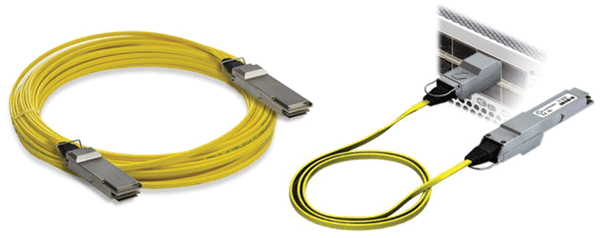 Interconnectors can be classified according to a multitude of criteria, although the most common is in terms of their logical function and physical implementation, as well as the topology of the interconnection network. In the first case, connections are classified based on characteristics such as bandwidth, distance, and latency. Establishing a hierarchical structure, the first type of connection we can define is that internal to the servers themselves; that is, data bus connections between microprocessors, controllers, and RAM. In these cases, characteristics such as latency and bandwidth are very important. These systems are extended using input/output buses that connect disks or network cards. Transmission rates range from 33 MHz (PCI) to more than 2 Gbit/s (PCI-Express), with word sizes of 32–100 bits. By grouping several processors, a cluster can be created, which is the next hierarchical level, characterized by typical distances of 10-100 m. Cluster links are usually characterized by parallel connections (multiple lines per link), in contrast to LAN/SAN links, which use only one communication channel to simplify cable laying. LAN/SANs cover distances of tens or hundreds of meters, providing bandwidths between 1 and 10 Gbit/s. Finally, the last level of the hierarchy consists of MAN/WANs, whose interconnection links between routers and switches cover several kilometers. Clearly, the components and cables used to interconnect these diverse systems are based on different technologies. Table II summarizes the different levels of interconnection currently available, as well as the implementation forecasts using optical technology. Figure 1 shows the future trend in the optical interconnect market.
Existing Products: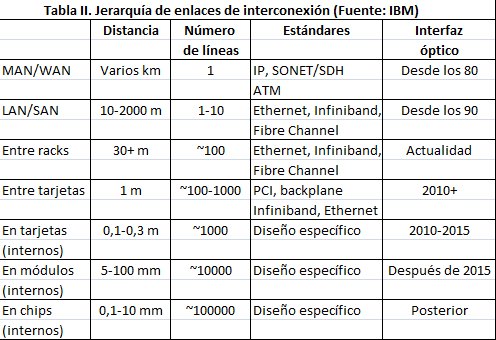 Most parallel optical products are based on active cables, meaning a fiber optic cable with factory-installed transmitters and receivers at each end. This allows users to replace a copper interface (CX4 or QSFP) with the active cable, which converts the signal from electrical to optical at one end and vice versa at the other. This type of cable can extend the reach from the 15 m of copper cable to 300 m, making it the ideal solution for links shorter than 30 m (rack interconnections). For distances of 100 m and above, structured cabling is more elegant, although some people still opt for active optical cable due to its lower cost. For example, the cost of an active cable is around $200, while each pluggable module costs about $300. Thus, companies such as Intel, Luxtera, Zarlink, Finisar, Reflex Photonics, Tyco Electronics, and Lightwire have announced products based on active optical cables in the last two years, albeit with differing characteristics in bit rate, range, and connector type.
Luxtera has launched the Blazar LUX5010 (Figure 2), a QSFP-compatible active optical cable consisting of a 4-channel single-mode ribbon fiber with speeds up to 10.5 Gbit/s and its corresponding transceivers. The assembly allows for an aggregate bit rate of 40 Gbit/s over distances of up to 300 m. Additionally, the company is also considering developing 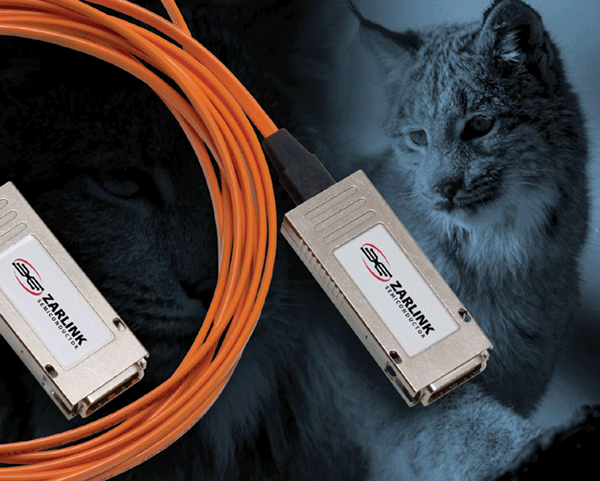 12-channel (120 Gbit/s) InfiniBand QDR products to replace current copper interfaces. Meanwhile, Zarlink has developed the ZLynx cable, which supports both 10GbE and InfiniBand DDR using a CX4 connector (Figure 3). This is an active (4+4) x 5 Gbps optical cable.
However, not all companies are interested in active optical cables. For example, JDSU does not offer products with these characteristics; instead, the company sells parallel modules based on SNAP12 and plans to develop products that support the emerging 40 and 100 GbE market, leveraging its expertise in packaging and VCSEL chips.
'
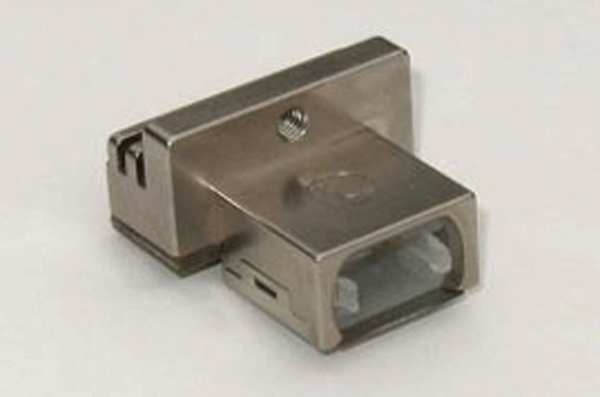
Without a doubt, JDSU is a leading company in the active optical module market, offering a diverse range of transceivers at 850, 1310, and 1550 nm: 4/2/1G SFP, 10G XFP, SFP+, and 30G SNAP12. 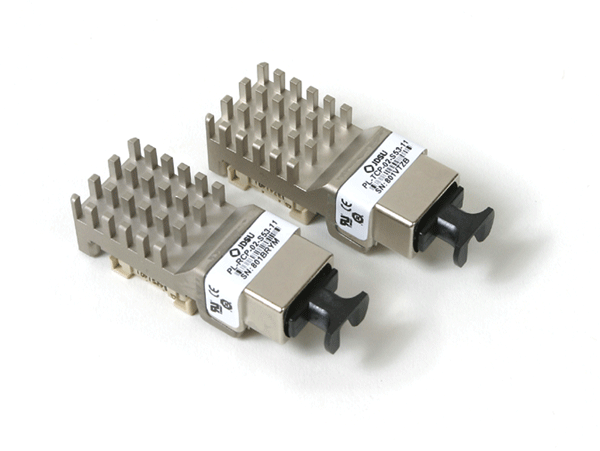 Figure 4 shows an example of 12 x 2.7 Gbit/s (32.4 Gbit/s) transceivers compatible with SNAP12. The startup Xloom has also launched a parallel optical interconnect that is not based on active optical cable, but rather consists of a four-channel optical transceiver compatible with the 10GBASE-CX4 standard. This product, known as AVDAT 4X (Figure 5), is ideal for extending the range of 10G Ethernet switches to distances exceeding 200 m. Additionally, it supports InfiniBand SDR (10 Gbit/s per link) and DDR (20 Gbit/s per link), as well as Fibre Channel.
 As can be seen, there is considerable activity in the optical interconnect market. This is expected to increase with the completion of the 40 and 100GbE standards, scheduled for June 2010, which will lead to the almost complete replacement of the electrical interfaces still in use today. However, the development of optical interconnects would not be possible without the ongoing improvements in associated optical technologies. Therefore, recent news such as the announcement by Intel, which has developed a 40 Gbit/s silicon modulator, represents a major advance, as it foreshadows the possibility of optical connections between chips at speeds of Tbit/s.
Francisco Ramos Pascual. PhD in Telecommunications Engineering.
Full Professor at the Polytechnic University of Valencia.