1. Openness and flexibility: PLCnext Technology is based on an open architecture that allows for the development of individual solutions and seamless integration with existing systems. This enables Festo to offer automation solutions tailored to the specific needs of each customer.
2. Leveraging synergies: The combination of the know-how of both companies allows for beneficial cooperation to best solve future technological challenges, such as in the field of cybersecurity.
3. Innovation and future viability: The combination of Festo's automation expertise with PLCnext Technology promises innovative solutions for Industry 4.0. By working together and pooling resources, the challenges of digital transformation can be overcome together.
The common goal of Festo and Phoenix Contact is to meet the requirements arising from the convergence of IT and OT (Information Technology and Operations Technology) in the industry through open automation solutions.
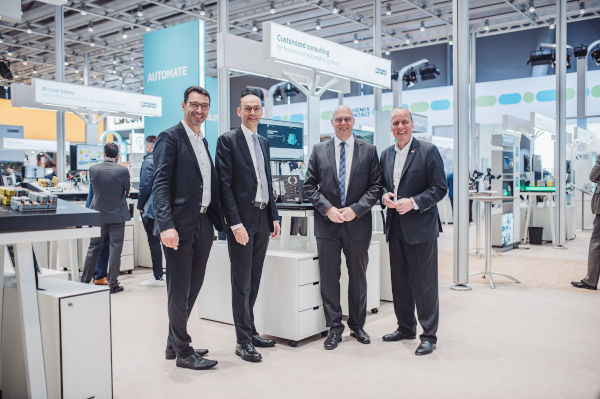
"In a rapidly changing world, it is increasingly important to establish partnerships and work together within the framework of open technology platforms. A paradigm shift is clearly evident. Together with Festo, we will continue working to develop new solutions for our customers. Because sustainable innovation can only be achieved through close collaboration," emphasizes Frank Stührenberg, CEO of Phoenix Contact.
“With PLCnext Technology, we are using the technologically leading platform for automation technology. We are convinced that the openness of PLCnext Technology will provide many advantages to our customers,” emphasizes Gerhard Borho, Chief Information Technology and Digitalization Officer at Festo. Ulrich Leidecker, COO and President of the Industry Management and Automation Business Area at Phoenix Contact, adds: “The openness of PLCnext Technology opens up the possibility for numerous suppliers to offer flexible, reliable, and modern automation technology. The technological partnership with Festo represents a milestone for the automation industry, since the more partners there are in an open automation ecosystem, the more valuable it is for each participant.”