

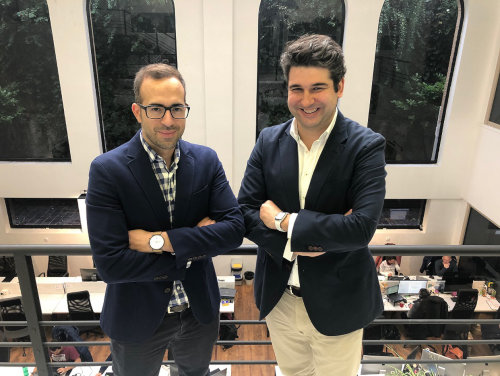
“Talking about IoT means talking about connectivity between objects. Currently, there are numerous protocols designed to connect objects: 2G, 3G, 4G, 5G, Wi-Fi, Bluetooth, NB-IoT, LTE, Sigfox… and LoRa. The key difference is that the LoRa protocol, like Sigfox, is based on LPWAN (Low Power Wide Area Network) technology, which eliminates one of the major current obstacles to IoT sensor projects: battery consumption,” explains Alex Bryszkowski, co-founder of Redexia.
“Thanks to LoRa, a sensor's battery can last up to 8 to 12 years without needing to be recharged until then. Furthermore, LoRa, by using a spectrum band that is not subject to licensing, allows for much more attractive connectivity costs than other technologies such as 4G or NB-IoT,” said Juan Ederra, co-founder of Redexia.
The LoRa network is particularly well-suited for any sensor project where the transmitted communication doesn't require high bandwidth, but rather small data packets: geolocation, temperature, pollution levels, counters, motion detectors, consumption readings, etc. Therefore, the use of the LoRa network is ideal for any monitoring project, vehicle and object tracking, smart cities, precision agriculture, waste management, Industry 4.0, and more.
Redexia intends to focus exclusively on being a connectivity operator and not entering the verticals, so it will be a trusted partner of any IoT integrator or consulting firm.
Redexia is a member of the LoRa Alliance, a non-profit organization that understands the Internet of Things revolution is now. All LoRa Alliance members actively collaborate to drive the global success of the LoRaWAN network protocol.








