 While it is clear that most owners and operators have adopted the mantra that "you can't manage what you haven't measured," it is also clear that the speed of change in data centers around the world is very rapid and exposes the shortcomings of past practices.
Therefore, this article has been written to indicate the guidelines that should be followed to ensure best practices and future-proof your data centers.
It is based on a survey of owners and operators of high-level data centers to describe:
• Current monitoring and reporting practices in this data center segment
• Improvements sought in current practices, especially to adapt to
future trends that will impact data centers worldwide.
These concerns are not going away, and trends indicate they will continue to impact data center operations. Therefore, monitoring must quickly and accurately identify solutions to address future requirements, such as, obviously, new metrics and reporting standards.
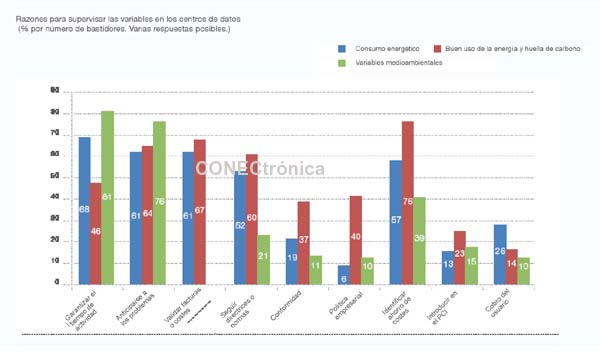
The vast majority of owners and operators monitor energy consumption, temperature, and humidity in all their facilities on a continuous basis.
Energy efficiency, carbon emissions, and power quality are also monitored, but more irregularly and only at major facilities.
 As data centers become increasingly interconnected and delivery focuses more on the portfolio and less on specific facilities, monitoring systems will need to offer sufficient flexibility to monitor new variables or scale to new facilities.
The information from the data obtained through monitoring does not follow a set pattern between using the data only to warn that a threshold has been exceeded, manually compiled information, automatically generated reports, and more complex analysis and modeling applications.
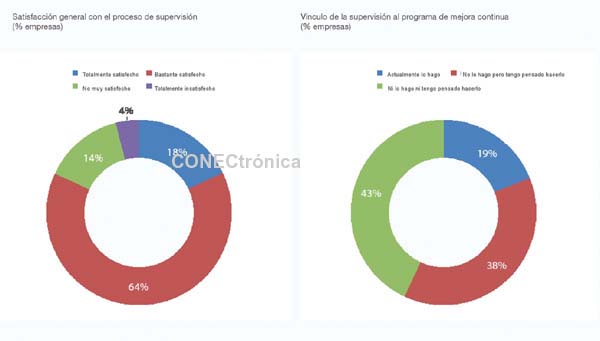
Satisfaction levels with monitoring and reporting are at best limited, although linking these processes to a formal continuous improvement process does much to increase satisfaction.
Greater satisfaction and confidence in data center monitoring has as much to do with expectations and the organization of existing systems as with technological excellence.
Good monitoring practices have allowed operators in this sample to seamlessly integrate it into the requirements that their data centers must meet and into the business processes that manage and support those centers.
There are concerns about the ease of integrating different monitoring processes to create a complete portfolio view, as well as about the amount of data that can be generated through monitoring and the ability of existing systems to provide actionable savings information.
To adapt to the shift from data centers to dynamic facilities requiring considerable flexibility in service delivery, provisioning, and planning, monitoring must follow a parallel path. This means moving from alert-based systems to those with greater control and predictive capabilities.
This article uses this information to propose a set of best practice guidelines for data center monitoring. Monitoring in accordance with best practices is important because:
• As data centers become more dynamic and complex, decisions will be increasingly data-driven and less based on hunches.
• It is essential to be able to trust the data collected.
• Ineffective monitoring deployment can represent missed opportunities for greater facility efficiency and cost savings.
• It is important to combine monitoring and information in your facility requirements. In several cases observed in this research, less is actually more!
• Data centers will have to report with increasing accuracy to external agencies.
The full article can be downloaded at:
www.raritan.eu/resources/white-papers/power-management