a comprehensive IIoT platform for machine manufacturers,
connects industrial equipment to the cloud, enabling remote monitoring, control, and maintenance. Its goal is to help machine manufacturers and service teams improve operational efficiency and reduce downtime.
Unlike traditional, fragmented solutions, this platform brings together tools for connectivity, data analytics, and service management in a single environment, facilitating industrial digitalization without requiring complex development.
Key IXON Cloud Solutions
1. Secure Remote Machine Access
One of the platform's core functionalities is remote access to industrial devices, such as PLCs, HMIs, and robots. This is achieved through secure VPN connections that allow engineers to connect to machines as if they were physically present on the factory floor.
Key tools include:
DirectVPN: secure, cloud-based remote access.
EasyControl: direct connection to the machine's control panel via a web browser or mobile app.
Compatibility with multiple PLCs and industrial systems.
Thanks to these capabilities, companies can perform diagnostics, updates, and technical support remotely, reducing costs and response times.
2. Machine Data Monitoring and Analysis:
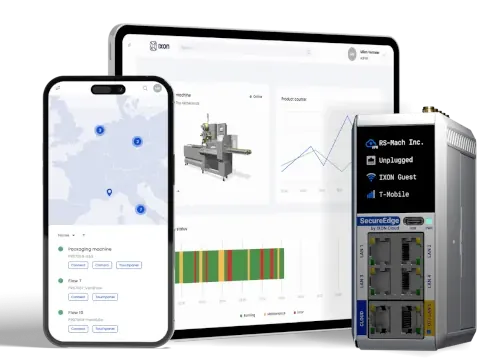
IXON Cloud allows you to collect and analyze data from industrial equipment in real time. This facilitates predictive maintenance and optimizes machine performance.
Key features include:
Data Logging: Automatic collection and storage of machine information.
Custom Dashboards: Configurable dashboards using no-code tools.
Alerts and Notifications: Automatic alerts when anomalies or critical events are detected.
These tools transform operational data into actionable insights to improve productivity and prevent failures.
3. Centralized Machine Fleet Management
For manufacturers or companies with multiple machines installed in different locations, IXON Cloud offers a centralized device management system.
The system allows you to:
organize machines into groups
, remotely update firmware,
view the location and status of the machines,
and manage configurations from a single dashboard.
This facilitates the control of large networks of distributed machinery, simplifying administration and maintenance.
4. Customer Service Portal
The platform includes a customizable service portal that allows manufacturers to offer digital support to their customers.
This portal can integrate:
technical manuals,
support tickets,
user management, and
spare parts orders.
Furthermore, the system allows for white-labeling, meaning companies can use the platform with their own logo, colors, and domain, offering a fully integrated brand experience.
5. Industrial Connectivity Devices
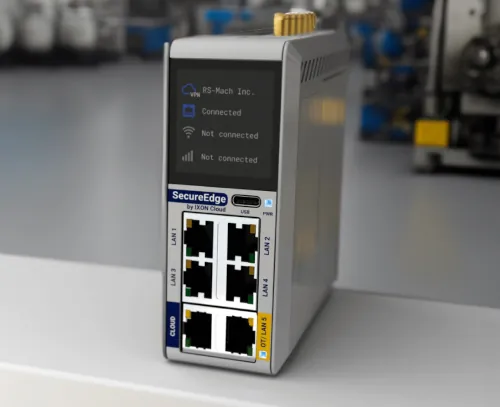
IXON also offers specific hardware for connecting machines to the cloud, such as industrial gateways that act as a bridge between the machinery and the platform.
These include:
IXrouter3: a simple device for connecting industrial machines to the internet.
SecureEdge Pro: an advanced gateway with high cybersecurity standards and support for additional applications.
These devices guarantee a secure and stable connection between the industrial infrastructure and cloud services.
Security and Scalability
Security is one of the pillars of the platform. IXON implements measures such as:
two-factor authentication,
data encryption,
advanced access management, and
compliance with the international standard ISO 27001.
Furthermore, the modular architecture allows companies to start with a small implementation and scale gradually, integrating new functionalities through APIs and additional applications.
In conclusion
, IXON Cloud represents a complete solution for the digitalization of industry and the remote management of machinery. Thanks to its combination of secure connectivity, data analytics, fleet management, and service portals, the platform enables manufacturers to improve equipment maintenance, optimize operations, and offer new digital services to their customers.
In an increasingly connected industrial environment, tools like IXON Cloud are becoming a key element for driving efficiency, reducing downtime, and moving toward a smarter and more productive industry.