A well-maintained plant improves process efficiency and product quality, reduces downtime, and can extend equipment lifespan. However, these advantages can be offset by higher maintenance personnel costs, equipment expenses, and training. The question is how to strike the right balance.
Five trends are influencing maintenance strategies in process plants:
1) Planned and unplanned downtime is becoming increasingly costly.
2) Maintenance must achieve more with less: workforce optimization and a smaller supply of skilled personnel require those on the ground to work smarter.
3) Sustainable practices are gaining momentum, and there is a need to employ best maintenance practices to increase equipment efficiency and reliability.
4) Technological advances are enabling a shift from in-house maintenance to a hybrid of in-house and out-house maintenance.
5) Best maintenance practices enhance competitive advantage through product quality and lower operating costs.
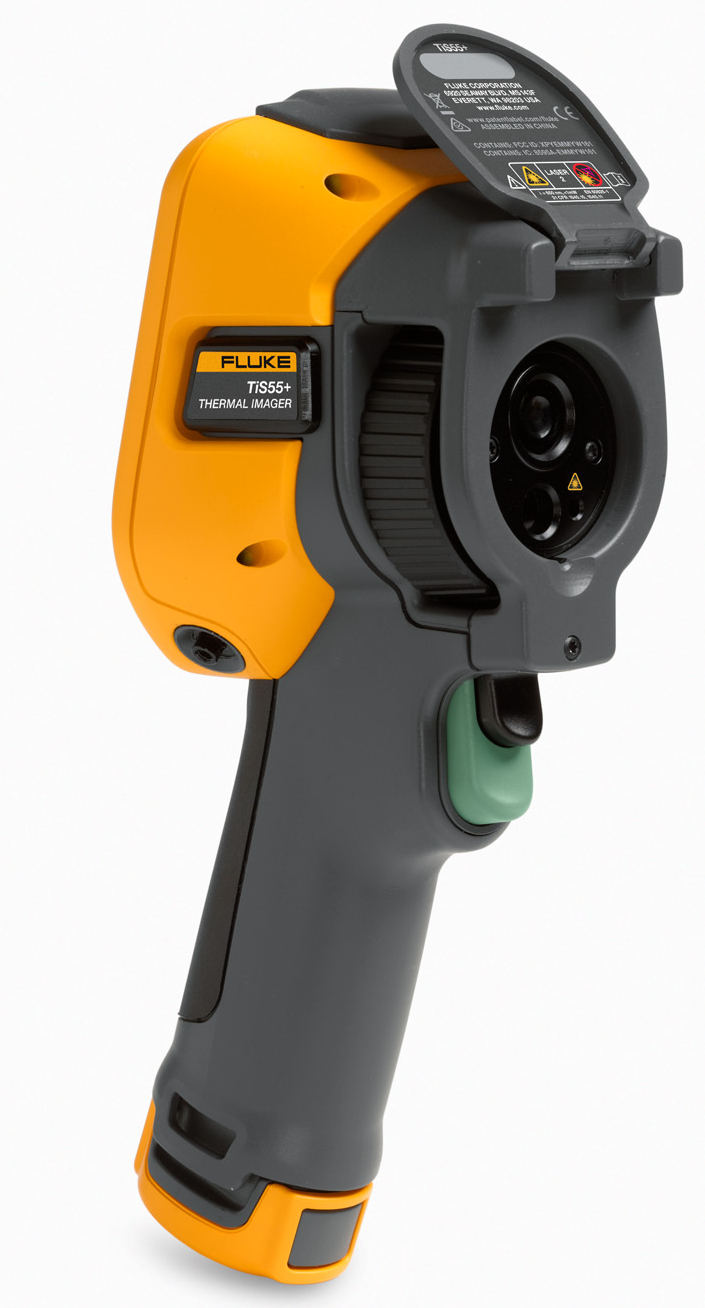
Recent developments in thermographic equipment are helping to address each of these trends and ensuring that plant managers achieve effective maintenance. Heat is often a symptom of equipment failure or malfunction, and thermography is an important tool in preventive maintenance plans, helping plant managers avoid planned and unplanned downtime and addressing trends that necessitate changes in maintenance strategy.
Maintenance must achieve more with less: optimized workforces must work smarter.
Maintenance teams used to consist of diverse problem-solving specialists, such as electrical, mechanical, or instrumentation technicians, but streamlining and cost reduction have decreased the number of technicians with these skills.
An optimized workforce requires maintenance teams capable of managing a wide variety of plant equipment. The application of thermographic cameras to preventive maintenance is broad and can be used to assess mechanical equipment such as motors, drives, and conveyor belts, as well as for electrical inspections, making them versatile tools.
 What to explore?
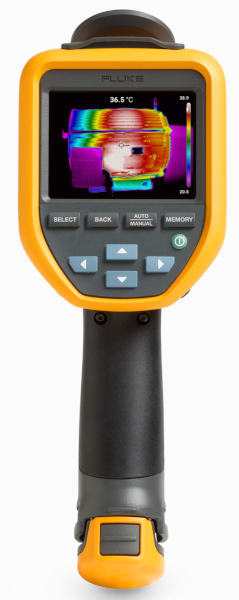
The first step in any preventative maintenance task should be a visual inspection. If more information is needed, a thermal imaging camera can help uncover thermal profiles on mechanical and electrical equipment to pinpoint a problem.
When capturing infrared images of equipment, it is best to do so while it is operating under normal conditions. Ideally, the electrical device should be checked while hot and stationary with a minimum load of 40%, taking into account the temperature increase that will likely occur when operating at maximum load. This allows for proper evaluation of the measurements and comparison with normal operating conditions.
What to look for?
Initial thermography requires the technician to inspect the equipment after installation and use this image as a baseline for identifying temperature anomalies in subsequent inspections.
Once a baseline is established, thermal trend inspections can be used to compare the temperature distribution of the same components over time, thus helping to establish future maintenance plans.
Comparative thermography can then be employed. Creating periodic inspection routes that include thermal imaging of all critical motor and drive combinations, along with tracking them against reference images, will help determine whether a hotspot is unusual and verify whether repairs were successfully completed. When three or more pieces of equipment are operating under similar conditions, detecting an anomaly is relatively straightforward.
A rule of thumb is that when a temperature increase in a thermal image is five degrees or more above ambient temperature, this difference could indicate a potential electrical fault. This rule of thumb and experience often provide the best guidance because, for some components, elevated temperatures may be normal.
Technological developments that enable hybrid internal and external maintenance
: Image Tagging.
The industry has long used asset tagging to identify equipment. Some thermal imaging cameras now incorporate a visual camera and firmware that allows maintenance technicians to read QR codes or barcodes used to tag assets, enabling proper organization of files and documents related to that asset. The ability to add photos, text, and voice annotations streamlines inspections and the generation of maintenance reports. Once tagged, images can be uploaded to a server and organized by asset, allowing technicians to track them over time.
Remote support
Once organized in this way, images can be tracked over time. Online condition monitoring software takes this to the next level, enabling plant operators to perform hybrid maintenance tasks. Internal technicians can track and take measurements from the images and upload them to servers or the cloud. They can also rely on external technicians who can interpret these images, generate reports, and manage necessary interventions.
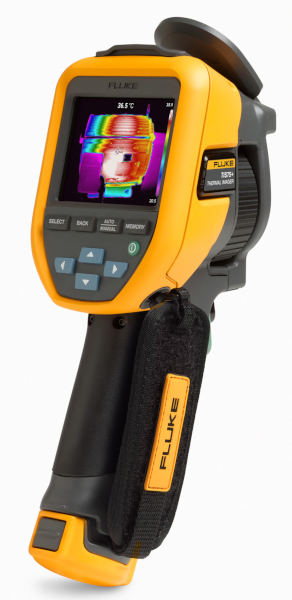 Image Quality:
A thermal imaging camera with a temperature sensitivity better than 100 millikelvin (0.1 °C) will provide good image quality. For technicians working with numerous assets, having a thermal imaging camera allows for both manual and fixed focus images, resulting in easily recognizable, high-quality images across a wide range of applications.
For quick routine inspections, a focus-free option allows for rapid image capture at varying distances, while manual focus can achieve superior image quality and allows for focusing at very short distances. The combination of both provides maximum flexibility for a variety of inspections performed by in-house teams.
Tracking Intermittent Problems:
Tracking intermittent problems can complicate the work of maintenance technicians searching for the root cause. Intermittent problem tracking can be implemented with thermal imaging equipment capable of capturing video or performing automatic captures. This equipment can be mounted on a tripod to identify problems that may not have been present at the time of the inspection. The ability to remotely control thermographic equipment, capture images, and adjust focus further enhances safety in hazardous areas or confined spaces.
Expanding competitive advantage with a quality product and lower operating costs:
The performance of monitoring equipment can reduce the likelihood of unscheduled downtime, decrease reactive maintenance and equipment repair costs, and extend the lifespan of machine assets. Sustainable practices like these are gaining momentum, and the need to implement best maintenance practices to increase equipment efficiency and reliability is becoming widely recognized, beyond their cost benefits.
Future-proof solutions:
The future of maintenance strategy lies in predictive maintenance, thanks to its ability to anticipate future equipment failures through both scheduled and unscheduled interventions. Thermal imaging cameras can help achieve this; the difference lies in the increased frequency of inspections, with changes in the data obtained indicating a potential future failure. Semi-automated inspections and software developments for capturing and analyzing data will provide predictive maintenance solutions in the future.