Among the factors driving this phenomenon are the availability of more affordable technology and open-source reference designs. These have helped lower the barriers to entry in engineering, allowing smaller companies to launch the equipment they have designed and built. Furthermore, this has resulted in the technological and financial resources they require being significantly less than in the past.
4Links, headquartered in Buckinghamshire, UK, plays a pivotal role in the development of "New Space." Founded in 2000, the company provides the engineering expertise and consulting services that small and medium-sized enterprises (SMEs) need to complete their space projects. It also collaborates with larger organizations, such as Airbus and Clearspace.
One of 4Links' recent projects involved developing a software and hardware platform designed to make developing space systems faster, simpler, and more cost-effective. This platform, named Loki after the Norse god known for his intelligence, promotes design reuse without requiring each project to be started from scratch.
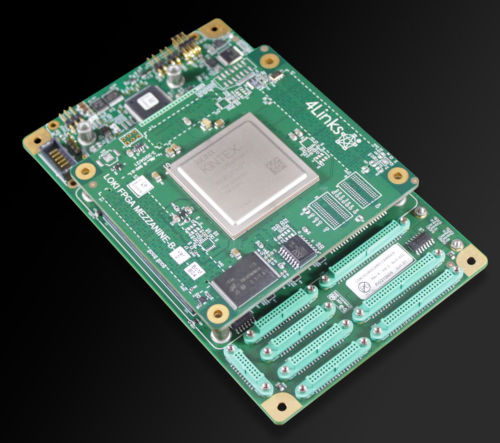 Figure 1: 4Links' Loki development platform (the subsystem connection area is on the right).
Loki aims to provide space industry customers with a fully configurable processing platform on which to build their onboard computers. It is designed for satellites using the increasingly popular SpaceWire network infrastructure methodology (in whose implementation 4Links founder Paul Walker played a key role). Based on a programmable, modular, and logical design, Loki requires fewer engineering resources, thus shortening lead times and reducing costs.
Loki consists of a Eurocard-format main board and an expansion auxiliary board. This auxiliary board handles all aspects related to fixed functionality, such as processing, memory, and system management. The auxiliary board is based on a high-performance Xilinx Kintex UltraScale FPGA. It can be reprogrammed before launch and even upgraded in flight. A main I/O board, meanwhile, handles all connections. It functions as a gateway, handling communication with the various satellite subsystems and providing input to the expansion board connected to the FPGA.
The ability to integrate the auxiliary board with the main boards using different I/O configurations greatly simplifies modifications based on customer requirements. Another key advantage of Loki is that the board only needs to be validated once and can then be used in multiple configurations. As a result, everything can be ready for launch in a significantly shorter timeframe, sometimes as little as a month.
As Spencer Saunders, Engineering Director at 4Links, explains, "The main board and auxiliary board approach makes this platform very attractive to our customers. It's much more agile, allowing for accelerated development. Another benefit for users is that they can validate one board and then reconfigure others. This validation eliminates the need for costly recertification for each new project."
Engineering Considerations
: Since Loki is intended for satellites and other orbiting equipment, its overall weight had to be minimal. Furthermore, the cost-sensitive nature of most "New Space" projects had to be acknowledged, meaning that custom MIL-SPEC components were not feasible in the design; instead, off-the-shelf, conventional products were used. Above all, the devices had to be resistant to damage. All selected components had to function for extended periods despite exposure to extreme temperatures, mechanical shocks, and vibrations.
Connecting the main board to each subsystem required the 4Links development team to overcome several design challenges. In addition to meeting all the aforementioned requirements, the space available for the necessary connectors would be very limited, necessitating a high-density pin configuration.
Finding an Effective Interconnection Solution:
Conventional connectors, such as the Micro-D format, would be excessively large for this type of implementation, taking up valuable space on the printed circuit board. Furthermore, these connectors are heavier due to their metal housings, necessitating an alternative solution.
Harwin and 4Links began discussing Loki just over a year ago. After extensive testing of various samples, it was determined that Gecko-SL connectors would be an excellent choice for the I/O board and for fulfilling all the connection capabilities of its subsystem.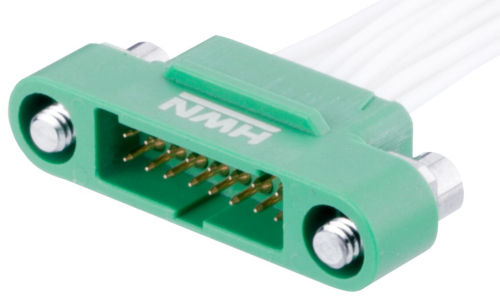 Harwin's 1.25-pitch Gecko-SL connectors offer distinct advantages over standard Micro-D components, as they are significantly lighter and more compact. As with all components in the Gecko family, they offer the extremely high reliability required by mission-critical systems: they must be robust enough to withstand the most demanding operating conditions. The screw-on locking mechanism ensures secure fastening even under intense torsional forces. The 4-terminal beryllium-copper contact design guarantees a stable connection even under severe shocks (50G/100G) and vibrations (20G). Gecko-SL connectors operate in temperatures ranging from -65°C to +150°C and are also notable for their excellent degassing properties.
Gecko-SL connectors are available in a wide variety of pin configurations. It was also important for the Loki platform that the 4Links technical team benefited from exceptional connection flexibility through numerous combinations that could be successfully integrated into the available surface area of the motherboard. This resulted in minimal space occupied by unused pins.
“Harwin’s Gecko-SL connectors have provided us with the high pin density we needed, and in a much better way than competing solutions, as they require minimal board space,” says Saunders of 4Links. “We also appreciate the enormous versatility in the number of pins available for the different versions. This has allowed us to install connectors with the required number of pins, assigned to each function, without leaving pins unused or wasting space.” “The quality of the products we received from Harwin and the corresponding technical support have been fundamental in bringing our Loki platform to market.”
The Loki platform already forms the basis of the computer systems installed on board numerous low Earth orbit (LEO) satellite missions used for weather monitoring, Earth observation, and space debris removal. Additional projects will be launched soon.
Author: Andy Brayford, Director of Business Development for Northern Europe, Harwin