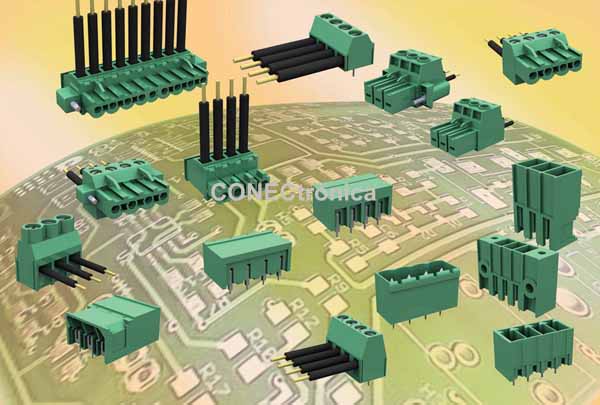
Many of today's terminal block manufacturers only sell this product—they stock every possible terminal block, from A to Z, and are highly focused on manufacturing terminal blocks—but they don't offer other interconnection systems. Purchasing terminal blocks from a connector manufacturer that offers a full range of connection systems, however, gives customers more options and the ability to combine and match components to specify the best interconnection solution for their system.
Only a few connector manufacturers have the necessary experience in manufacturing and marketing PCB connectors, board-to-board connectors, cable-to-board connectors, and rectangular connectors, and can easily leverage this experience to develop a complete range of terminal blocks. While purchasing terminal blocks from a manufacturer that only makes terminal blocks guarantees a certain level of expertise and quality, they cannot offer a single point of supply for all the interconnecting components of a system.
Reduced application costs, miniaturization, reflow soldering technology, and high power are the areas that will drive advancements in new terminal block designs. Upcoming technological advancements will incorporate spring contacts to simplify installation and reduce costs. There will also be an increase in available power products, as well as PCB-mount products with through-pins for reflow soldering. Many of these innovations are being driven by OEM customers in the Telecom and Datacom markets, in addition to OEMs in the industrial sector. All major OEMs use terminal blocks in their designs and are currently seeking reputable connector manufacturers who can supply them, allowing them to narrow their supplier base.
So, what should a design engineer consider when specifying a terminal block for current applications?
Through-in Technology:
In today's market, customers are looking to reduce costs by shortening assembly and installation times, often through automated component placement and reflow soldering.
For this purpose, Pin-in-Paste technology is essential. Through-in components with reflow soldering have been used for years across all industries for various types of connectors (such as pin strips). Through-in technology is especially beneficial for large OEMs because it enables fully automated production, facilitating the management of large production volumes and reducing time to market. This will be the trend in future terminal block sales, and more manufacturers will begin offering this technology in the near future.
 Reduced Installation Costs:
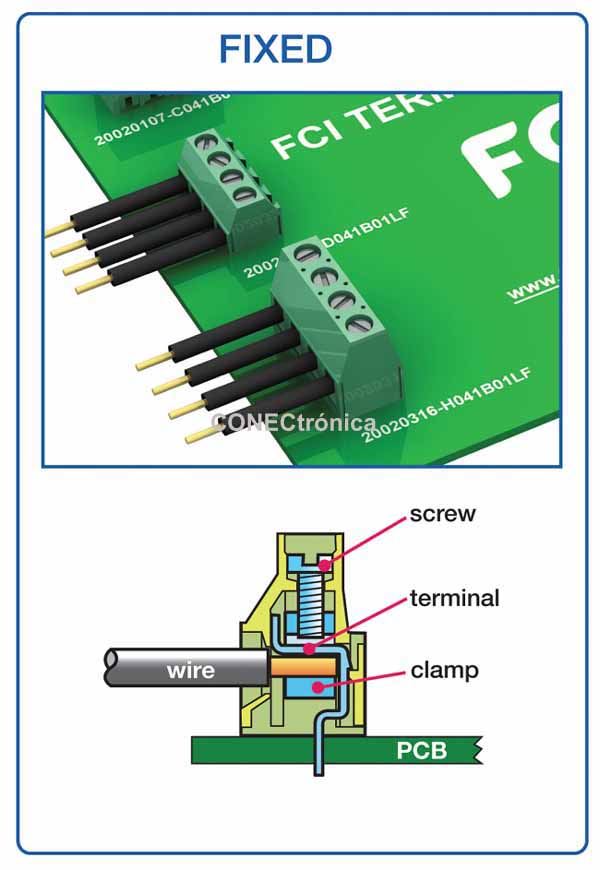
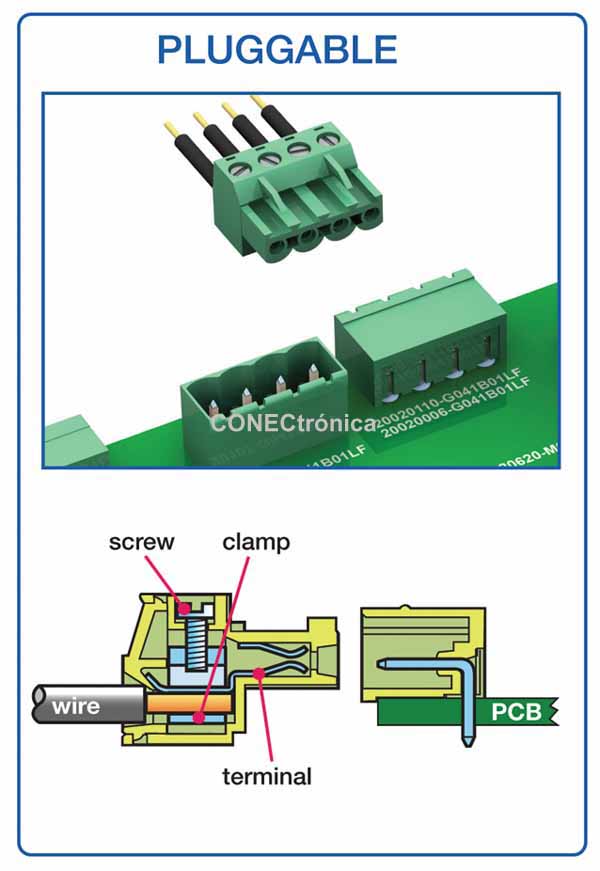
Previously, all terminal blocks used screw technology, which was time-consuming and difficult to install in the field. Most terminal blocks have an average of 8 to 10 contacts, and a single piece of equipment may have multiple terminal blocks. Unscrewing and screwing each connection during installation or maintenance is time-consuming. Spring-loaded terminal blocks, however, significantly reduce this time and are increasingly being incorporated into new designs due to their ease of use. They save time and require less equipment. Many customers believe that screw-loaded versions offer greater reliability and a longer-lasting connection, but today's spring-loaded versions are designed to meet the standards and specifications required in most applications.
Elevator Terminal Blocks:
Many terminal blocks are used in consumer applications where barrier and cable protection terminal blocks are sufficient. However, plug-in and PCB terminal blocks are ideal for industrial and instrumentation applications, especially when using elevator terminal blocks (Figure 2). Furthermore, for these demanding applications, the key to high performance is the use of superior materials that provide good conductivity as well as chemical and mechanical stability. However, sometimes proven materials are replaced by "exotic" and new materials in this market. Customers need to choose a supplier that has experience working with traditional materials as well as incorporating state-of-the-art materials when necessary.
Performance vs. Price:
Design engineers will evaluate a component based on its performance and design characteristics to see if it meets the system requirements. Price will be secondary for the designer, but in today's market, price is an important factor in component selection, and the design engineer will consider it to see how it affects the final cost of the equipment. However, it is important to choose a terminal block that provides good quality and ensures good performance throughout the system's lifespan.
Stock Availability
: Terminal blocks are often not specified until the end of the design cycle, as they are considered commodity products and are secondary when incorporating new technologies with more advanced features. For this reason, it is important for the designer to find a standard product that is readily available and in stock. Manufacturers can facilitate this process with a website that assists in the design process and provides product specifications.
Service:
When choosing a terminal block supplier, design engineers should look for high-quality products with the characteristics mentioned above, as well as a manufacturer that can offer years of experience in interconnection and superior service. Engineers benefit greatly when they can easily access drawings, 3D models, specifications, and samples of a wide variety of connection solutions online.
Since these are indeed commodity products, the real differentiating factor in terminal block specification will be choosing a high-quality product with a superior level of design support and fast, reliable supply to meet the production needs of OEMs.
Author: Koos Steding; Global Product Marketing Manager for Terminal Blocks, FCI Electronics.