However, a period of adaptation and change is also taking place, due to the increased application of wireless NFC (Near Field Communication) via radio frequency identification (RFID) for cards and mobile phones, the impact of which could be considerable
Due to the recent surge in interest in these devices, it's easy to forget that smart cards first appeared on the mass market in the early 1980s, with the introduction of the Télécarte system in France for paying at public telephones. More than 20 years later, Europe can still claim to be the birthplace of smart cards, particularly in the banking sector. The continent is far ahead of the United States in the field of chip-enabled credit and debit cards.
Concerns about fraud have led to the widespread adoption of chips and PINs across Europe, primarily promoting the standardization of transaction management. Europe is taking the first steps toward a cashless society. Meanwhile, the United States remains heavily reliant on traditional magnetic stripe bank cards. The extensive infrastructure required to operate these cards is a significant obstacle to the widespread adoption of smart cards. Technologies like MagnePrint provide other ways to ensure greater protection against card duplication and could also increase the lifespan of the magnetic stripe card for a while.
Security is currently a top priority, and there is significant global interest in the introduction of electronic identity documents and passports. However, we seem to forget that for several years, public administrations have been using smart cards to improve the efficiency, security, and ease of use of various healthcare and social services. The potential in the commercial sector is also substantial, with new applications emerging continuously.
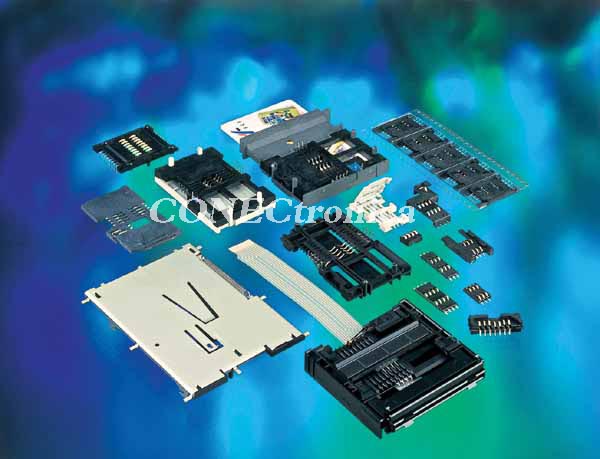
Despite the diversity and potential of the market, most smart card connector applications are characterized by a basic design and simple technology. The main characteristics sought are: the longest possible lifespan, a stable, reliable, and secure mechanism, and compliance with standards such as EMV, PCI PED (Payment Card Industry PIN Entry Devices), and ISO 7816.
It is clear that products are constantly being developed, but this is more of an evolution than a revolution and reflects general trends in the electronics industry, such as the search for solutions to make more efficient use of space. Issues related to product commercialization (such as time to market, supply guarantees, and value for money) are the most relevant for original equipment manufacturers (OEMs). Regarding contacts, the emphasis is also on performance rather than innovation. For most applications, the need to withstand a high number of cycles makes gold the preferred choice for contact plating.
It's clear that the success of most smart cards relies on widespread acceptance rather than exclusivity, leading to a trend towards standardization. However, custom-made connectors can still play a crucial role. Original equipment manufacturers (OEMs) typically employ different strategies to prevent terminal duplication via the connector, developing distinct end-user solutions for different customers. Customizing connectors also facilitates design protection against copying.
Something similar is happening with the SIM card connector market. In this case, the miniaturization process has already concluded; in fact, the SIM connector we're used to is now nothing more than a series of contacts. As with the previous example, innovative design isn't a crucial factor. What original equipment manufacturers (OEMs) are looking for is a solution that meets established standards and specifications. Given that the lifespan of a new mobile phone design is measured in months, the key for the manufacturer is being able to respond effectively to the short lead times they have to deliver orders. Manufacturing and supply chain efficiency are just as important as producing a quality product at a competitive price.
For connector manufacturers who have successfully adapted to the smart card market, the growing importance of NFC technology presents both a new challenge and an opportunity. NFC is poised to have a major impact, but it is the form it will take that has generated some controversy. This wireless system will undoubtedly replace some smart card connector applications, but NFC terminals will also require new types of interconnects.
The impact of proximity communication makes us forget that it's a technology as widespread as contactless cards. Until now, NFC applications have been primarily used for low-cost transactions, such as public transport in large urban centers. But today, a growing number of industry representatives are interested in using it for operations currently performed only with banknotes and coins.
The direction of this growth is still being determined. Public transport cards, like the Oyster system used in London, are being transformed into stored-value cards that can be used in various types of businesses. Similarly, major credit card providers are launching systems that will facilitate the use of contactless, PIN-free proximity cards for low-cost transactions.
Japan is paving the way for the use of mobile phones with NFC systems linked to credit cards for this type of payment. Major mobile phone manufacturers, such as Nokia, are enthusiastic about the idea of this application becoming the norm, which would mean the end of the SIM card as a payment connector. But some issues remain to be resolved, related to the customer's willingness to stop using cash and the merchant's willingness to replace banknotes and coins with the necessary infrastructure for proximity communication.
As we can see, proximity communication has not yet had a significant impact. Payment terminal manufacturers offer NFC functionalities using add-on modules: the connector for the smart card remains unchanged, and new connectors are also needed for the add-on module. In the long term, the changes may be more drastic. If NFC-enabled smart cards resolve security issues and begin to be used for all transactions currently conducted in cash, a whole new range of potential applications will emerge.
Should the use of mobile phones as digital wallets become widespread, the SIM card's days may be numbered. However, this is not inevitable, as there is a powerful lobby advocating for the SIM card as a very inexpensive means of data storage and as a marketing tool. A serious debate is also underway regarding the security features of removable SIM cards compared to those of integrated NFC technology.
Whatever direction the various smart card markets take in the coming years, it's clear that connector manufacturers are not in a position to influence those changes. We're not talking about a market where major advances in connector design or technology will play a fundamental role. The emphasis is on compliance with international standards and the development of increasingly compact, durable, secure, and cost-effective design solutions.
Connector manufacturers best positioned to capitalize on the dynamics and growth of the smart card market will be those most attentive to customer needs and able to respond to them quickly and effectively, introducing products to the market as soon as possible, at competitive prices, and ensuring the resources to maintain a high volume of stock.
The author,
Gijs Werner, is the Global Marketing Director of FCI Electronics and an economist. He worked for three years as a marketing consultant and, from 1998, at Berg Electronics as Product Manager for the Basics+ product portfolio. At FCI, he has been responsible for product and market management at both regional and international levels.