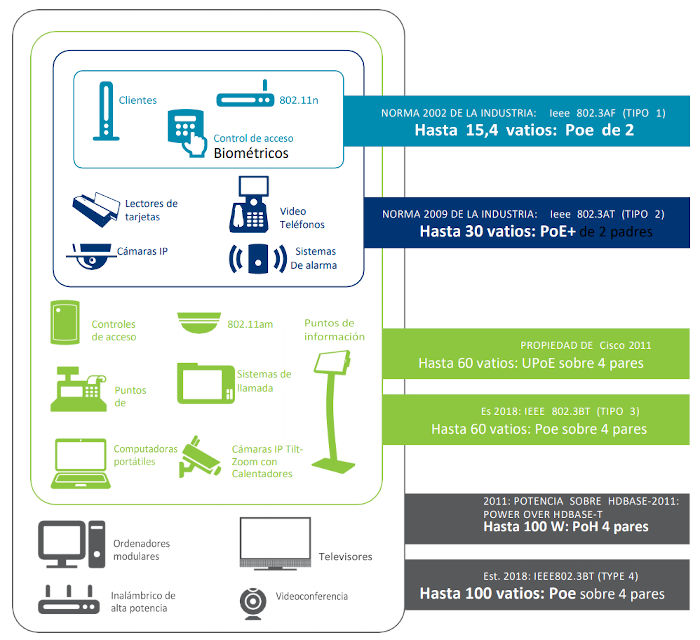
Among the applications where PoE is particularly effective are:
- IP surveillance cameras, with a wider range of applications and located in remote areas.
- AV controls, panels, interactive devices, and information displays in all types of rooms.
- Voice over IP phones.
- Point-of-sale systems and information kiosks in shopping centers and general areas.
In general, a wide range of devices and applications, which nevertheless require a suitable network design, to avoid cable heating and connectivity problems that may affect their performance.
Overview of the Standards:
Figure 1 provides a guide to the capabilities and applications based on the power supplied (15.4-30, 60, or 100 W) and the number of pairs used for transmission (2 or 4 pairs).
Several organizations (TIA, ISO, IEEE) are also studying the special characteristics of high-power PoE (greater than 60 watts). In particular, Underwriters Laboratory (UL) defined a limited potential (LP) certification in 2015 as a special designation for these types of applications; and the NEC, in 2017, published a recommendation indicating the maximum size of cable bundles to prevent overheating in these applications.
 Equipment for PoE Installations
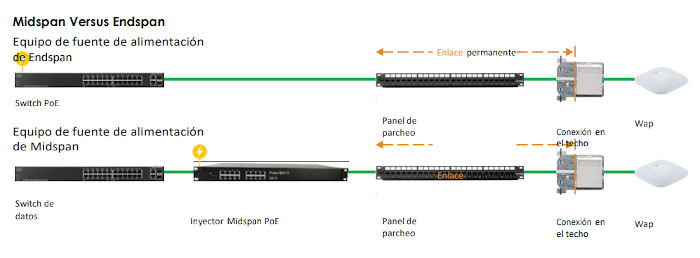
A PoE system has two main components: Power Sourcing Equipment (PSE) and Powered Devices (PDs). The PD receives power from the PSE using standard Ethernet cabling. PSEs can be divided into two types: end-spans and mid-spans. See Figure 2.
End-spans are essentially Ethernet switches with added PoE circuitry, while mid-spans are placed between the switch and the powered device.
Mid-spans, also known as PoE injectors, are typically used when PoE is the only upgrade being made to the network, such as adding IP phones or wireless access points to an existing non-PoE network. This avoids replacing non-PoE switches that are still within their productive lifecycles. Mid-spans can be located anywhere, as long as they are mounted in a standards-compliant facility, such as a telecommunications room or closet, and are not installed as part of a permanent link.
 Cabling Recommendations for PoE:
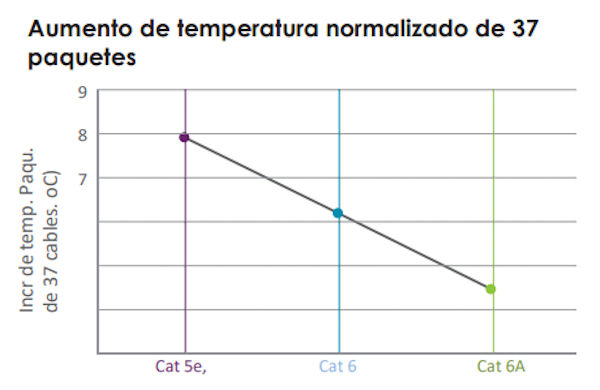
As PoE standards allow for higher power transmissions, temperature rise problems in cable bundles can become more frequent, exceeding the 15°C above ambient average limit set by the TIA. See Figure 3.
Cable temperatures should not exceed their rated temperature, and installation wiring typically has a 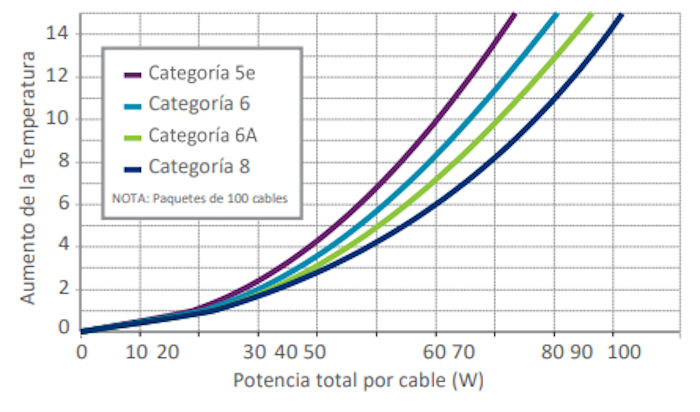 maximum temperature of 60°C (140°F). However, many cables with higher temperature ratings are now available, including 70°C, 75°C, and even 90°C. See Figure 4.
In addition to using higher-rated cables, there are other ways to avoid performance problems related to higher cable temperatures, such as cabinet construction, category classification, and installation best practices. These include reducing the number of cables per bundle, properly separating powered and unpowered cables within the same bundle, and using ventilated or well-ventilated cable trays or conduits.
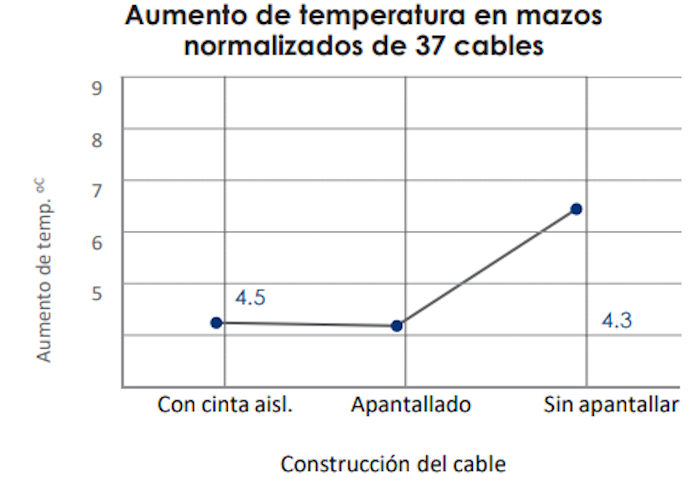 Shielded or unshielded cables with insulating sheathing:
The use of LEVITON cables with a metallic "insulating sheath" surrounding the 4-pair core, or shielded cables (F/UTP), results in average temperature increases more than 2°C lower than standard UTP cable. See Figure 5.
Connection Integrity and Performance
Another consideration with high-power PoE is the potential damage, over time, from current passing through to the RJ-45 connectors in the network. This is especially true if, when disconnecting a live patch cable, a small electrical arc jumps between the connector and the plug.
Both sockets and connectors must always have 50 µm gold-plated tips, as specified by ANSI/TIA-1096-A and ANSI/TIA-568-C.2 standards. There are connectors and patch cables available on the market that do not have gold plating, often sold at a much lower cost, and these non-compliant options will fail more quickly when used in PoE applications.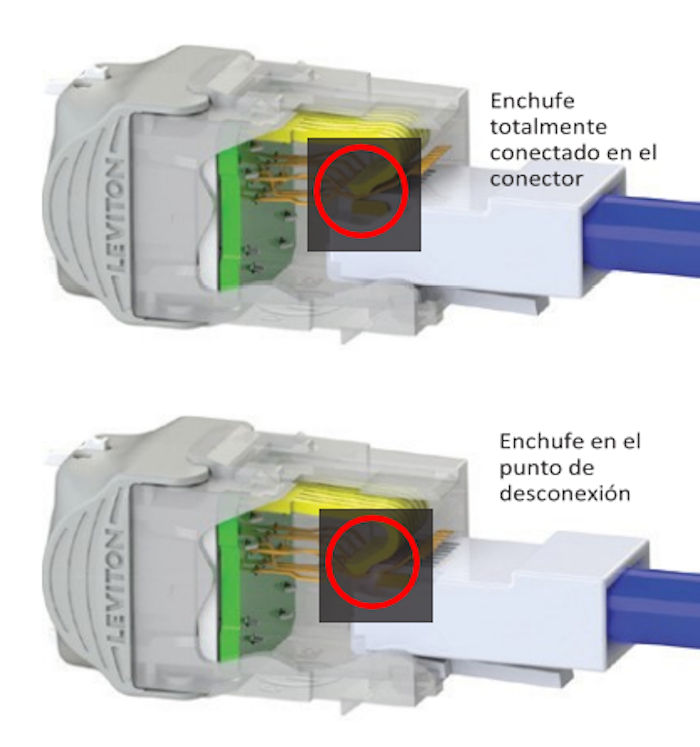
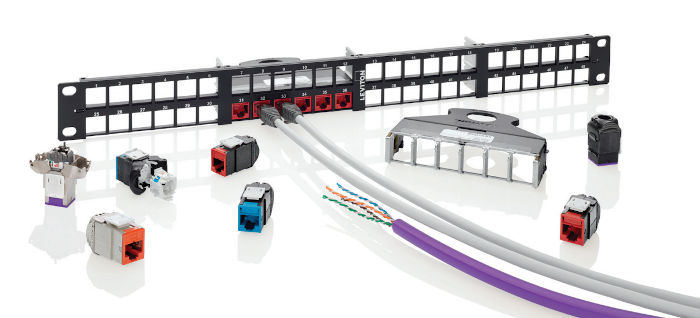
Furthermore, the use of metal-bodied connectors, such as the LEVITON Atlas-X1 connector, results in a 53% improvement in heat dissipation in that area of the system. See Figure 6.
 Preparing for the Next Generation: High-Power PoE.
High-quality connectivity is essential to achieving the performance and reliability required in current and future PoE network operations.
System components must be designed to minimize temperature rises and meet industry standards to ensure system longevity and prepare networks for future upgrades and growth, such as higher power requirements from PoE-enabled devices or larger cable bundles.
(Article extracted from the LEVITON White Paper “Cabling & Connectivity for Power over Ethernet”)