


- Ensuring maximum safety - Preventing the risk of injury to occupants, protecting the vehicle, and safeguarding the manufacturer's reputation.
- Making their vehicles operate as efficiently as possible - So that vehicle owners can avoid the inconvenience of frequent recharging and travel longer distances.
However, achieving these two objectives presents complex challenges for the engineers tasked with accomplishing them. And achieving ever-faster charging times requires moving to higher voltages (800V). Therefore, due to this increasing complexity, the powertrain design of any modern EV is critical. Manufacturers must therefore develop highly sophisticated in-vehicle networking capabilities with the necessary monitoring and diagnostic functions.
Access to essential data:
Electric powertrains require a high-performance data acquisition infrastructure to ensure their efficiency and safety. Through this infrastructure, the various elements of the powertrain are constantly monitored, and any indication of a problem is signaled to the relevant electronic control unit (ECU), where appropriate corrective action is taken. Furthermore, as we will see, the limitations imposed on the designs of electric vehicles mean that this infrastructure (and the components it uses) require specific technical characteristics.
Critical Components of an EV Powertrain
The six main systems found within or directly associated with an EV powertrain are as follows:
- The On-Board Charger (OBC) - Responsible for charging the battery by taking AC power and converting it to a suitable DC voltage.
- The Battery Pack - Where the charged energy is stored, ready to be delivered.
- The Traction Inverter - Converts the DC power from the battery into AC power, which then drives the EV's electric motor.
- The Motor Controller - Where digital circuits take the force applied by the driver to the vehicle's brake and accelerator pedals and translate it into commands that result in changes in motor torque (to accelerate or decelerate the vehicle).
- The Battery Management System (BMS) monitors various parameters within the battery pack to maintain the proper functioning of each cell.
- The DC-DC converter - To reduce the battery voltage so it can be used for other functions (such as lighting, climate control, infotainment, etc.).
The OBC, BMS, traction inverter, motor drive, and motor controller must continuously transmit or receive real-time data to/from their supporting ECUs. This real-time data will provide greater powertrain efficiency, longer vehicle life, increased reliability, and a higher degree of safety.
Data Dependence in Electric Vehicles:
It is well known that electric vehicle battery packs are composed of lithium-ion cells, and the potential for fire hazards must be considered. Therefore, constant system monitoring is vital. By acquiring real-time data from the cells, such as temperature, voltage, and current, the Battery Management System (BMS) understands the overall health of the battery pack. It then ensures that each cell remains within its safe operating parameters.
Through its numerous diagnostic functions, the BMS can detect any potential problems within a given cell that could lead to overheating and disconnect it (preventing a dangerous thermal runaway situation). However, if a more serious problem occurs, affecting a large portion of the battery pack, the vehicle may need to be shut down completely.
The BMS can also handle cell balancing. There will be variations in cell construction throughout the battery pack, with some cells capable of holding more charge than others. Cell balancing means that the charge is better distributed throughout the battery pack, so cells with lower performance will last longer.
Other components, such as the OBC, traction inverter, etc., require data to respond quickly to changing powertrain conditions. Like the BMS, they need high-speed connectivity to enable deterministic operation.
Essential Interconnection Requirements:
The use of connectors in any automotive application requires several essential characteristics. First, space will be limited, so the dimensions of the connector components must reflect this while still offering high contact densities. At the same time, the selected connectors must be robust enough to withstand the demanding environments of automotive applications. They must be resistant to shock, vibration, and high temperatures. Furthermore, complete protection against dust and moisture ingress will be necessary.
They must also support high data rates, in line with modern vehicle communication network requirements, and maintain strong signal integrity (despite the noisy electromagnetic environment in which these connectors will be placed). Furthermore, mechanisms to prevent mating errors during assembly are recommended. Finally, the increasingly competitive nature of the electric vehicle sector means that the connectors used must be competitively priced and not add excessively to the total bill of materials costs.
High-density compact interconnect solution:
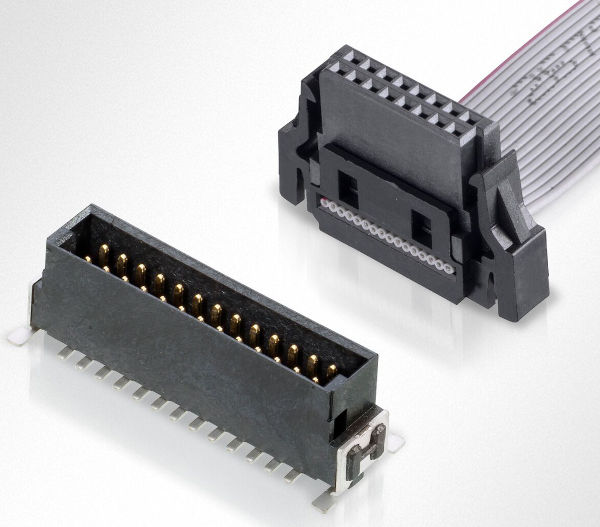
Several manufacturers have designed the Archer Kontrol for the powertrains of their electric vehicle models, and Harwin is building a strong track record in this growing application. These highly reliable board-to-board connectors have been integrated into OBCs, motor controllers, and traction inverters. They provide automotive engineers with all the essential technical attributes needed in the data infrastructure accompanying electric vehicle powertrains, and for buyers, they are well-positioned commercially. Furthermore, their small size, with the option to choose between vertical and horizontal orientations, allows these 1.27 mm pitch connectors to fit into tight spaces.
 In addition to a 125°C temperature rating (to withstand the heat inside powertrain modules), these components have exceptional vibration resistance (cyclically tested at 10–2,000 Hz, 1.5 mm, 198 m/s² (20 G) for 12 hours). Furthermore, with a 3 Gbps transmission capability, they can easily support the data rates of Ethernet-based vehicle communication networks. Highly durable phosphor bronze contacts with a gold/tin finish are used. These contacts are embedded in rugged plastic housings rated UL94V-0 for flame retardancy.
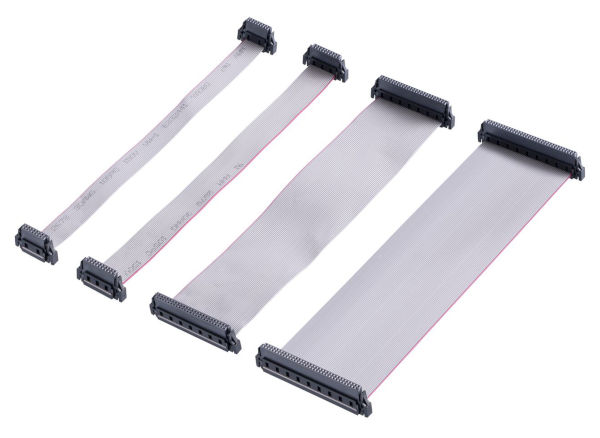
Archer Kontrol connectors are fully shielded (to prevent damage) and feature built-in polarization to protect them from mating errors on vehicle manufacturers' production lines. Stack height options from 8 mm to 20 mm provide greater versatility, allowing for suitable combinations to meet specific design requirements. In addition, ready-to-use cable assemblies are available (in lengths of 150 mm and 300 mm), with added strain relief fasteners.
Conclusion:
Real-time data acquisition and transfer are fundamental to the long-term operation of electric vehicles, providing greater propulsion system efficiency, longer battery life, and enhanced safety. Harwin collaborates closely with many of the world's leading electric vehicle manufacturers, providing them with the connectors they need to enable their powertrains to achieve the highest possible performance levels. Thanks to this continuously evolving interconnect technology and innovative new enhancements, the next generation of electric vehicles will be even better positioned to meet market expectations.






