 Convergent technologies like these have not only greatly increased healthcare professionals' ability to directly care for patients in clinics and hospitals, but have also contributed to the remote monitoring of patient conditions. In today's interconnected world, it is quite common for healthcare professionals to consult with colleagues in other cities around the globe. Mobile communications are increasingly used to monitor and care for patients with chronic diseases such as diabetes.
 Healthcare reform has also spurred integrated strategies for real-time patient diagnosis and monitoring. Current telecommunications systems offer a high-speed highway for managing digital information, such as the Picture Archiving and Communication System (PACS). PACS, which allows for the electronic storage and display of images like X-rays and CT scans, is a virtually filmless process and improves diagnostic methods. Physicians and other healthcare professionals can access and compare images simply by pressing a button.
Although medical device manufacturers continue to improve existing products and introduce new ones to the market that leverage the latest technologies, engineers must contend with the unique conditions of the medical industry, which present greater challenges for design and manufacturing. This is especially true in the current economic climate, where healthcare is under pressure to reduce costs. While medical interconnects are typically supported by specialized manufacturers, the industry is increasingly adopting standards from other sectors, such as consumer electronics and telecommunications.
In the development of medical equipment, manufacturers must pay closer attention to durability and reliability than in the consumer and telecommunications markets. This is because medical equipment is expected to last for many years and, in the case of invasive devices, to perform consistently in relatively harsh environments. This presents a real challenge because it involves using industry-standard interconnects in the medical setting, where the form factor may be correct but the lifespan of the materials may not meet expectations.
The need for readily available modifiable interconnects (MOTS) is met by leveraging existing technology, such as the HDMI connector used in audiovisual equipment, and reinforcing it with cladding and secure fastening mechanisms, if necessary, for use in medical equipment. MOTS solutions are found where they provide significant value to equipment designers and interconnect providers. For example, by using 80% of a legacy technology, a custom interconnect may not be required. When considering a MOTS solution, it is advisable to work with the company's application engineers to identify the risks and benefits of a given interconnect system.
The problem is that many medical devices are connected to patients. In these cases, many medical device designers face the additional challenge of incorporating biocompatible functions into confined spaces. Microengineering must respond to the demand for devices that fit the human body as closely as possible, such as pacemakers and hearing aids. The form factor may be at the correct scale, but biocompatibility and ease of use can become critical criteria. Given the specific needs of the medical device market, there will always be a level of customization that requires a detailed specification (SPEC). High-specification applications can leverage existing designs from other sectors and adapt them to the requirements of medical use.
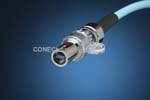 A key consideration for equipment manufacturers is the selection of interconnects that enable the reliable transmission of data, signals, images, and power. The effectiveness of medical equipment depends heavily on robustly designed underlying electronic interconnects that enable the equipment to perform as expected.
Medical equipment interconnects must have secure contacts with high coupling cycles, long service life, and durable materials to withstand the wear and tear of daily use in environments with a variety of fluids. The equipment must also be able to withstand potential accidental physical interference, such as hospital carts crossing cables. Furthermore, the interconnects must meet many additional requirements and overcome challenges such as tight tolerances for signal integrity, high coupling and actuation cycle counts, reduced losses due to resistance, and strict regulations regarding magnetic interference, radio frequencies, and crosstalk.
When selecting interconnects for medical devices, it is advisable to work with a manufacturer that has a proven track record of developing connectors that perform in the harsh environments of other industries, such as chemical, solar energy, manufacturing, pharmaceutical, defense, and telecommunications. These sectors require, in part, the same rigorous standards as the medical equipment industry, and manufacturers with experience developing interconnects for these environments typically offer a range of coated connectors that ensure durability.
Key features of interconnects for medical equipment
: - Reliability to consistently deliver accurate results.
- Durability to operate for many years under harsh conditions (including sterilization).
- Miniaturization for portability and easy integration into small devices.
- Flexibility for folding/
bending and routing.
- Integration into other medical equipment and systems.
- Easy disconnection for cleaning and removal.
- High-speed transmission with copper and fiber optics for PACS.
It is now more important than ever to use medical equipment with interconnects that offer all these features, as the performance of medical equipment is critical. Given the advancements and convergence of electronics, a risk-benefit assessment of interconnects by the equipment designer is paramount. A cardiac monitor failure, for example, poses an incomparably more serious risk than a faulty smartphone or a malfunctioning router handling consumer phone calls.
Given the rising costs of healthcare, which will significantly impact patient treatment, and the increasing prevalence of home care, the demand for smaller, more portable medical devices will undoubtedly grow considerably in the coming years. Companies that design medical equipment will need to carefully select their interconnects to effectively meet this need.
Author:
Anthony Kalaijakis, Molex Incorporated.
About the author
Anthony J. Kalaijakis is Director of Strategic Medical Marketing at Molex Incorporated, a global leader in the design and manufacture of electronic, electrical, and fiber optic interconnect systems.