Passive optical network (PON) technology has been fundamental for broadband operators to carry out large-scale FTTX projects, as it provides a simple and cost-effective means of implementation. As this medium continues to evolve with the advent of next-generation derivatives, the data rates and split ratios that PON-based FTTX can support will increase dramatically. However, this also exacerbates the already considerable testing challenges associated with PON.
The aim of this article is to analyze how to address the challenges that these new forms of PON pose to test engineers. It will detail the advanced test equipment currently required for this type of work and the variety of options available for acquiring such equipment.
FTTX Market Drivers:
While it's clear that the underlying dynamics driving FTTX deployment were already in place (such as the increase in connected devices per household, along with the growing popularity of online gaming, 4K/8K video streaming, and cloud services, etc.), there are now other factors to consider. For example, the changes in our work culture in the wake of the global COVID pandemic will undoubtedly have a significant long-term impact. A much larger proportion of the population now works from home, and many of us are likely to work at least partially from home in the future. Consequently, the demand for residential broadband will remain high, and in response, the pace of FTTX deployment is almost certain to accelerate considerably.
Emerging PON Standards:
Gigabit PON (GPON) was first introduced in 2003. It combined the inherent advantages of PON's shared point-to-multipoint fiber and the ability to serve more subscribers with a given infrastructure investment, while significantly increasing the data rates that could be supported. It offered downstream speeds of up to 2.5 Gbps and upstream speeds of up to 1.25 Gbps. In the following years, GPON was followed by other asymmetric standards. The increasing demand for bandwidth naturally led to calls for even higher speeds. Furthermore, as user behavior changed, the distinction between upload and download requirements became less pronounced. This would drive the need for symmetric standards.
The introduction of XGS-PON enabled 10 Gbps data transfer over a single channel in both directions using Wavelength Division Multiplexing (WDM). Following this came NG-PON2, which means that symmetrical operation can now be offered through 4/8 downlink and uplink channels, respectively. This translates to a total capacity of up to 80 Gbps available on a single fiber. The key to this technology is the use of time-division multiplexing (TWDM) and the incorporation of tunable lasers into the system.
With GPON, wavelengths of 1490 nm and 1310 nm are used for downlink and uplink traffic, respectively. In NG-PON2, 1600 nm is used for downlink traffic and 1530 nm for uplink, while XGS-PON relies on 1577 nm for downlink and 1270 nm for uplink. The ability of these two newer standards to coexist with GPON is a noteworthy aspect. This allows operators to meet the service level requirements of different customers using much of the same infrastructure, thus protecting previously made investments. This also means that when an upgrade is eventually needed, operators can easily migrate their GPON network to XGS-PON or NG-PON2 without modifying most of the deployed hardware (particularly the fiber optic cabling), requiring only the replacement of a few optoelectronic devices.
However, the fact that both XGS-PON and NG-PON2 are based on longer downlink wavelengths than conventional GPON presents certain drawbacks. Most notably, it exposes them to greater power losses. The use of multiple wavelengths also significantly increases the complexity of testing procedures. Other potential problems must also be considered, such as the increased susceptibility of the output to fiber bending caused by improper installation.
 Applicable Testing Equipment:
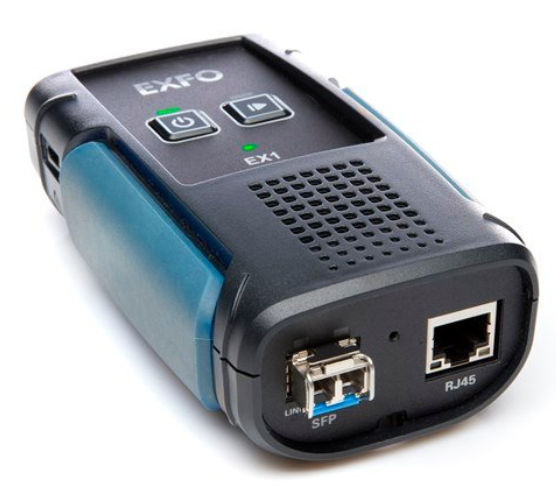
The Exfo P-174631 FTTH Contractor Kit is suitable for both legacy and next-generation PON infrastructure. The kit includes a pocket-sized EX1 GPON tester, a high-precision OX1 fault detector, and an FIP-4858 fiber inspection probe.
The Viavi SmartOTDR handheld fiber tester provides an efficient means of analyzing networks using the latest PON standards. It enables detailed fault location work thanks to its time-domain optical reflectometry and visual fault location capabilities, with the ability to process up to 256,000 data points. The inclusion of the company's Smart Link Mapper software makes test data much easier for the operator to interpret, resulting in faster test completion and minimizing the risk of errors. Furthermore, the unit also features built-in power measurement capabilities, with calibrated wavelengths of 1310 nm, 1490 nm, 1550 nm, 1625 nm, and 1650 nm.
Conclusion:
The arrival of XGS-PON and NG-PON2 has taken the fiber network to another level, enabling the delivery of 10 Gbps symmetrical services to homes. However, this requires more sophisticated testing procedures, along with access to state-of-the-art instruments that incorporate all the necessary functionalities. The rapid pace of the FTTX sector, with infrastructure that must be deployed in short timeframes and the periodic emergence of new standards, means that directly purchasing new equipment may not be a cost-effective strategy. It may be prudent to consider alternative procurement methods.
By partnering with leading suppliers such as Viavi and Exfo, Electro Rent is ideally positioned to provide test engineers with the equipment they need to carry out their assigned FTTX testing tasks. A broad portfolio of equipment is ready for direct shipment from the warehouse, eliminating lead times and ensuring that project completion deadlines are met. The procurement options offered include short-term rental, long-term leasing, rent-to-own, and the acquisition of used equipment.
By implementing a more effective testing strategy that encompasses the various equipment procurement methods mentioned above, available inventory can be better aligned with current needs and subsequently adjusted as those needs change. Equipment that is no longer in use can be quickly replaced with other instruments for which a pressing need has been identified. The number of units can be increased or decreased to address fluctuations in demand over time.
By Richard Martin, Head of Product, Electro Rent