
 Even the old school of European Telecoms, which have publicly staked their future on FTTC VDSL, are quietly formulating a "Plan B" for building fiber access networks.
Fiber access networks, whether point-to-point or PON networks, are simple enough for accountants to understand, but require engineering and business process expertise to build a network that generates maximum benefit.
The first and most important requirement is to purchase quality fiber optic components with a 25-year lifespan. This is achieved by setting quality targets, not price targets. One of the key elements of China's success story is the use of recycled plastics. If you want a cheap hotel, China can supply inexpensive options, but don't be surprised if the splice trays and fiber enclosures are fragile and fall apart after a couple of years.
Buying from European suppliers isn't necessarily the solution either, since some of them often identify the best deal from whoever is currently offering the best price in China and simply slap their logo on the packaging. Having full traceability of origin is the only way to guarantee quality.
Building a fiber access network is easy. You just subcontracted the installation to the lowest-cost contractor? But how do you know if they've done their job properly? Monitoring fiber installations is a real waste of money. The only way to do it right is to apply an OTDR to every fiber or PON and check the quality of every splice. This not only requires a large number of technically skilled resources to take the measurements, but even more technically skilled resources to review them. Too often, companies are shocked to discover that struggling installation subcontractors simply forward good OTDR measurements from other fibers instead of making the effort to verify each fiber individually.
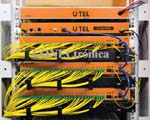
However, there is a much simpler way to monitor the quality of a fiber optic network: using a central office OTDR and an optical test access switch. This equipment can be used to automatically check the quality of the installation and to build an optical data network as the network is deployed. This approach drastically reduces costs, as the test system will automatically check 100% of each network section as it is installed. If it detects unexpected faults in the optical network, an exception will be raised, and the contractor can be dispatched back to correct the defect at no additional cost.
Using a "Head Office" OTDR not only eliminates installation quality policy costs, but also ensures you have a 100% verified low-loss optical network. This, in turn, eliminates prequalification costs!
In operation, the OTDR can automatically detect and locate defects in the optical line as they occur. Modern OTDRs can even detect the presence of ONTSs at the customer's premises by detecting minute reflections from these devices.
PON networks, in particular, face new service challenges. Up to 64 customers can be connected to each fiber optic OLT. This fiber is typically split in two stages. For example, it could be split into 8 fibers, each of which is further split into 8 individual fibers terminated at the individual customer premises.
Accidental damage to a PON can result in up to 64 customers losing communication and entertainment services simultaneously. This can place a traumatic burden on the customer service call center. Without OTDR testing capabilities at the "Head Office," each incident report can only be handled in isolation. Customers are forced to queue up to ask all the "dumb questions" necessary to generate individual incident reports. This is time-consuming, and nothing frustrates customers more than service providers who "can't even manage their call centers properly!" Without OTDR testing capabilities at the "Head Office," call center review is limited to identifying which ONTs are still online. This is a very limited use case, as the OLT software vendor cannot identify whether an OLT is powered down or physically disconnected due to a broken fiber.
Manually locating fiber optic faults is a time-consuming and laborious task that requires skilled personnel in vans, using handheld OTDRs to retest the network at individual customer premises.
Implementing a proper "Head Office" OTDR testing solution before fiber deployment is key to building long-term profitability in fiber optic access networks. These systems eliminate the installation costs associated with quality policies and are the only effective means of monitoring the optical transmission quality of individual fiber optic lines. Unfortunately, many network operators only begin to consider fiber optic line testing once the network has already been built.
Author:
By Frank Kaufhold, MD, UTEL


