According to the report, the five sectors that will generate the most business will be: construction (smart buildings), with 213 billion euros, followed by automotive (175 billion euros), utilities, with 44 billion euros, Smart Cities (21 billion euros) and industry, with 17 billion euros.
The same report, which compiles IoT studies from analysts like Pike Research and companies like Bosch, indicates that the Smart Cities concept will attract investments from diverse sectors, such as smart buildings, automobiles, and energy providers. According to the report, from 2010 to 2020, the development of these types of cities, or IoT-based projects within them, will generate an investment volume of €87 billion.
 The Cities of the Future:
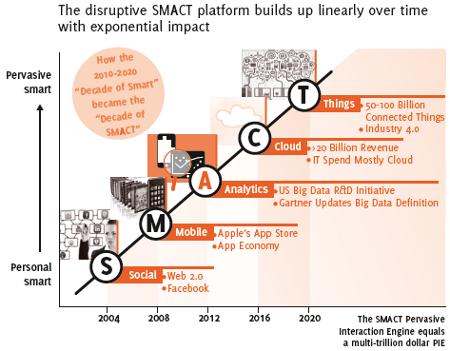
Sogeti's Innovation Institute, VINT, has focused its latest IoT report precisely on the cities of the future. The report analyzes how this concept is gaining momentum and its rapid evolution, based on five fundamental, technology-driven concepts grouped under the acronym SMACT (Social, Mobile, Analytics, Cloud, and Things).
According to the report, the rapid evolution of smart cities is driven by the fact that while half the world's population currently lives in cities, this proportion will reach 75% by 2050. Furthermore, cities currently generate 80% of CO2 emissions and 75% of energy consumption, and they also produce 80% of global economic wealth.
All of this means that smart cities are a focus of attention for governments and industry, and their evolution will depend on the current debate about the different models of approach to the concept, which Sogeti classifies into three categories: City in a Box (custom-designed cities whose plans include all the necessary infrastructure), Sensitive City (based on the use of sensors that collect the behavior and routines of the inhabitants), and City as a Platform (a set of applications and technology that collect the data and apply it to the infrastructures).
Whatever the approach model, the report identifies eleven key areas within cities for IoT deployment: health, food, traffic, logistics, administration, networks, retail, supply chains, smart meters, tourism, and e-government.
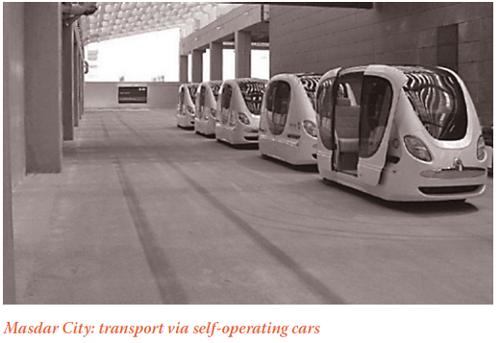
Currently, according to the Sogeti report, projects already exist that reflect the three concepts that help to understand them. For example, Masdar City is an example of a "City in a Box." Designed by British architect Norman Foster, this urban center is under construction in the Emirate of Abu Dhabi. It's a 5-square-kilometer city for 40,000 inhabitants, involving 1,500 companies, and is expected to be completed between 2020 and 2025.
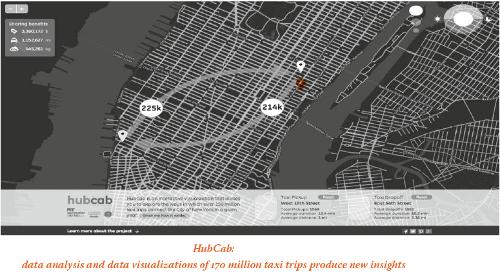 On the other hand, in New York City, there's a project called HubCab that exemplifies the concept of Sensible Cities. In this project, 13,500 taxis are equipped with technology to collect data from over 170 million trips taken annually by city residents and use this information to inform smarter decisions. The dataset includes GPS coordinates and peak demand times, as well as routes, destinations, and most frequented areas. The figures show that, without compromising passenger comfort, 40% of taxis could be shared, resulting in a CO2 reduction of 423 grams per kilometer traveled.
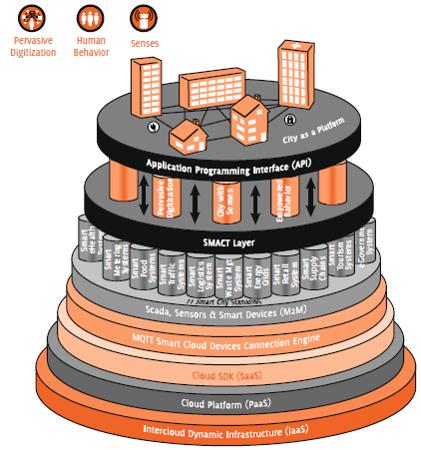 Finally, City as a Platform is the concept where the digital and physical worlds converge. Data collected through sensors on human behavior is transferred to the physical world, to infrastructure, to improve its functioning. For example, using sensors and behavioral data analysis, along with information about infrastructure, cars can move around the city autonomously, without any problems. Sensors, big data analysis, and apps will help adapt the city's physical elements to traffic flows.
According to the study, if 90% of all Americans traveled in computer-driven cars, 4.2 million accidents would be avoided, 21,900 lives would be saved, and $450 billion would be saved.