However, the OOK has almost reached its frequency limit, making it necessary to find new methods to send more data without laying more fiber optic cables. This is where coherent optics shines.
Unlike other devices that increase data frequency, such as the PAM4, the coherent optics system is equipped with digital signal processing (DSP) chips, as well as electronic dispersion compensation (EDC). The use of DSP and EDC chips allows the coherent optics system to transmit data over 1,000 km, depending on the modulation.
What is coherent optics?
Coherent optics can solve capacity problems by modulating amplitude, frequency, and polarization, allowing more information to travel through the same optical fiber.
To simplify things, imagine an ocean wave through which information can be sent. In OOK-based communication systems, we could only determine whether the wave was visible or not. Let's assume that amplitude refers to the wave's height, and that we could manipulate it. If we could distinguish four different heights, we could send much more information in the same amount of time.
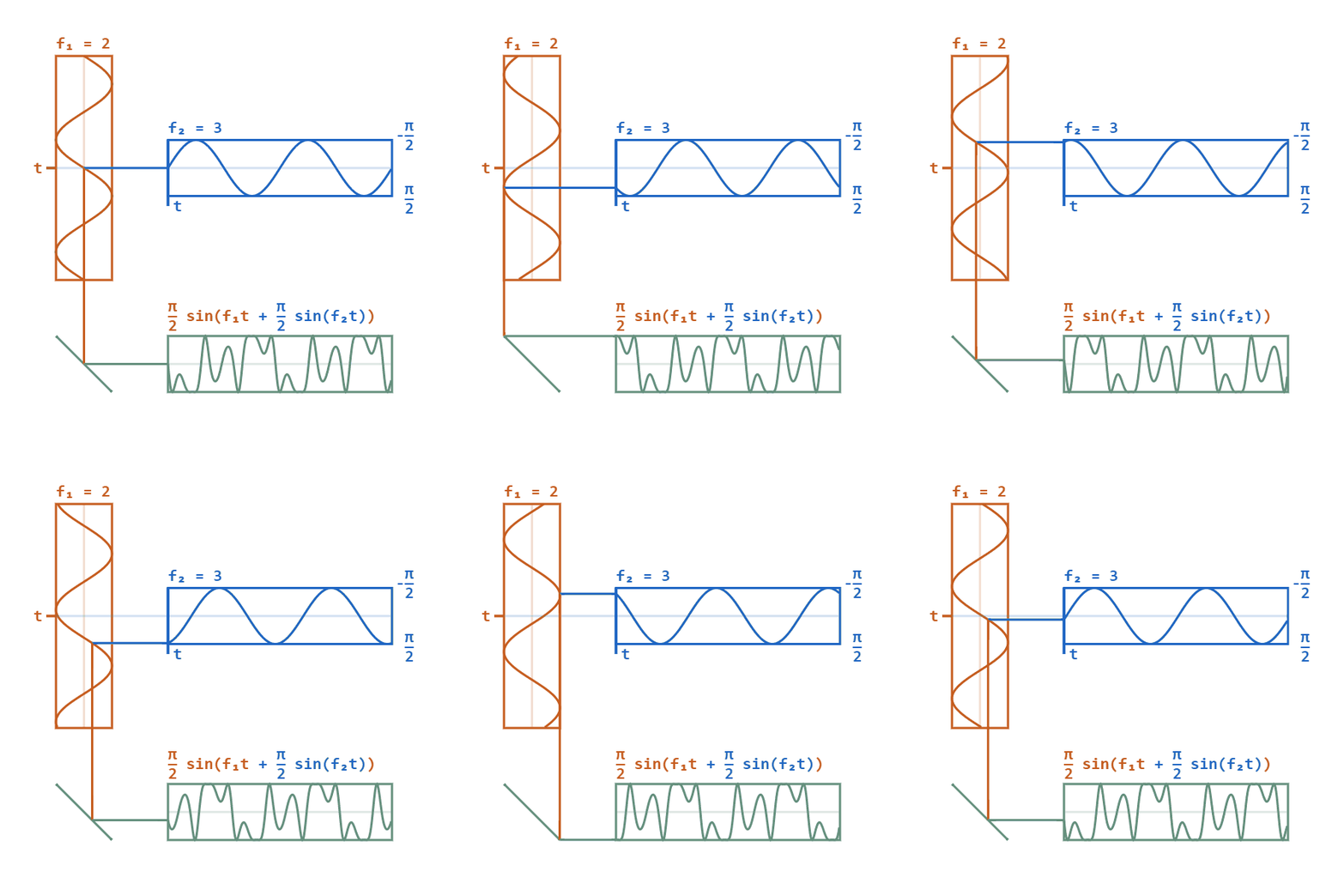
Similarly, let's imagine that frequency refers to the time when the wave crest reaches the shore, and that this occurs at a 60-second interval. By modifying this parameter and making the crests reach the shore more frequently, we could send much more data. (Figure 1)
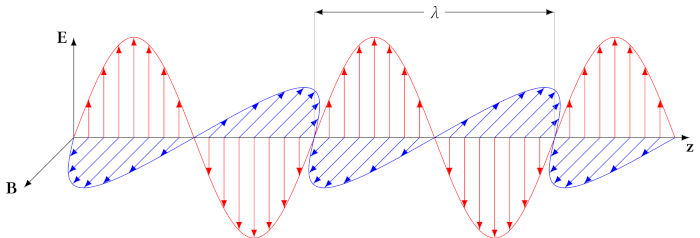 Now, imagine that the same wave could ripple not only vertically, but also horizontally, and that the two movements could be combined: you would be able to carry twice as much information. (Figure 2) This is what happens when we complicate transmission by using amplitude modulation, phase modulation, and modifying the polarization.
The combination of these three techniques simultaneously complicates the signal and achieves very high performance. For example, 400G QSFP-DD optics modulated using 16QAM and 64Gbaud are capable of 64 billion light changes per second.
DWDM Technology
Coherent optics has brought several new technologies, such as DWDM, which multiplies the capacity of a single fiber by using multiple wavelengths transmitted over it. DWDM multiplexes many signals with different wavelengths onto a single fiber. DWDM differs from the original WDM technology in that it comes in two types: fixed grid and flexible grid. Fixed grid DWDM can handle 48 channels with a 100 GHz spacing, 64 channels with a 75 GHz spacing, or 96 channels with a 50 GHz spacing. Flexible grid DWDM, on the other hand, does not have a fixed channel number, as the spacing is dynamic, allowing each channel to have a different bandwidth.
WDM technology is not new, but its application to coherent transmission is. Currently, only DWDM technology can support both OOK and coherent transmission. This, along with the technology's amplification capabilities, which make it widely applicable, is probably why it is the most popular WDM technology.
 QSFP-DD to increase capacity
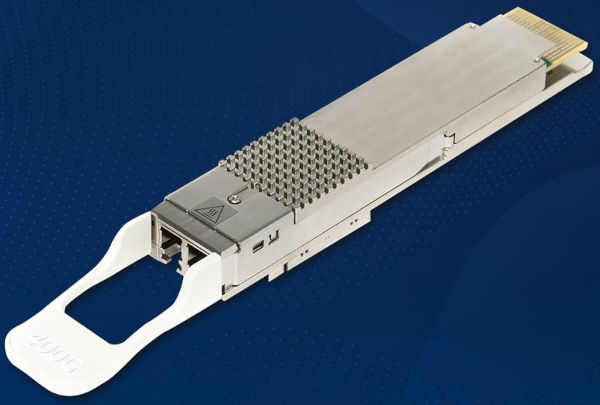
The QSFP-DD (Quad Small Form Factor Pluggable Double Density) interface differs from previous standards in that it is longer than QSFP+ and QSFP28 because it has additional rows of pins. (Figure 3) This means that, instead of the four previous data paths, QSFP-DD has eight, and each path has a throughput of 56 Gb/s, resulting in a combined total of 400G for a single transceiver. This greatly increases the amount of data the interface can handle.
QSFP-DD technology differs from its predecessors in that it has more than double the peak power consumption of QSFP28. This provides sufficient power to run a coherent DSP. This is beneficial because network planners can eliminate the need for transponders or multiplexers in their DWDM network. This technology can save companies up to 50% on initial investment and up to 90% on power consumption.