This scenario highlights the need to develop digital solutions capable of monitoring livestock and controlling grazing activity, offering reliable information for both farmers and the market.
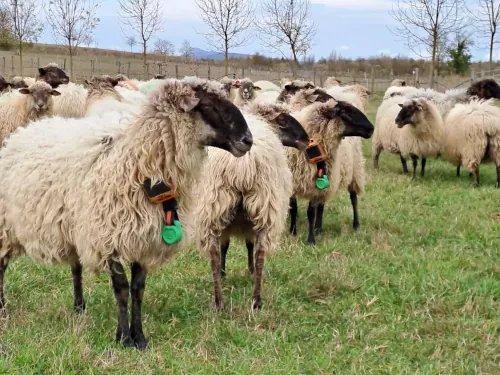
In this context, LARRESNE was created, an operational group that integrates companies, technology centers, and entities in the agri-food sector, with the aim of advancing the digitalization of the livestock sector, improving herd management, and strengthening the traceability of products from grazing land. Among its members is the technology center NEIKER, an entity dependent on the Department of Food, Rural Development, Agriculture, and Fisheries of the Basque Government, which plays a leading role in the initiative through the scientific validation and adaptation of technological solutions applied on farms. One of the solutions proposed by LARRESNE is RUMI, a smart collar that combines GPS and an accelerometer to continuously record the location and activity of animals while grazing. The device has a solar panel that provides autonomy, eliminating the need for constant battery changes and ensuring continuous and reliable animal monitoring, even on large farms or with animals grazing in remote areas.
“The device collects information that allows us to determine the animals’ activity: whether the animal is grazing, ruminating, resting, or moving around the pasture. This information is transmitted in real time to an application, making it easier for farmers to monitor each animal individually and plan their daily tasks,” explains Nerea Mandaluniz, a researcher in the Animal Production department at NEIKER.
Application in Livestock:
The tool is optimized for cattle and will be used in a dairy farm at LARRESNE. It will also be tested on Latxo sheep, adapting the technology to the specific needs of each sector. In the case of cattle, the RUMI system has already been validated by NEIKER and allows farmers to receive immediate information about estrus, calving, and potential health and welfare issues. This continuous monitoring helps farmers organize their tasks, anticipate various events, and contributes to improving animal welfare. Furthermore, it opens the possibility of certifying pasture-raised milk, providing traceability, differentiation, and transparency for the consumer.
To optimize the system, NEIKER is currently working on the Behialde cattle farm, where it is continuously analyzing the data recorded by the device to verify its accuracy in identifying activity, welfare, and reproductive parameters in real time, thus reinforcing its usefulness in the daily management of the farms. The project will also help Behialde to certify its pasture-raised milk. Meanwhile, with Latxo sheep, NEIKER is collecting data from the flock at its headquarters in Arcaute, with the aim of adapting the technology to the needs of sheep and facilitating its future integration into the certification processes for animal feed linked to the Idiazabal PDO, which protects cheese production in specific areas of the Basque Country and Navarre.
Efficient Task Organization:
The tool aims to provide benefits to the livestock sector that go beyond the early detection of alterations in animal health, welfare, or behavior. According to Mandaluniz, “the initiative focuses on supporting the sector in the efficient organization of farmers' daily tasks, improving work planning, anticipating potential events that may occur to the animals, and all of this will allow for optimized herd management.”
Furthermore, the digitalization of grazing facilitates new management models based on continuous and objective information, allowing for optimized time management, anticipation of herd needs, and adaptation of interventions based on real data. Additionally, the availability of accurate records enables traceability and product differentiation in the market, such as pasture-fed milk certification, as the system provides verifiable evidence supporting traceability and compliance with production criteria, offering clear information to consumers and facilitating monitoring by the sector.
About LARRESNE:
LARRESNE is an operational group launched in the 2024 call for proposals by the Basque Government, within the framework of the Common Agricultural Policy (CAP) Strategic Plan 2023-2027. The initiative, which will conclude at the end of this year, comprises the technology center NEIKER, the BEHI-ALDE livestock farm (leading the cattle project), the KERIXARA cheese factory (for the sheep pilot project), EITFOOD, the startup INNOGANDO (technology provider), and the IDIAZABAL PDO Regulatory Council. This group aims to integrate technology and best livestock practices to improve animal welfare, ensure sustainable practices, and generate benefits for both animals and the environment. In this way, the project addresses both the needs of livestock farmers and current societal demands regarding animal health, sustainability, and welfare, while strengthening the traceability and quality of grazing-derived products.