As AI becomes the dominant workload on mobile networks, telecom operators need more capacity, greater cost-effectiveness, and faster innovation without relying on traditional hardware upgrade cycles. Nokia's AI-RAN platform helps telecom operators leverage significantly greater uplink and downlink capacity from their existing spectrum and radio infrastructure, providing a practical pathway to AI-native networks while improving network cost-effectiveness and accelerating innovation at software speed.
“AI-RAN is the biggest innovation in radio in decades. AI-RAN makes the network intelligent, extends AI into the physical world, and enables telecom companies to get more out of their existing infrastructure, including a software upgrade path to 6G. Nokia's anyRAN software, powered by NVIDIA's Aerial AI-RAN platform, unlocks greater performance from operators' existing spectrum and can be deployed with existing Nokia or ORAN-compatible radio units.” “For operators, this translates into higher throughput, improved profitability, and faster delivery of new services,” said Justin Hotard, president and CEO of Nokia.
Built on Nokia’s AI-native network architecture and NVIDIA’s accelerated computing, Nokia’s AI-RAN platform represents a game-changer in network performance and cost-effectiveness. The AI-RAN platform has already demonstrated a spectral efficiency increase of over 20% thanks to AI-driven radio innovations. The company is on track to achieve a 50% increase in spectral efficiency by 2027 and over 100% by 2028, helping telecom providers carry significantly higher traffic volumes in dense cells while reducing cost per bit and improving the customer experience.
“Telecoms is entering the AI era: the radio access network is the next AI infrastructure,” said Jensen Huang, CEO and founder of NVIDIA. “Together with Nokia, we are bringing NVIDIA CUDA and AI to the baseband, transforming the RAN into a planetary-scale AI computer. This is a generational shift for operators: freeing up more capacity and efficiency from the current spectrum, while laying the foundation for new AI services and the 6G era.”
Through a new software subscription model, telecom providers can benefit from AI innovation, new features, and performance improvements without being tied to hardware refresh cycles. Nokia’s AI-RAN solutions will enter pilot testing later this year and be commercially available in 2027, with a roadmap that leverages NVIDIA’s programmable silicon platforms.
“Nokia’s AI-RAN launch represents a significant step in bringing AI-RAN from industry vision to commercial reality.” The addition of the new AI-RAN node, along with the AirScale capacity expansion unit and cloud-native deployment options, provides operators with practical choices for adopting AI-native networks based on their existing infrastructure and transformation goals. “By combining AI-accelerated computing with a software-defined architecture and a clear product roadmap, Nokia is helping operators free up more capacity, improve network cost-effectiveness, and accelerate the transition to an AI-native RAN,” commented Rémy Pascal, Head of Mobile Infrastructure at Omdia.
One AI-native platform. Three adoption paths.
Considering the diversity of telecom providers’ network strategies and installed RAN bases, Nokia’s AI-RAN platform is built on a common software-defined architecture, powered by Nokia’s anyRAN software and NVIDIA accelerated computing.
Supporting 4G, 5G, and future network evolution, it offers three hardware platform options, including an expansion card for existing AirScale deployments and a Cloud RAN alternative. The platform, which is fully compliant with Open RAN standards, supports open and interoperable multi-vendor deployments, while giving operators the flexibility to choose the hardware and cloud environments that best suit their needs. These hardware platform options allow telecom providers to modernize at their own pace, while preserving existing infrastructure investments, benefiting from a common software roadmap, and accelerating innovation at the speed of software. Telecom providers can adopt AI-RAN in stages using the approach that best suits their deployment strategy, capacity requirements, and installed base.
Leveraging existing investments:
For existing Nokia customers, the company is introducing the new GPU-based AirScale capacity expansion unit as the most efficient way forward. Designed for Nokia’s AirScale installed base, the solution integrates NVIDIA accelerated computing into existing network infrastructure, enabling a significant leap in capacity through a simple upgrade path, while preserving existing network investments. This approach is also supported by Marvell’s AI-accelerated commercial silicon, as part of Nokia’s broader focus on an ecosystem of software-defined AI-RAN architectures. Telecom providers can introduce advanced AI capabilities, continuously improve performance through software, and extend the value of deployed infrastructure.
Scaling native AI capability anywhere:
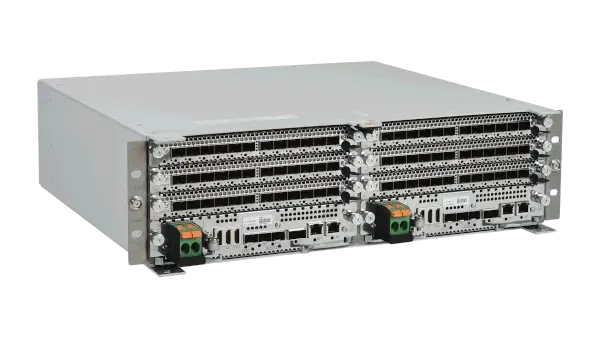
For telecom providers seeking maximum deployment flexibility and performance, Nokia is introducing the industry’s first GPU-powered standalone AI-RAN node. It brings AI-accelerated RAN performance to any network environment and supports 4G, 5G, and future 6G workloads on a common platform. The solution can be deployed as a standalone node, in cluster configurations, or alongside AirScale as a single logical base station, giving operators a highly flexible path to scale AI-native networks while preserving freedom of choice in deployment.
Enabling Cloud-Native AI-RAN:
For telecom providers adopting cloud-native architectures, Nokia is introducing GPU-powered AI-RAN COTS server solutions, delivered through ecosystem partners. These platforms enable an open and secure supply chain while supporting deployment on industry-standard accelerated computing infrastructures, combining cloud-native flexibility with the performance requirements of AI-native radio networks.
Innovation at Software Speed:
Nokia's AI-RAN marks a fundamental shift from hardware-defined radio networks to software-defined platforms that are continuously enhanced by software and AI innovation. Through Nokia's new subscription-based business model, telecom providers gain ongoing access to advanced AI algorithms, spectral efficiency improvements, network optimization capabilities, and future software-enabled AI-native features. This approach allows them to benefit from continuous innovation while maximizing the long-term return on infrastructure investments, improving total cost of ownership (TCO) and performance without incurring excessive hardware costs. Instead of waiting for the next hardware cycle, networks can continuously improve performance, efficiency, security, and resilience as new capabilities become available.
By combining AI-accelerated computing, advanced AI algorithms, and an open ecosystem approach, Nokia is helping telecom providers achieve greater capacity, improved profitability, and continuous innovation, while laying the foundation for the future evolution of networks.