 Digitalization is perhaps the field that is playing the most prominent role, and therefore driving the current Fourth Industrial Revolution in which we have been immersed since the beginning of this century. Digital solutions, which emerge almost daily thanks to the effort, investment, and innovation of the leading companies dedicated to their design and manufacture, are changing each and every aspect of society and the world as we know it.
Perhaps due to the high visibility of the immediate advantages they offer, whenever we talk about digitalization, the first image that collectively comes to mind is solutions. But for all these solutions to function correctly, there is an indispensable and crucial factor: Data Centers. Data Centers, the engine of a digitized industry. The future is digital, and data centers are at the heart of that transformation. The Internet of Things, Cloud Computing, Big Data, Smart Cities, and Industry 4.0 are concepts already familiar to everyone, especially in a business sector where up to 70% of large companies are already in at least an early stage of adopting a data center strategy. With estimates predicting more than 50 billion connected devices worldwide by 2050, the importance of this type of infrastructure will only continue to grow in the short, medium, and long term. Data centers are the places where the various information technology (IT) systems and data repositories necessary to maintain a network or computer system, information, connections, and store a company's data are housed and maintained. But if there's one industry that's taking the use of these infrastructures to a new level, it's logistics. Due to their inherent characteristics, companies in the logistics sector not only benefit from the already mentioned advantages of industrial digitalization, but they can also find alternative business avenues by utilizing space for the installation of large data centers. We will now analyze each aspect of this duality.
The core that enables digitized logistics
The supply chain, in all its phases and market niches, from distribution to packaging, transportation, and retail, is undeniably a leader in the adoption of digital solutions. Given the demands of its market—precision, delivery times, manufacturing processes, operations, etc.—the days when distribution centers were operated analogically, with pen and paper, limited by countless human errors that caused problems such as delays or cancellations, a competitive disadvantage in an increasingly globalized market, are over. Today, all these processes are fully automated and optimized thanks to digital solutions, creating an increasingly efficient, secure, and sustainable logistics chain. Solutions that are only implementable because of data centers are what allow businesses to support their information and achieve secure, continuous, and 24/7 operation. They are a vital infrastructure that powers all the systems and applications residing there, ensuring uninterrupted operation. Due to this critical nature, logistics companies are adopting different strategies for integrating data center infrastructure into their workplaces, which leads us to the second point: the creation of new business opportunities for the logistics sector. This includes the use of logistics spaces for data center infrastructure
As can be understood from the above, the advance of digitalization is causing the demand for data center infrastructure to skyrocket. In the current context, the rental of this type of space has grown by around 15%. Therefore, it is not surprising that logistics companies around the world are taking advantage of this situation by offering their facilities to other companies so they can use them, or their own data centers, to manage and store their data.
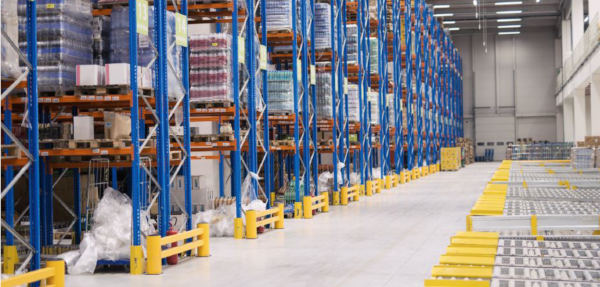 ABB, at the forefront of technology in solutions for Data Centers
However, to stand out in a world as crowded as that of data centers, and to benefit from its growth, companies that want to focus their business here must take into account the trends that are shaping the development of this type of infrastructure to make them more sustainable, efficient, effective, secure and environmentally friendly.
- Optimization of IT assets and facilities to maximize capacity and availability.
- Adoption of the use of automation tools to improve service levels, meet existing needs, with flexibility to respond to future changes in business requirements, technology and computing models.
- Leveraging proposals to optimize assets by generating operational efficiency – including hardware, software, data centers, personnel, and processes.
- Ensure constant monitoring of systems and management capacity that provide the operational knowledge to meet required availability, capacity planning and energy efficiency.
Among the companies investing the most to modernize existing data centers and ensure new ones are at the forefront of the industry's technology is ABB. ABB, a leading technology pioneer that collaborates with clients in utilities, industry, transportation, and infrastructure, has spent decades developing solutions and products to make data centers as efficient, effective, and secure as possible. Its portfolio of solutions is highlighted above all by its holistic ABB Ability™ Energy and Asset Manager for Data Centers. The Swiss multinational understands that the success of any business is closely tied to the performance of telecommunications services and data availability.
To ensure access to all types of tools and processes, it is absolutely essential that your operations are efficient at all times. ABB Ability™ Energy and Asset Manager takes data centers into the future with capabilities such as:
- Real-time management of the electrical system on a monitoring panel of your facilities.
- Visualization of the behavior of the power distribution system, ensuring continuity of service and availability of the installation's power supply.
- Predictive analytics with information to optimize your critical assets.
ABB Ability™ Energy and Asset Manager for Data Centers is the perfect solution for logistics centers to complete their digitalization and take full advantage of the benefits it brings.