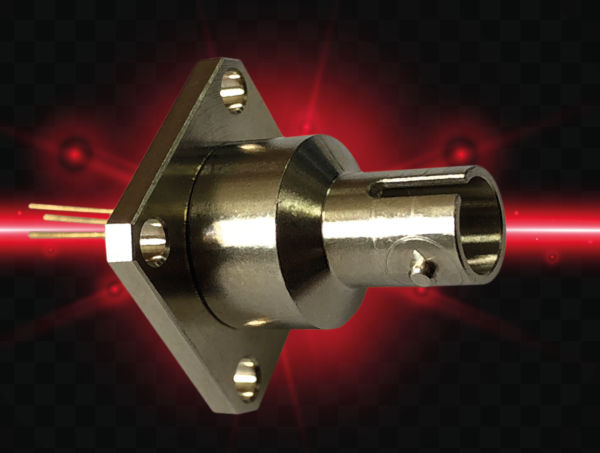
The new transmitter is optimized for use with glass fiber optic systems and, thanks to higher transmission power (up to 30% higher than the previous generation of the device) and greater consistency from device to device, offers significantly superior performance, allowing data to be sent over greater distances, up to one kilometer further depending on the type and size of the fiber.
An additional benefit of the FDE854LBF's higher launch power is its ability to operate at up to 30% lower currents for applications that don't require the extra launch power. In a large installation involving 20,000 to 30,000 channels, for example, the resulting power savings can be several kilowatts, helping the application meet environmental criteria while reducing power supply requirements and heat generation. This feature is also very useful for applications powered by batteries, renewable energy sources, or those in energy-constrained environments. The reduced heat generation can be beneficial in designs where heat buildup might be problematic, such as wrapped applications, applications with limited space, or where sensitive components are used on the same PCB. Power-saving operation also extends the system's lifespan.
The FDE854LBF can be supplied pre-assembled in OMC's full range of industrial fiber optic device receptacles to deliver complete transmitter modules. Combined with the company's patented ACA™ (Active Component Alignment) technology, this allows for the delivery of transmitters with exceptional consistency and long-term reliability.
The FDE854LBF has been incorporated into OMC's continuous product improvement program. The company invests heavily in R&D, enabling it to remain a leading manufacturer in the industrial fiber optic market.
William Heath, Commercial Director at OMC, comments: “It is often overlooked that when you talk about an optical emitter that can offer additional intensity, there are additional benefits for other applications that do not require that: the device also offers energy savings and reduces heat generation, and there may be applications where upgrading to the next-generation device is appropriate solely for energy-saving reasons.”.