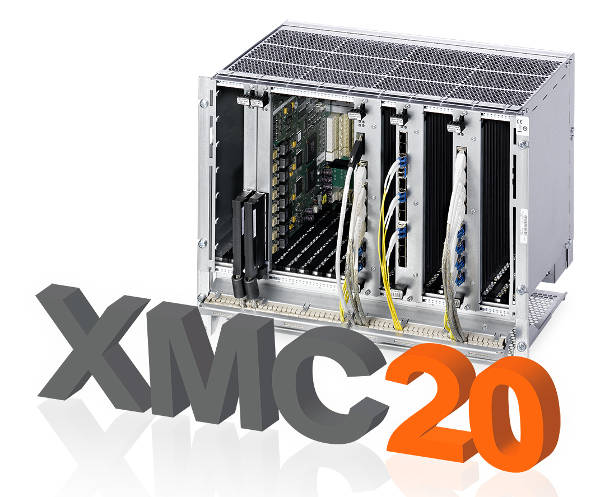
KEYMILE's XMC20 hybrid multi-access transport and service platform, featuring a new encryption card, is the only way to make communications networks exceptionally secure in the long term without compromising availability. The card encrypts all network traffic at Layer 2, utilizes a hardware-based quantum random number generator, and is redundant in design.
At this year's CeBIT, from March 14-18, 2016, in Hanover, KEYMILE will be exhibiting at the Bitkom hub in Hall 4, Stand B72. KEYMILE will be showcasing its XMC20 hybrid multi-access transport and service platform, including the new encryption card for secure communications. This encryption card makes KEYMILE the first vendor to offer a cost-effective, easy-to-deploy solution for end-to-end encryption in mission-critical networks.
The card encrypts data used to control and monitor networks belonging to energy utilities, railway companies, gas and oil pipelines, local authorities, and for air traffic control and defense. The solution is tailored to the needs of these sectors, is easy to manage, highly efficient, and can be integrated into an existing network without any infrastructure changes.
Fail-safe operation plays a key role in mission-critical networks, and like the board, the card features a redundant design. Two separate encryption units are available that utilize a hardware-based quantum random number generator (QRNG). It leverages the quantum states of coincident photons to generate truly random numbers and high-security keys. These keys are significantly more secure than previous keys and can also provide maximum security for mission-critical networks in the future. Furthermore, an ID Quantique (IDQ) quantum key distribution (QKD) server can be added to the encryption solution. IDQ, headquartered in Switzerland, is a global provider of quantum cryptography solutions. The optional QKD server guarantees real, long-term protection, even in the age of quantum computers.
The encryption card will be available starting this summer.
Load balancers with natively integrated Web Application Firewall
KEMP Technologies has announced that its LoadMaster load balancers will natively integrate Web Application Firewall (WAF) services. This will enable secure web application development, preventing Layer 7 attacks, while maintaining core load balancing services.