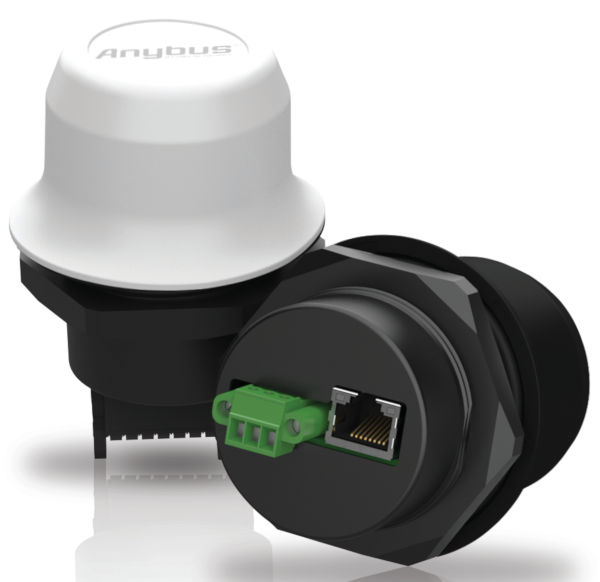
Wireless Bolt IoT includes all the necessary components for static or mobile assets to communicate via a cellular connection. It comes in the unique Bolt format for mounting on the asset with an M50 screw and features a robust IP66/IP67 enclosure with UL NEMA 4X certification for outdoor mounting, an integrated cellular antenna with a modem, a microcontroller, and a firewall.
The built-in Ethernet port is used to connect to the corresponding Ethernet port on the device. Configuration is performed via the included web server or by sending REST commands through the Ethernet port. Wireless Bolt IoT then transparently transfers data between the device and the cellular internet connection using TCP/UDP-based protocols. It supports Power over Ethernet (PoE), but power can also be supplied via separate terminals.
In the cellular link, Wireless Bolt IoT establishes communication using the latest LTE NB-IoT and CAT standards, with 2G (GPRS/EDGE) backup, enabling reliable deployment virtually anywhere in the world. These new LTE standards are known as LP-WAN (Low Power Wide Area Network) technologies, suitable for new IoT applications that typically require low power consumption, reduced bandwidth (25-300 Kbit/s), good geographic coverage, and low connectivity costs per asset. A built-in SIM card slot enables connection to any operator's network worldwide. Private cellular APN networks also allow for private enterprise networks for the assets
Wireless Bolt IoT is ideally suited for battery-powered assets not connected to the electrical grid, such as electronic road signs, traffic monitoring stations, and water level monitoring stations. Thanks to its "low-power mode," Wireless Bolt IoT enters a low-power state when no data is being transmitted, meaning the battery/power supply size can be minimized.