 And Weiser's visions have come true; we are living precisely in such a world, as cameras, mobile phones, household appliances, and cars are all controlled by computers. Miniature computers (so-called embedded systems) are what make this magic possible. However, true progress will only be achieved when these miniature computers no longer operate independently but are able to exchange information on a network. This will be possible thanks to the advances in networking technology over the last ten years: driven by the enormous consumer market, we have high-performance, affordable technical devices available for many application areas. In response to this situation, automation technology is also beginning to adopt these ideas.
Example of a machine failure
When a machine fails in a manufacturing plant, the entire production line stops.
The machine sends a message to its operator's smartphone via Bluetooth. The operator goes to the machine, runs a few tests, and identifies the problem as a motor. Using the smartphone, the operator issues a priority maintenance and repair order, which is received at the company's maintenance center. There, the machine's fault is initially checked through online diagnostics. The technician is then dispatched (via the smartphone) to perform the repair. The technician gets into their vehicle, enters the location data into the vehicle's navigation system, and the GPS guides them through the company's extensive facilities to the correct building. Once there, the indoor positioning system takes over and interacts with the operator's smartphone to guide them to the faulty machine.
 Here, the technician wirelessly connects their tablet to the machine's control system and performs some system tests. They confirm that a motor needs replacing, take a picture of the nameplate with their smartphone, and send the information to the central spare parts warehouse, where the correct part is identified and immediately dispatched. The maintenance technician can track the spare part's journey on their tablet and retrieve it at the entrance to perform the repair work on the machine. Again, using their smartphone, they verify the part number and version via the RFID tag to avoid problems in the complex interaction of all the components. They then start the system via their tablet and verify its correct operation on the large screen. After confirming that the repair is successful, they complete the maintenance order via their smartphone and initiate a new order for the component from the warehouse, also entering the data for cost center accounting.
From ideas to reality
From a technical standpoint, this is already possible, although companies are still far from achieving this. However, the trend is shifting in this direction, albeit along a different path than in the consumer goods sector. Industrial companies expect installed devices and equipment to demonstrate a high degree of maturity and extremely high levels of reliability. Industrial users also want to be certain that a replacement smartphone will be available in ten years without being (as is currently the norm) replaced after nine months by another model that may be significantly different from its predecessor. But what is useful in the consumer goods sector is also relevant in the industrial sphere. In 2004, a group of representatives from the industrial and scientific communities was formed to discuss the effects and application areas of smart information and communication technologies. This led to the idea of a SmartFactory, which materialized in 2005 as a research and demonstration center located in Kaiserslautern.
 The SmartFactory initiative
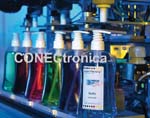
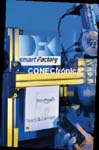
The core element of SmartFactory is a test and demonstration facility where a liquid soap production process has been implemented using typical industry components. The production line handles soap pretreatment, followed by coloring, container filling, and labeling.
The production line is managed by the “Technology Initiative SmartFactory KL eV” association, which currently comprises 15 leading members from industry and science. The initiative's primary objective is to create a manufacturer-independent test and demonstration facility where the potential of new technologies for factory operations can be researched and developed. In this context, the goal is not to replace people with automation technology, but rather to provide the best possible support for workers through ubiquitous computing.
This real and typical industrial production process forms the basis on which various research disciplines can carry out their work in the direction of the "factory of the future".
Digital product memories: To control the filling process, an RFID (radio frequency identification) chip is placed on each bottle and contains all the important parameters of the order and the production process. In this way, each product has its own memory. In the future, "smart" products will influence their environment through M2M (machine-to-machine) communication and enable more efficient manufacturing processes.
 Wireless communication systems also improve the flexibility and agility of factories. Installation and modification work is reduced when conventional wired communication systems can be scaled down. However, in an industrial environment, the demands placed on a wireless network are much greater than in other areas: reliability and security are paramount, making thorough planning and control of radio bands essential.
In the case of wired connections, the location of a device is implicitly known.
When many wired connections are eliminated, the issue of machine location becomes more critical. Especially when using mobile operating systems, the context of the operational situation plays a significant role: some plant or system functions can only be activated when the operator is near the system. At the SmartFactory, three different real-time indoor location and tracking systems have been installed. These can help maintenance technicians locate faulty devices or provide operators with important data for specific tasks, depending on the device's location on the production line or within the system.
Self-configurable automation systems are a further step towards flexible and adaptable factories. To a certain extent, "plug and play" mechanisms can also be used in factories.
The prerequisites for this are the emergence of new standards and abstract models of the installed components.
 Becoming intelligent
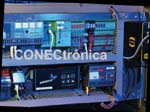
With the help of current embedded systems technologies, many simple field devices can become “smart objects” and offer their functions within the automation network in a way similar to web servers. This technically feasible homogeneity of information and functions from the field level to the planning level will bring about changes in enterprise IT structures: the strictly hierarchical automation pyramid will evolve into a converged network, with access to the various levels of control and planning. Similar to the “Internet of Things,” where more and more physical objects in the real world are identified and paired with their virtual representation in the IT world, a picture of an increasingly networked and integrated “factory of objects” is already beginning to emerge.
In the future, IT security will be of greater importance than ever before, to protect data security and the integrity of IT and production systems against both internal and external threats.
Author:
Detlef Zühlke, Professor and PhD in Engineering, Scientific Director, German Research Center for Artificial Intelligence DFKI GmbH, Innovative Factory Systems, Kaiserslautern.