Protecting an airport is highly complex, as it's impossible to disrupt air traffic or interfere with aircraft equipment. Indra's system's ability to modulate the response is therefore crucial. It can also be integrated with air traffic control systems to cross-reference information and immediately detect any unauthorized flying object.
However, the risk affects many other areas and types of facilities. Industrial plants, nuclear power plants, infrastructure, government buildings, prisons, sports stadiums, or any venue hosting a public event can face the same problem.
Developing an effective solution requires in-depth knowledge in various areas: radar technology, electronic warfare, communications, and command and control, among others. Mastering these areas is essential to providing each client with the 'shield' they need, as no two areas requiring protection are alike.
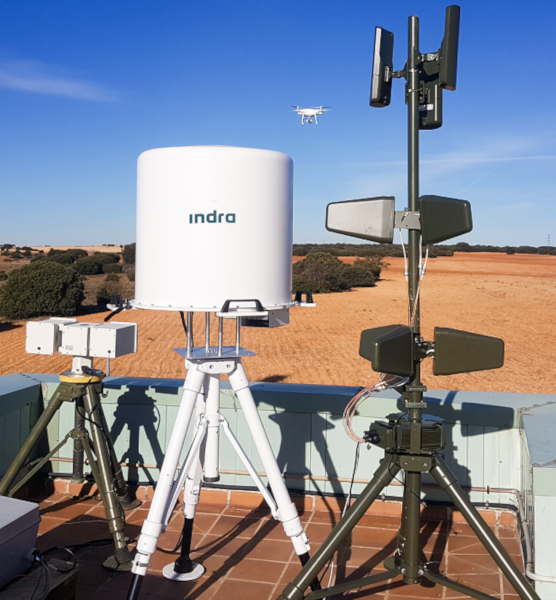
Indra's ARMS system is designed with flexibility and adaptability in its DNA. It features a range of possible detection sensors, including radars, infrared cameras, and radio frequency sensors with diverse characteristics and capabilities, which perform detection and identification tasks.
The operator oversees the entire operation from their control station and will manage—or allow the system to react automatically—the jamming equipment, which cuts off communication with the pilot and overloads the aircraft's navigation systems, effectively blinding it and preventing it from completing its mission. They can also employ deception or spoofing techniques to distort the aircraft's autoguidance systems and steer it toward a desired safe location.
Indra's solution employs the most effective soft-killing methods to protect civilian environments and neutralize any drone model available on the market. It can also be adapted to incorporate hard-killing elements, which bring down the aircraft, although these methods are more typical of the military sector, where it is necessary to counter more advanced and potentially more dangerous drones.