Axions are predicted to convert into photons in the presence of a strong magnetic field. Therefore, the Korean team has built a new laboratory that uses super-powerful magnets to try to recreate this precise scenario. The phenomenon is imaged using a haloscope, which in turn uses a fast data acquisition (DAQ) system to capture, analyze, and store the results. 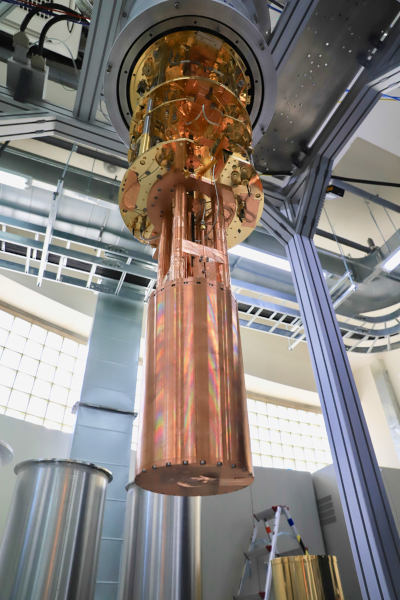 At CAPP, the IBS's Center for Axion and Precision Physics Research, the plan is to conduct various experiments over the next decade to confirm the existence of axions and, ultimately, determine their properties. The first experimental results are already in. The CAPP team searched for axions with a mass between 6.62 and 6.82 μeV, corresponding to a frequency between 1.6 and 1.65 GHz. The search was conducted using the CAPP apparatus shown in Figure 1. The researchers demonstrated experimentally, with a 90% confidence level—the most sensitive result in this mass range to date—that there is no axion dark matter or axion-like particle within this range.
A key component of the laboratory's newer data acquisition system is a Spectrum Instrumentation PCIe digitizer card, model M4i.4470-x8. The scientists chose this unit because it can sample incoming signals on two channels simultaneously, at rates up to 180 MS/s and with a vertical resolution of 16 bits. Furthermore, the collected data can be transmitted to a computer via the PCIe bus at a transfer rate exceeding 3 GB/s. This means that all data can be acquired and sent to the central computer without any loss. Figure 2 shows a block diagram of the typical experimental setup.
Dr. ByeongRok Ko, a researcher at CAPP, explains: “Our goal was to improve the figure of merit in axion haloscope searches, i.e., the scan speed. First, we achieved a practical DAQ efficiency of over 99% for a single channel, where the DAQ process includes online Fast Fourier Transforms (FFTs). Then, using an IQ mixer and two parallel DAQ channels, we implemented software-based image rejection without sacrificing DAQ efficiency. This is more than double the efficiency of previous setups, which relied on a conventional spectrum analyzer.”
Image rejection is important because axion haloscope searches typically employ a heterodyne receiver that introduces unwanted background noise. Therefore, image rejection is essential for maintaining high scan speeds. In this case, the fast DAQ system provides image rejection of approximately 35 dB across a frequency range of 600 to 2200 MHz. "There are two key features of the Spectrum digitizer card that enable this, which is why we chose it," says Dr. ByeongRok Ko. "First, the integrated 2 GSamples memory, which can be used as a buffer, and second, a FIFO transfer mode via the PCI Express x8 Gen2 interface, which allows continuous data flow at speeds exceeding 3 GB/s."
Another challenge for the DAQ system is data post-processing. This includes unit conversion, online FFT, averaging, and writing the power spectra to disk storage. Online FFT dominates post-processing time. In most cases, axion haloscope experiments require data at different resonant frequencies because the axion mass is unknown. Furthermore, for various reasons, the data at each resonant frequency may be divided into several subsets with different timestamps. In these cases, post-processing can be performed in parallel while acquiring the next set of data. Fortunately, 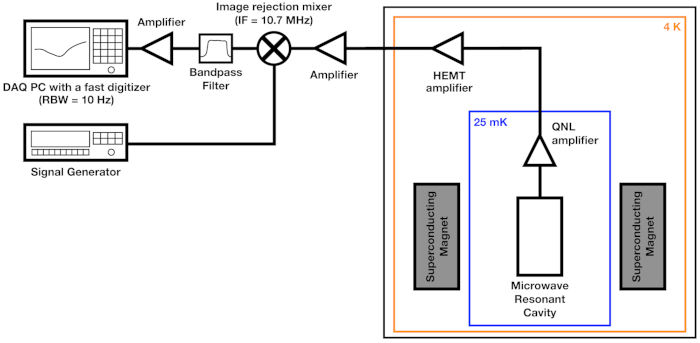 Spectrum Instrumentation digitizers come with drivers that support a wide range of programming languages, one of which is Python. Python's multiprocessing module is ideal for this type of application and was subsequently used to demonstrate the scenario described above.
Yannis K. Semertzidis, director of CAPP and also a professor at KAIST (Korea Advanced Institute of Science and Technology), explains: "This experiment isn't a 100-meter sprint, but the first sprint of a marathon. We learned by doing and tested new concepts that will be used in higher-level systems in the future." The team demonstrated that it can achieve much greater sensitivity than all previous experiments in the target frequency range. The plan now is to expand their experiments with larger systems.
To accelerate the search process, the CAPP team is now conducting multiple experiments using various system designs. 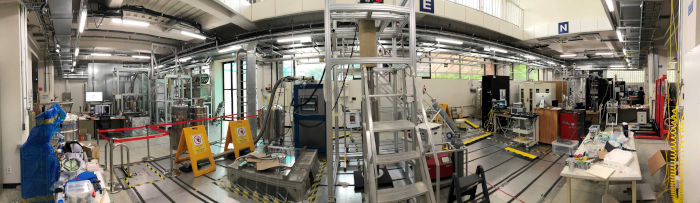 This allows them to target different axion mass ranges in parallel. Figure 3 shows an overview of the CAPP experiment room with its multiple experimental setups. Interested readers can follow the experimental progress on the CAPP website at https://capp.ibs.re.kr/html/capp_en/.
A research paper discussing the development of the DAQ system, along with the various acquisition modes and test results, is available here.