
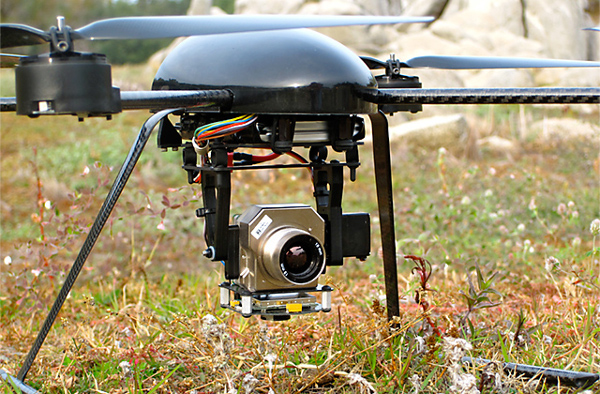
 We know that the availability of increasingly powerful and less expensive integrated circuits with each generation, thanks to Moore's Law, is a major factor contributing to the development of affordable and flexible robotics. But as these advances allow machines to become smaller, higher-performing, more agile, and more mobile, hardware such as wiring and connectors must meet specifications precisely.
Size, Weight, and Other Aspects:
Nano-D connectors are widely used by today's agile robots. Manufacturers can offer versatile, small, and lightweight products that provide good safety and robustness. The narrow 0.64 mm pin pitch and various configurations allow engineers to choose multi-way connectors with just a few pins to more than 60, in low-profile, single-row or narrow, double-row formats. A wide variety of connectors are also typically available for board mounting, flexible circuit mounting, panel mounting, wire-to-board, wire-to-wire, and other mounting options such as vertical or straight ends, surface mounting, or push-in soldering.
Although numerous configuration options exist, equipment designers must consider how the robot's environment and normal operation can place greater demands on the connectors. Temperature extremes or rapid hot/cold cycling may occur. Mobile robots can be subjected to severe mechanical shocks and vibrations, and require high resistance to corrosion or mild oxidation, which can be critical if the robot is exposed to corrosive chemicals or if a high level of reliability is required, such as in medical equipment.
In addition to considering the effects of these influences, engineers must also keep in mind that ordering off-the-shelf components is generally more economical and has a shorter lead time than developing a specification for a special or custom connector. It is important to examine all aspects of the connector in detail, such as the pin-to-socket design and the quality of the nickel or gold plating on the contacts, thus ensuring that the chosen standard components offer long-term performance and reliability.
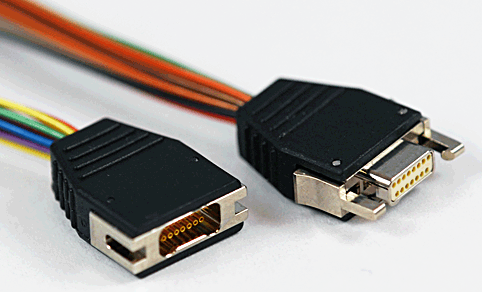
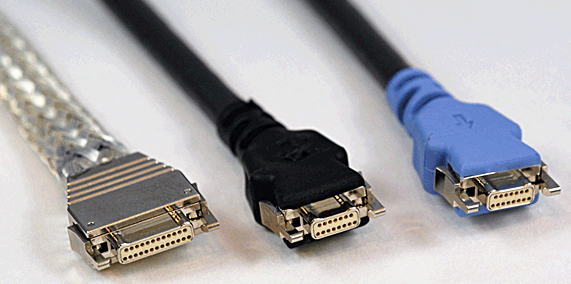 Standard High-Performance Design.
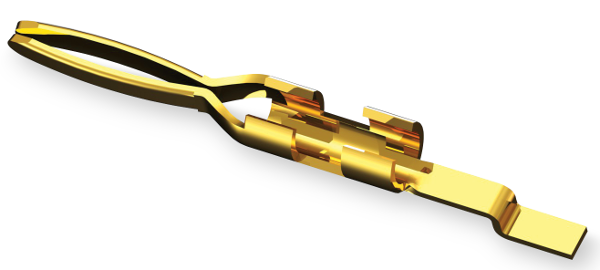
As an example, the pins of Omnetics Nano-D/Bi-Lobe® connectors are made of 17,200 ksi beryllium copper and tempered to withstand continuous elastic force. Furthermore, the spring pin is tuned and molded to maintain four continuous contact points. This design, which includes an open terminal, is extremely robust and durable, while also allowing for greater compression and expansion margins. This ensures continuous electrical contact under conditions that might result in intermittent operation in other designs. In high-vibration environments, some connectors allow an open-circuit time of 10 ns, whereas the spring pin design of the Nano-D/Bi-Lobe connectors has shown zero opening in vibration testing.
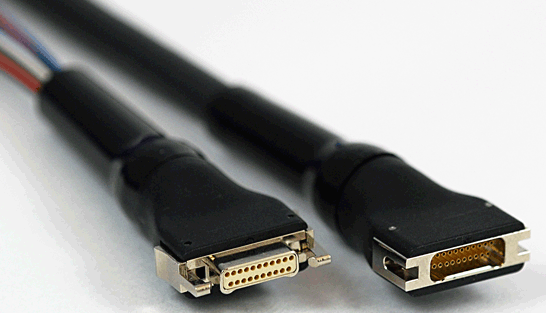 The copper alloy sockets expand when the connector is hot and are designed to increase contact pressure; when the connector cools, the socket contracts and the spring ends close to prevent excessive stress on the spring and thus extend the connector's lifespan. The open pin spring exceeds 2,000 connection/disconnection cycles in endurance tests.
To ensure a long service life, the contacts are gold-plated after molding, as specified by ASTM B488 Type II for electroplating gold coatings. Each surface has 50 microinches of nickel and 50 microinches of gold, verified by X-ray fluorescence (XRF) measurements and tested for non-porous surfaces.
Another important factor is the robustness of the connector housing. Low-cost connectors with plastic housings can allow new equipment to be marketed at a more competitive price, which is important in the robotics field given its growing market presence. On the other hand, in some environments, connectors with plastic housings can become brittle and difficult to reseal after reconnection. Omnetics offers a variety of metal housings, including lightweight, metallized aluminum or anodized options, as well as stainless steel or titanium housings. These are particularly suitable for demanding environments, such as aerial robots or surgical equipment, and can withstand much higher levels of shock and vibration than heavier, larger connectors.
 The high retention force during connection is another strength of standard Nano-D connectors, largely due to the integrated screw pins. Omnetics recently announced a new locking version of its Nano-D/Bi-Lobe connectors, enabling quick, tool-free assembly. These connectors exceed the stringent shock and vibration requirements of MIL-DTL32139, ensuring their durability in virtually any type of robot, including unmanned aerial and ground vehicles.
Advances into New Environments:
While a wide range of robust, standard connectors is available, robotics is rapidly evolving and moving into new segments, so some applications may require specialized connectors. One example is security-oriented robotics, which may need special encapsulation and wiring for surveillance to prevent deliberate tampering or severing of connections. In these cases, Omnetics can work with customer engineering teams to help define connector requirements and quickly provide an appropriate solution.
Author: Bob Stanton, Chief Technology Officer at Omnetics Connector Corporation