

These vehicles control numerous subsystems that depend on the information they transmit to each other to achieve high levels of automation, interacting with the physical world through various sensors and actuators.
Initially, these subsystems used function-optimized communication technologies, known as domain-specific hardware architectures. This approach required multiple application-specific buses to transfer data between different domains, necessitating the use of gateway computers to translate information between the various hardware architectures. With up to 20 network standards to manage, automakers sought a simpler solution with a common platform for their communications infrastructure.
Transition to Ethernet-Based Zone Architectures:
The automotive industry is moving from legacy network architectures to a single Ethernet-based backbone. This shift allows vehicles to be divided into "zones" that can more easily interact with a centralized computing platform via a ubiquitous IP-based Ethernet network. In collaboration with the IEEE, automakers helped define a physical layer that requires only a single pair of balanced cables, instead of the two or four pairs typically found in Ethernet installations. Figure 1 illustrates the transition from domain-specific hardware architectures to a zone architecture with a centralized computing platform.
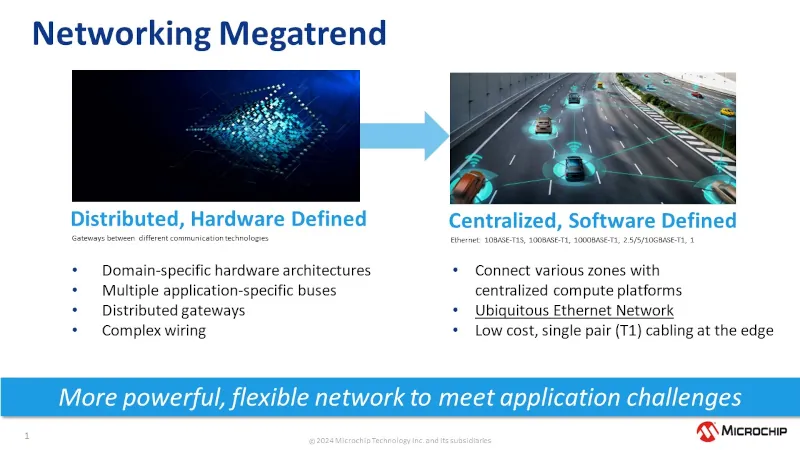
Figure 1: Megatrend in networks, from a domain-specific architecture to a zonal architecture
This transition to Ethernet-based zonal architectures represents a significant advancement in automotive design and functionality. By adopting a single communication technology, automakers can simplify the vehicle's internal network, reducing the complexity and cost associated with maintaining multiple communication standards. This streamlined approach not only improves vehicle performance but also paves the way for more advanced features and capabilities.
Advantages of a Common Data Environment:
A unified data environment allows vehicle systems and functions to be defined using software, reducing latency and complexity. With increasing security requirements, standardized mechanisms can authenticate network participants and encrypt information as needed. Previous communication buses lacked security features, requiring diverse approaches to mitigate security threats.
The advantages of a common data environment extend beyond security and efficiency. By standardizing communication protocols within the vehicle, automakers can more easily integrate new technologies and features. This flexibility is crucial as the automotive industry continues to evolve, with advancements in autonomous driving, electric vehicles (EVs), and connected car technologies. A common data environment ensures that these innovations can be seamlessly incorporated into the vehicle architecture, providing a more cohesive and integrated driving experience.
Simplified Software Updates
: Using a common network simplifies software updates, allowing designers to implement updates using a single approach instead of defining methods for different data links. The ability to simplify software updates represents a game-changer for the automotive industry. As vehicles become more software-dependent, the need for regular updates and enhancements grows ever more critical. A common network infrastructure enables over-the-air (OTA) updates, allowing automakers to implement new features, fix bugs, and improve performance without requiring a visit to the dealership. This not only enhances the customer experience but also reduces maintenance costs and downtime.
Ethernet 10BASE-T1S: Bridging the Digital and Physical Worlds
Ethernet, a concept that has existed for 50 years, with IEEE® specifications published 40 years ago, has been primarily used to transfer large amounts of data between computers. However, the interface between the digital world of computing and the physical world of automobiles remained hardware-dependent and domain-specific. To address this issue, 10BASE-T1S Ethernet was developed.
Ethernet 10BASE-T1S is a multipoint bus that uses a single pair of wires as its backbone. Sensors and actuators connect directly to this wire, eliminating the need for Ethernet switches to connect multiple devices. As data is received and needs to be sent to higher-speed interconnects, a simple switch with one 10BASE-T1S port and additional higher-speed ports is sufficient. No special translation gateways are required, as all devices on an Ethernet network use the same format for Ethernet frames.
The development of 10BASE-T1S Ethernet marks a significant milestone in the evolution of automotive networks. By providing a standardized and efficient way to connect sensors and actuators, 10BASE-T1S Ethernet bridges the gap between the digital and physical worlds. This technology enables real-time data processing and communication, allowing the vehicle to respond more quickly and accurately to changing conditions. 10BASE-T1S Ethernet ensures that vehicle systems work seamlessly together. Figure 2 illustrates how this concept works.
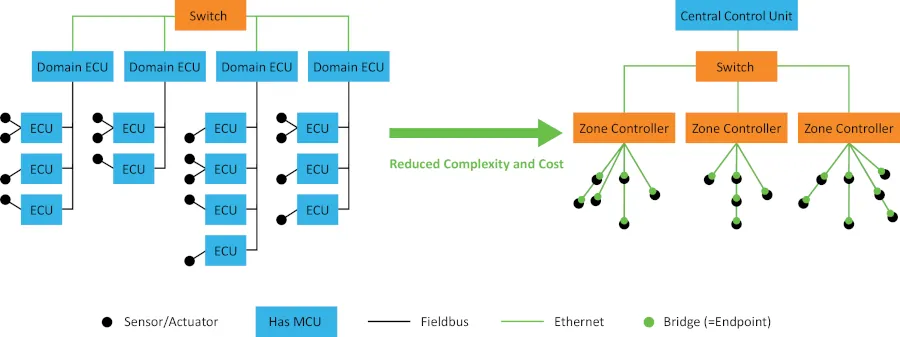
Figure2: Zonal architectures versus domain architectures
Real-World Application: Demonstration
To showcase the practical application of 10BASE-T1S Ethernet, Microchip Technology has developed a demonstration illustrating how this technology can be used to connect various sensors and actuators within a vehicle. The demonstration includes pressure, proximity, light, and other sensors that capture real-world data, which is then processed by a centralized computing platform. The processed data is used to control motors, fans, lights, and displays, which in turn interact with the physical world. A video of the demonstration is available on YouTube at https://youtu.be/nD1c3eLYp7M. Figure 3 shows the demonstrator.
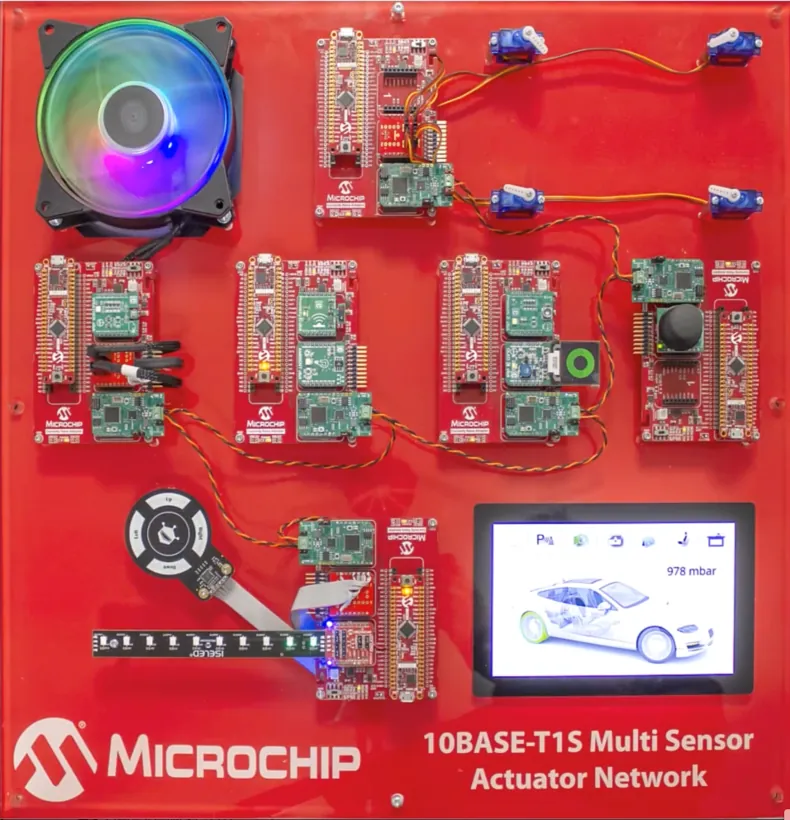
Figure 3: Multiple sensor and actuator demonstrator
This configuration not only highlights the versatility of 10BASE-T1S Ethernet but also underscores its potential to simplify the design and implementation of vehicle communication systems. By using a single multipoint bus that operates over a single pair of wires, 10BASE-T1S Ethernet eliminates the need for Ethernet switches to connect a multitude of sensors and actuators. As data flows across the network, a simple switch with one 10BASE-T1S port can interface with higher-speed connections while maintaining consistent Ethernet frame formatting throughout the system.
Monumental advantages for car manufacturers
Using a single protocol for most functions offers significant advantages to automakers, who must be compatible with multiple application-specific standards. Each year, improvements are introduced to advanced driver assistance systems (ADAS), often requiring new cameras, radar, ultrasonic sensors, and lidar in the future, as well as updates to infotainment and navigation systems. Other parts of the car are improved gradually, sometimes with just new software features.
Modern vehicles can have 40 different wiring harnesses, dozens or even hundreds of electronic control units (ECUs), and miles of cables weighing up to 113 kg. The diverse wiring required for different applications also presents electromagnetic compatibility (EMC) challenges, as each application has unique requirements.
Switching to a single protocol simplifies the vehicle's internal architecture, reducing the number of wiring harnesses and ECUs required. This not only reduces weight and complexity but also improves reliability and ease of maintenance. With fewer components to manage, automakers can focus on enhancing vehicle performance and features, delivering a better overall driving experience.
Meeting Future Demands
To meet the demands of future vehicles, which will soon employ several hundred million lines of code compared to the current 100 million, the industry is moving to a zonal electronics/electrical (E/E) architecture based on Ethernet. This architecture groups sensors into a single link from the zonal gateway to a backbone network and the central computing platform.
The transition to a zonal Ethernet-based E/E architecture is essential to support the increasing complexity of modern vehicles. As the number of sensors, actuators, and electronic systems continues to grow, a scalable and efficient network infrastructure becomes imperative. Ethernet provides the bandwidth and flexibility needed to manage the massive amounts of data generated by these systems, ensuring smooth and efficient vehicle operation.
As the industry continues to evolve, the adoption of Ethernet-based architectures will play a crucial role in shaping the future of automotive technology, ensuring that vehicles remain connected, efficient, and innovative. What began as a concept for a unified vehicle communications architecture is on the verge of becoming a reality. Some vehicles on the road today already use Ethernet for their computing architecture, and models with the new zonal architecture, which extends to the physical-digital interface, will soon enter production. This approach not only simplifies vehicle design but also opens the door to new possibilities for software-driven innovation, as functions previously defined by hardware can now be implemented and updated through software.
Beyond cars: the widespread adoption of Ethernet
The advantages of Ethernet are not limited to the automotive industry. Industrial applications are also beginning to adopt this technology, driven by the need for more efficient and scalable communication solutions. As Ethernet gains traction in sectors beyond automotive, economies of scale will help reduce costs, making it more accessible and attractive for a wider range of applications. Furthermore, as knowledge of how to structure and implement Ethernet-based systems expands, it will become easier to develop and deploy these systems across diverse industries.
In essence, the adoption of Ethernet, and specifically 10BASE-T1S Ethernet, is a fundamental step toward bridging the gap between the virtual and real worlds in automotive technology. This technology not only enables a future where vehicles are smarter, safer, and more connected than ever before, but also lays the foundation for broader innovation across multiple fields.
Ethernet's journey from computer applications to the automotive industry is a testament to the power of standardization and the potential of cross-industry collaboration to drive technological progress. As the automotive industry continues to evolve, Ethernet will play a pivotal role in shaping the vehicles of tomorrow, ushering in a new era of mobility defined by efficiency, safety, and connectivity.
Author: Microchip Technology Automotive Infotainment Systems Business Unit






