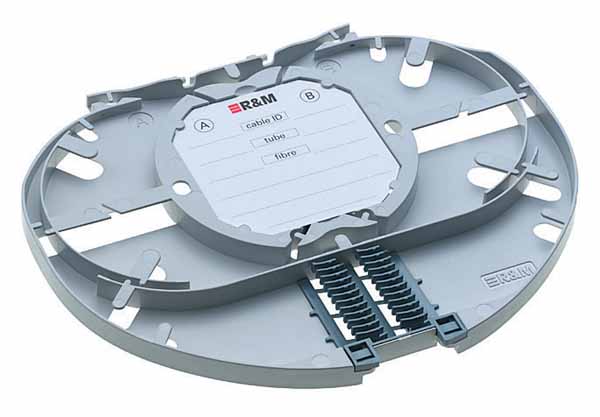
The SCM family is based on a small number of components that can be assembled without tools using a quick-assembly technique. An expandable module carrier with integrated fiber optic conduits acts as the backbone. Trays are inserted into this carrier to perform splicing, splitting, and branching functions as needed. This allows network operators to flexibly and quickly expand their FTTH infrastructure or adapt it to their specific requirements.
It's possible to move from one tray to another within the module, just like in a card file. Each tray can be assigned to a street, for example, or to a building, dwelling, or subscriber. Ample space for interchangeable labels, numbers, and color codes further simplifies the handling of large numbers of fibers. Connecting or managing specific subscribers is very easy.
A large 40 mm bend radius is one of the most outstanding features of the SCM family. The trays, modules, and surfaces for storing excess fiber segments have been designed so that it's not necessary to bend the fibers beyond this point. The bend radius is maintained even in the smallest unit, the Venus Box FLA residential patch panel, as well as in cross-fiber connections. Being stress-free, this radius minimizes attenuation losses and facilitates handling during installation. As a result, the R&M SCM family lays the foundation for maximum performance in future high-power and xWDM applications.
 The SCM family was created for ultra-dense fiber optic infrastructures. The three tray types can be equipped with 6 or 24 fibers and retractable or push-in splice holders, or 1:32 splices. Combining the SCM range with the R&M Optical Distribution Frame (ODF) allows for the management of up to 1,152 fibers in a single distribution frame. The R&M splice cabinet for precise underground distribution in the last run can accommodate up to 96 trays or 1,152 splices. The Venus Box FLA for building entry points can handle up to 144 fibers and splices when combined with SCM. SCM is compatible with all classes of cables and fibers available on the market.
System Components:
The multi-function splice trays are the most important part of R&M's Single Circuit Management (SCM) system. Figure 1 shows the Single Element (SE) version, which can accommodate up to 24 optical fibers—a number large enough to provide FTTH to entire streets—and is a solution for retractable or push-fit splices. The SE tray can be seamlessly combined with modern 24-fiber loose-tubes.
R&M's Single Circuit Management (SCM) system trays allow for easy fiber routing and offer a 40 mm bend radius, along with numbering, color coding, and a large interchangeable label. These details are shown in Figure 2.

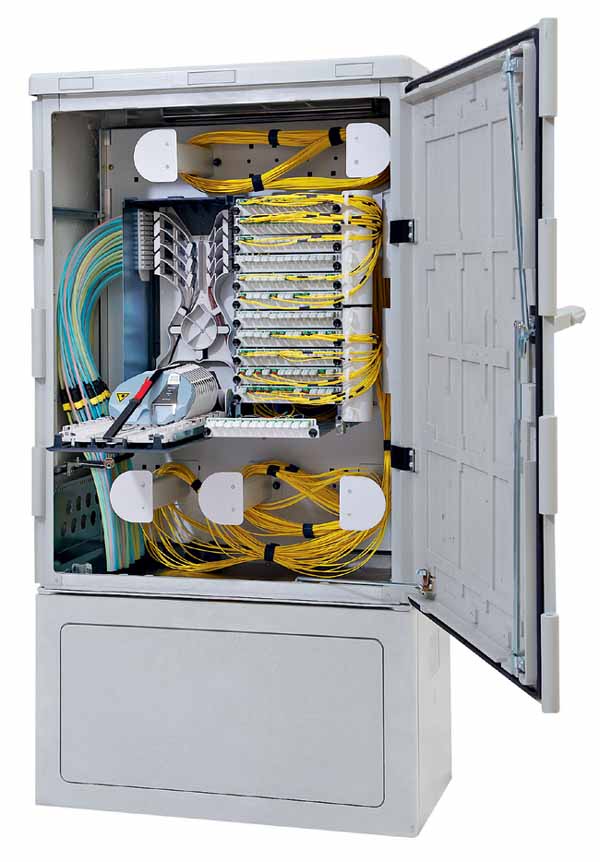
R&M's Single Circuit Management (SCM) system can be used in all areas of the network, from the central office to the building entry point. Combining SCM with R&M's Optical Distribution Frame (ODF) allows for the management of up to 1,152 fibers in a single distribution frame. See Figure 3.
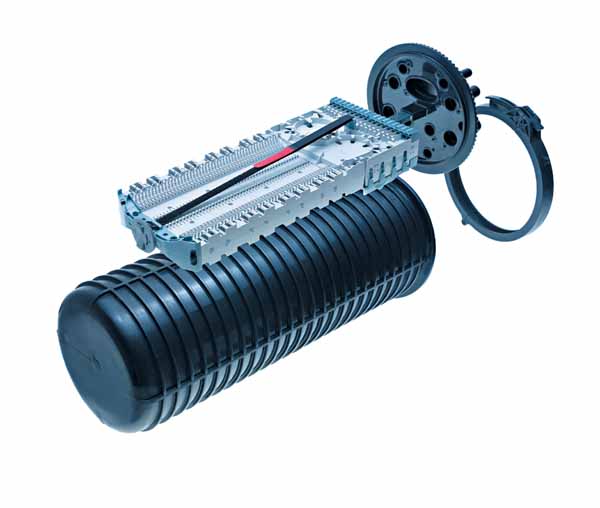
The R&M splice box for precise underground distribution in the last section can accommodate up to 96 Single Circuit Management system trays or 1,152 splices (Figure 4).
R&M's next generation of FTTX subscriber management systems is about to arrive. With the integration of its revolutionary new ODF modules into service cabinets (Figure 5), R&M has reached another milestone in subscriber management. Outdoor installation has never been more reliable, simple, or modular. The cabinet's internal components will grow as the subscriber base grows without any upfront investment.
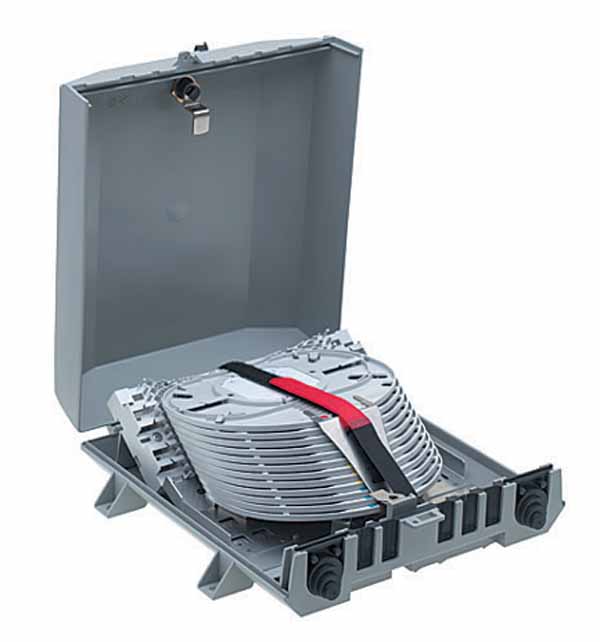
The Venus Box FLA (Figure 6) building entry point enclosure can accommodate up to 144 fibers and splices and an equivalent number of fiber optic subscribers when combined with the SCM system. It includes storage for excess fiber. Its compact design also supports loop installation. The rugged Venus Box is protected against the elements, as well as dust ingress and water splashes, according to IP54.