

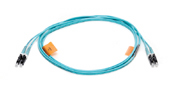
 FTTH, within the FTTx technologies, is based on the use of
FTTH Network Installation
For the installation and/or maintenance of FTTH networks, precision electronic instruments called FTTH analyzers to measure different parameters of the signals used in FTTH telecommunications technology. These parameters include optical power, MER, BER, symbol rate, etc.
FTTH is a term that even telephone operators themselves use confusingly, sometimes using the acronym when the fiber optic cable is left in the building's entrance. This is a mistake, because for an ICT (common telecommunications infrastructure) to be considered FTTH, the fiber must reach the user's PTR (network termination point). From that point on, since the installation is then the user's responsibility, they can decide what to do with the data transmission, that is, whether to continue with fiber optics or coaxial cable. The PTR should not be confused with the wall socket; they are different, although they have many similarities. The PTR is responsible for separating the installation in the home from the building's entrance. That's why we call fiber optics FTTH. If this separation occurs at the entry point, it is not considered FTTH.
Architecture
FTTH technology proposes the use of fiber optic cable all the way to the user's or fiber customer's home (end user). The access network between the subscriber and the last distribution node can be implemented with one or two dedicated optical fibers per user (a point-to-point connection resulting in a star topology) or a passive optical network (PON) that uses a tree structure with one fiber on the network side and several fibers on the customer side.
Architectures based on optical splitters are defined as systems without active electronic components in the loop. Their main component is the beam splitter, which, depending on the direction of the light beam, divides the incoming beam and distributes it to multiple fibers or combines it within a single fiber. The philosophy behind this architecture is to share the costs of the optical segment among the different terminals, thereby reducing the number of optical fibers required. For example, using an optical splitter, a video signal can be transmitted from one source to multiple users.
Star topologies provide one or two dedicated fibers to a single user, offering the highest bandwidth but requiring cables with a greater number of optical fibers in the central office and a larger number of laser emitters in the telecommunications equipment.
Availability
Asia
South Korea was the country in the world with the highest broadband penetration, with 58% household penetration in 2011.
In Japan, where broadband penetration had already reached 40% of the population, there were more than 3 million homes connected to FTTH by mid-2005, and forecasts point to 50 million customers by 2014, with leading companies like NTT announcing €38 billion in investment to achieve this goal.
Europe
In France, Free already offers fiber optic to the home at speeds of up to 100 Mbps and Triple Play services, with an initial rollout across various districts of Paris through the company Nicominvest. Meanwhile, France Telecom intends to deploy its own fiber optic network, with a potential market reach by 2008. However, in France in 2009, most broadband customers were on FTTB (Fiber to the Home) through Numericable. Operators are awaiting legislation on fiber sharing before expanding their FTTH (Fiber to the Home) network.
In the Netherlands, residents of the city of Nuenen have built their own 100 Mbps symmetrical FTTH infrastructure, the first alternative of its kind in Europe to traditional telecommunications operator models. KPN Telecom is preparing to expand its fiber optic network from the Netherlands and Germany, reaching a potential market of over 25 million customers.
In the UK, NTL is conducting the necessary tests to offer its customers 100 Mbps connections by deploying an FTTH network across the country.
In Spain, Telefónica conducted the first field tests in Pozuelo de Alarcón and Campamento (Madrid),19 achieving speeds of 50 Mbit/s. Since August 26, 2008, it has commercially offered four Triple Play packages over its FTTH network.20 In 2005, the government of Asturias deployed the first fiber-to-the-home network in the mining valleys of the Principality of Asturias. This purely public investment aimed to revitalize mining areas that had been depressed for years due to the decline of the sector. It was the first project of its kind in Spain, and a public company, the Public Telecommunications Infrastructure Manager of the Principality of Asturias SA (GIT), was created to manage this FTTH network and any future public infrastructure. This project is known as the Asturcón network.
On November 13, 2008, the Telecommunications Market Commission authorized Telefónica to market this service. Today, Telefónica offers 100 Mbps fiber optic connections in almost all Spanish provincial capitals and in some other strategic locations, through deployment agreements with Jazztel and usage agreements with Yoigo. Meanwhile, Vodafone and Orange decided to join forces to develop their own deployments. In September 2013, FibraCat began offering connections of up to 1000 Mbps download and 100 Mbps upload speeds to residential customers in Catalonia, starting operations in Manresa. The town of Ermua has also joined the high-capacity fiber optic internet network. Thus, on December 10, 2013, the neutral FTTH network began operating, reaching all residents and businesses in the municipality and surrounding areas.
In Andalusia, in July 2014, the operator WI-NET began migrating its own and franchised WiMAX networks in the provinces of Seville and Huelva to the new fiber-to-the-home (FTTH) technology, offering 100 Mbps connections as a basic plan, as well as HD Digital Television services over fiber optics. Jazztel offers a symmetrical 200 Mbps line. According to the CNMC's February 2014 report, the total number of FTTH connections in Spain was 12,350,000
In Latvia, Lattelecom plans to install FTTH networks in 80% of the country, offering internet connections at speeds of 500 Mbps, 200 Mbps, and 100 Mbps. It already offers these services in the country's major cities.
In Andorra, STA (now Andorra Telecom) conducted the first pilot tests in late 2007, which served as the starting point for coverage of all Andorran homes by 2010. Since May 2008, it has been marketing FTTH with speeds of up to 100 Mbps and Triple Play services.
North America
In the United States, Verizon stands out with investments exceeding $60 billion through 2010, aiming to connect 14 million homes with FTTH; SBC, with an investment of $6 billion over the next 5 years to connect 18 million homes with FTTH; and BellSouth, with an investment of $3.5 billion over the next 5 years to connect 8 million homes.
In Mexico, fiber optic internet services began to be offered in 2010. Companies offering this service include
Axtel, which provides symmetrical or asymmetrical connections of up to 200 Mbps in some areas of Mexico City, Guadalajara, Monterrey, Querétaro, and San Luis Potosí. In 2013, Axtel launched its TV service using a fiber optic connection, called Axtel TV.
América Móvil, through its TELMEX (Teléfonos de México) brand, is upgrading its infrastructure by installing FTTH fiber to the home using GPON carrier Ethernet technology for its Infinitum customers. As of 2012, Telmex was installing fiber optic internet services, replacing ADSL service in certain areas.
South America
In Argentina, since mid-2009, IPLAN3 began offering this service as part of its Internet Óptimo4 product, initially offering symmetrical plans up to 10 MB (100 Mbps). In Greater Buenos Aires (Buenos Aires suburbs), Claro offers internet and telephone services. In San Juan, San Juan Cable Color, in partnership with Telmex, offers a Triple Play service using FTTH, called io Total, with plans ranging from 3 Mbps to 10 Mbps for residential customers. In the Autonomous City of Buenos Aires, Phonevision has provided FTTH to residential customers since 2011.5
In Brazil, Telefónica Brasil provides its FTTH service mainly in São Paulo and the surrounding area, with plans to reach one million fiber customers before 2015.6 In Rio de Janeiro and São Paulo, TIM has offered high-speed plans using FTTH in conjunction with VDSL since 2011.7 Oi (formerly Brasil Telecom) provides its service up to 200 Mbit/s in the cities of Belo Horizonte and Rio de Janeiro.8 GVT provides its 100 Mbit/s service in 56 locations within the states of Rio Grande do Sul, Paraná, Goiás, Santa Catarina, Minas Gerais, Espírito Santo, Bahia, and the Federal District.9
In Chile, since late 2004, GTD Manquehue has offered 100 Mbps symmetrical FTTH service to municipalities in Santiago. At the end of 2013, Telefónica del Sur began offering telephone, IPTV, and internet services in southern Chile. Additionally, Movistar announced the nationwide rollout of this service between 2010 and 2012.
In Colombia, the state-owned operators UNE EPM and ETB have implemented the FTTH option for their customers, offering speeds of up to 50 Mbps for UNE and up to 150 Mbps for ETB. Current installation technicians are already undergoing training on fiber optic cable management. The service has been available in some areas of Bogotá (northern part of the city) since mid-January 2014, and IPTV will be available by the end of March 2014.
In Ecuador, Netlife has offered FTTH service since 2010, with plans ranging from 1 Mbps to 12 Mbps for international bandwidth, in Quito (the capital) and Guayaquil. Initially, coverage was limited to certain areas of the capital, and is currently quite restricted; however, they plan to expand coverage to most of these cities in the future. PUNTONET launched this service in late 2013, and ZENIX - INTERACTIVE launched it in August in the southern part of Quito. The state-owned company CNT offers FTTH service with asymmetric speeds from 4 Mbps to 25 Mbps.
In Paraguay, the National Telecommunications Company COPACO has offered FTTH services since 2010. Currently, the service only covers the capital city, Asunción
In Peru, Telmex (now merged with Claro) began installing fiber optic cable in mid-2009 in the main districts of the capital. Misticom deployed the first dedicated FTTH network in 2013. Starting in the city of Arequipa, the company is also expanding in Lima and other provinces. Misticom operates a 10 Gigabit GPON network with end-user speeds ranging from 6 Mbps to 100 Mbps. The company offers both business and residential services. Misticom is also the first IPTV provider in the country.
In Uruguay, the state-owned company Antel began laying fiber optic cable in Montevideo in 2011 and expanded to more than 20 other locations in the interior by mid-2012. The initial plan was to provide fiber-to-the-home internet access to the entire country by 2014. On October 19, 2011, the first home was connected to Antel's fiber optic service. The goal was to reach 30,000 connections by the end of 2011 and 240,000 by 2012. Until the end of 2013, Antel offered connections of up to 120 Mbps for $75
In the Dominican Republic, Claro announced the installation of fiber optic cable to homes, starting with the Naco and Serrallés sectors, and later in Piantini from April 1, 2012.
In Bolivia, fiber optic coverage is very limited.
In Venezuela, the state-owned CANTV began FTTH implementation trials in July 2013 in Caracas, achieving speeds of up to 20 Mbit/s
Links: http://es.wikipedia.org/wiki/Fibra_hasta_la_casa and http://www.ftthcouncil.org/






