way to achieve their ambitious goals.
“We wanted to improve the services available to people, and our revenue at the same time,” says Jaume Salvat, Director of Andorra Telecom. “We are also a broadcaster, which meant providing premium television services over the same network. ADSL wasn't sufficient for this, so we decided to invest in infrastructure with the future in mind. We wanted a long-term approach, to minimize the impact and enable better, more innovative services, while also reducing operating costs.”
General Information
Infrastructure Owner: Andorra Telecom, a full-service network operator (including fixed, mobile, television, and internet).
Location: The network covers the Principality of Andorra.
Network Status: Operational.
What followed was a commitment to provide internet access via fiber optics as a universal service, for all end users, in any populated place, in any geographical situation in the Andorran territory, at a reasonable base price and with a symmetrical access speed of 100 Mbps.
“Fiber comes with a huge investment spike, but it has major advantages that make it a unique option,” Salvat explains. “We realized it would allow us to move from being a traditional telecommunications operator to a much more service-oriented provider.”
In 2007, the company carried out two small pilot projects to test both the processes involved and the current technology:
Implementation
Network Size: High-speed broadband is available to the entire population of Andorra (75,000 inhabitants).
Penetration: Total number of households in Andorra: 52,000.
Households covered: 100%.
Total number of occupied households: 37,000 (the remainder are holiday homes). Penetration of occupied households: 39.8%.
Total FTTH subscribers at the end of 2011, including all household types (holiday/occupied): 14,712, or 28.3%.
Households connected at a full speed of 100 Mbps: 12,104 (the remainder are connected, free of charge, at a lower speed while awaiting an upgrade).
Technology/Architecture: FTTH.
Deployment Method: Conduit.
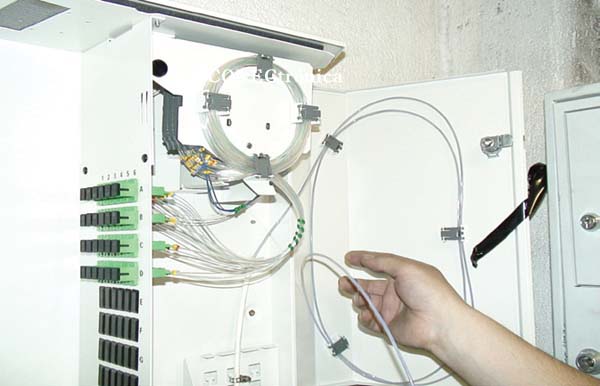 “The rollout began in early 2008 and was completed in May 2010,” he recalls. “It was a 100% horizontal rollout, although there are still some large apartment buildings awaiting connection.”
As of the end of 2010, the subscription rate stood at 28.3% of all 52,000 households in Andorra, reaching 39.8% when only full-time primary residences were measured, as opposed to second homes. This latter figure is expected to increase to 50% by the end of 2011 (see box for complete figures).
Difficult Challenges
“We have faced the most difficult challenges possible in this deployment,” says Salvat. “The only advantage has been the country’s small size. Otherwise, we wouldn’t have benefited from any of the economies of scale of a large-scale deployment, and the terrain is very mountainous. Around 50% of the population lives in the two largest cities, and the rest in smaller towns. It’s complex.” Facing these challenges, he says, it was more than just a technical issue: “The company has also had to undergo a significant evolution,” he explains. “We no longer focus solely on delivering basic connectivity. We’ve changed the way we do business, and it’s now more service-based. That has been the challenge—not just the technology, but also preparing the company and adapting the mindset of the people who had been working for us for a long time.”
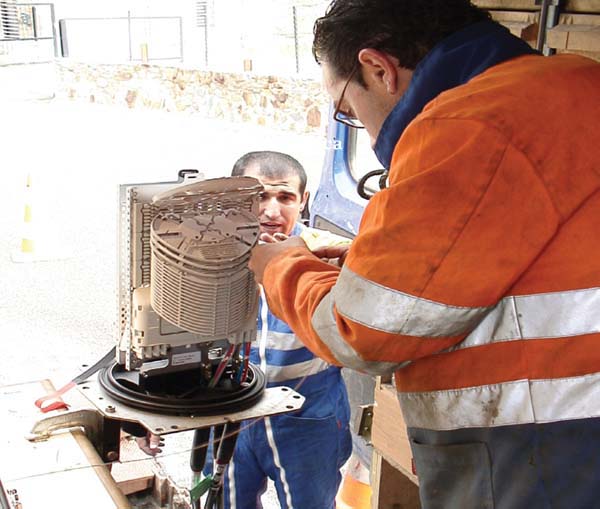 Salvat explains that Andorra Telecom's unusual regulatory position has also influenced the project: “What we want is to offer an attractive service at a good price to 100% of households,” he says. “In a country of our size, this wouldn't have been possible through competition. At Andorra Telecom, we build, manage, and provide services. We are also a mobile operator, ready to transition to 4G.”
He says his priority now is to focus on developing services for the new broadband network, for example, in the area of internet television: “We offer IPTV, and we allow consumers to receive calls on their television if they wish,” he says enthusiastically. “The call appears on the screen, and you can choose whether or not to answer. There are other interactive services, such as the white and yellow pages and weather information. We will be developing more and more service packages for customers.”
Business Case
Investment: There are no public subsidies for deployment; everything is paid for by Andorra Telecom.
Number of years to return on investment: 7.
Business Model: Increased FTTH network penetration by offering products tailored to each market segment. New services on the FTTH network only. Consolidation of backbone network technologies and service platforms.
Andorra Telecom says it wants to get rid of its entire copper network legacy as soon as possible, as it is an added expense to run two end-to-end networks.
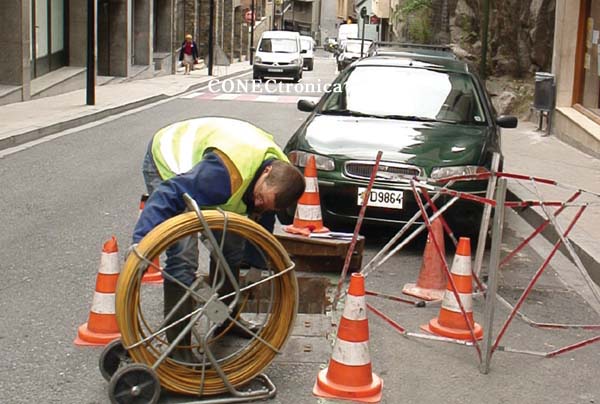 Fortunately, in most cases, the consumer response to FTTH has been very good, helping to make this ambition a reality: “We can clearly demonstrate that fiber is better - even though many people only have a holiday home here and don't want anything more than a phone,” says Salvat.
“People have generally been very enthusiastic, realizing that 100 Mbps symmetrical offers clear advantages. Once you offer a certain level of service, it becomes a staple product and people start expecting more, so we have to keep developing new services at a lower price. We have some very demanding customers.”
End-user services
: 60% of subscribers subscribe to a triple play package, which costs 69 euros, and 40% subscribe to a double play package, which costs 49 euros.
Salvat says that, in addition to customer satisfaction, it is becoming increasingly strategically advantageous for companies to locate in Andorra: “I foresee a lot of jobs being created in the future,” he says. “We made a significant initial investment that will pay off, both commercially and in terms of the population's quality of life. There is no doubt that it was the right decision.”
Author:
FTTH Council Europe