Jason Rudge, Director of Commercial Acquisitions at Excel Networking, commented, 'As a company, we are very aware of the damage plastic does to the environment and are determined to lead the way in our industry to eliminate as much single-use plastic as possible from the supply chain.'
Jason continued: “It hasn’t been an easy change, but one we’ve persevered with to develop alternative, plastic-free packaging for much of our copper and fiber product lines, as well as to reduce the size of our cardboard boxes wherever possible. The new plastic-free packaging will begin shipping in August 2019 and will become the standard as stocks of the current packaging designs are depleted.”
Jason added: "Another significant benefit for installers is the amount of time that will be saved on site by not having to open and then dispose of plastic bags, especially from components and connecting cables."
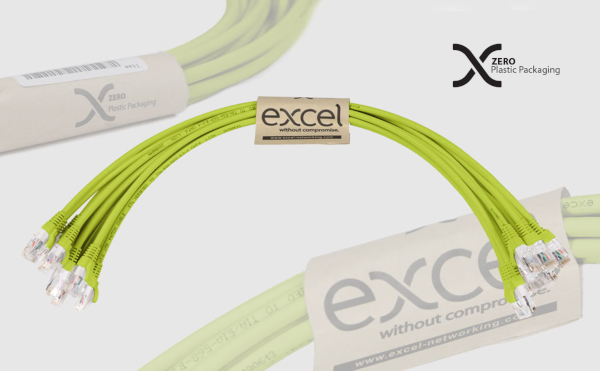
The changes mean that Keystone connectors will no longer be supplied in individual, single-use plastic bags as standard. Instead, they will be sold in packs of 24, presented in a 100% recyclable, natural cardboard box that contains no plastic at all. Similarly, instead of being supplied in single-use plastic packaging, individual patch cables will be secured and labeled with a natural, recyclable paper wrapper.
At Excel's 2019 partner information sessions, Excel Networking asked its customers for their feedback on product packaging. A substantial proportion of customers (92%) indicated that if products were available in multipacks rather than single units, that would be a preferable purchasing option. In addition, nearly 40% of respondents said their customers requested reductions in single-use plastic packaging materials as part of their bid selection process.
Jason concluded: “We are committed to listening to our customers and end users to find solutions with our suppliers that work for them. This latest push to eliminate single-use plastic bags from a range of Excel products is the latest example of our efforts to improve our sustainability, but it is by no means the end of the road.”