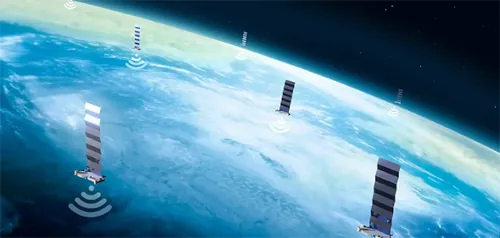
Researchers at the Polytechnic University of Madrid (UPM) have conducted the first empirical study of a network based on this technology. Their analysis sheds light on what can be expected as these services move into wider commercial implementation.
Starlink leads the way in satellite mobile connectivity . The SpaceX subsidiary launched a DS2D service in late 2024 for T-Mobile subscribers in the US. Initially, it only offered the ability to send and receive text messages (SMS), although data and voice services were planned for later. Using passive mobile network measurements collected by Android phones, the study, conducted by researchers from the Higher Technical School of Telecommunications Engineering (ETSIT-UPM) in collaboration with Weplan Analytics, provides valuable information on the capabilities, limitations, and future evolution of DS2D technology for expanding mobile connectivity.
new direct mobile connectivity via satellite
The authors found a strong correlation between the number of satellites being deployed and the volume of measurements taken during the analyzed period, from October 2024 to July 2025. The largest volume of DS2D measurements was concentrated in accessible areas with poor terrestrial network coverage, such as national parks and sparsely populated counties. Based on these measurements, they estimate that the capacity of this technology currently hovers around 3 megabits per second (Mbps) per satellite beam (shared among users connecting to the same beam), although they acknowledge that rates of up to 18 Mbps per beam could be achieved in the near future thanks to the various strategies Starlink is implementing in its network.
“Our study demonstrates that DS2D is not just a theoretical concept, but is already being implemented, as seems likely to happen soon in Spain as well,” explains one of its authors, Zoraida Frías, a member of the Information and Communication Technologies (GTIC) research group. The professor from the ETSIT-UPM emphasizes that “it comes at a crucial moment,” in which “it is essential to conduct a timely analysis based on measurements” of the new service and its corresponding expansions. “In light of the rapid evolution and intensifying competition within the satellite connectivity ecosystem, empirical knowledge like this is vital to guide both industry strategies and policy decisions affecting DS2D technologies,” she states.