 Polymeric materials are increasingly used in sectors requiring high-performance materials with diverse advanced properties, such as construction and transportation. This is due to the significant advantages offered by polymeric materials, leading to their introduction in many applications and their replacement of other material families. Among other characteristics, they have the following distinguishing features:
 • Good performance: Material that is inherently corrosion-resistant and highly durable, as well as being very lightweight and having a high strength/weight ratio.
• Freedom of design: Allows for complex shapes and a variety of manufacturing processes.
• It allows for high production volumes at low cost.
Another sector where polymeric materials have great potential is telecommunications, where there is a need for materials with different modes of interaction with electromagnetic radiation, ranging from materials with no interaction at all to those that act as a barrier.
Generally speaking, polymeric materials tend to be relatively transparent to electromagnetic radiation. This creates an interesting starting point for significant progress in obtaining materials that have no interaction with electromagnetic radiation and can therefore serve as radome materials. Additionally, the opposite effect can also be achieved with polymeric materials. Advances in synthesis, functionalization, and doping techniques have made it possible to leverage the advantages of these materials while simultaneously providing the ability to shield electromagnetic waves, thus serving as shielding materials.
What is the dielectric constant and what is a radome material?
The dielectric constant is a physical quantity that quantifies a material's ability to store electrical charge. Therefore, a lower dielectric constant means less charge storage and less electromagnetic shielding.
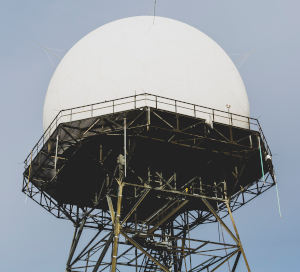
The main requirement for a material to be considered a radome is that, while preferably opaque to visible light, it is transparent to electromagnetic waves. For this reason, radomes are made of very low-loss dielectric materials. In fact, an ideal material for radome functionality would have a dielectric constant of 1, practically equivalent to air. Materials with dielectric constants closer to 1 are generally the best for radome design.
 What is electromagnetic shielding and what is shielding material?
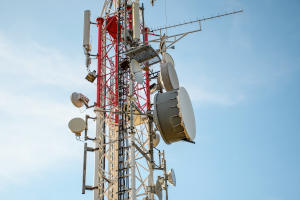
Electromagnetic shielding (EMI shielding) is the ability to block or minimize electromagnetic fields using barriers made of conductive or magnetic material within a specific space. Shielding can reduce unwanted effects of electromagnetic interference, such as radio wave coupling, electromagnetic fields, and electrostatic fields. The characteristics of a shield depend on several factors, including the material used, the geometry of the space, the frequency of the electromagnetic field, and the presence of openings.
Shielding material is material that reduces the transmission of electromagnetic waves by acting as a barrier, preventing a large portion of the electromagnetic waves that strike it from passing through. First, the wave is partially reflected by the surface, and then some of the transmitted (unreflected) waves are attenuated as they pass through the material. Thus, two effects of electromagnetic loss are distinguished: reflection and absorption. Therefore, the shielding effectiveness of a material is equal to the sum of both effects and quantifies the electromagnetic field that is prevented from passing through it.
Applications of Radome and Shielding Materials.
The function of both radome and shielding materials is to protect the equipment they enclose. However, although the purpose is the same, radomes protect equipment from physical factors while minimizing interference with electromagnetic interconnections, whereas shielding protects equipment from electromagnetic interference generated by other equipment. The
main application of radomes is antenna protection. The use of these materials helps reduce wind load on the antenna and its structure, prevents ice accumulation, and mitigates other adverse environmental effects. There are two main types of radome protection. One type is the side cover, which comes in different configurations (spherical, conical, or flat) and is placed on the antenna structure adjacent to the area(s) to be protected, providing lateral shielding. The other type is the external radome, which is not part of the antenna's structure but rather a separate structure that completely encloses and houses the antenna. There are cases of external radomes where the object's structure itself also serves this function, such as the fuselage of an aircraft. External radomes are the most common.
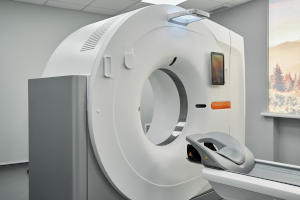
Furthermore, shielding materials have a wide range of applications, functioning as electromagnetic shielding. They are used, among other things, in medical instrumentation (MRI machines), in computer data storage rooms or cabinets, in electronic components or sensors sensitive to electromagnetic noise, in the protection of transformers or power supplies, and in the insulation of electric vehicle batteries. When it is necessary to isolate a source of emission or to immunize a specific space or piece of equipment, the most common solution is to install shielding panels or coverings. This way, the walls, ceiling, and floor of the space where the equipment is located can be covered. Conversely, for smaller items, the best option is to cover the equipment/component with an external casing.
 The role of polymeric materials in the evolution of radomes and shielding.
Thanks to their versatility, diverse performance characteristics, light weight, and low cost, polymeric materials offer a highly competitive alternative for a wide range of radome and shielding solutions, where each specific application can find its optimal solution.
Furthermore, developments in this field are enabling significant technological advancements. On the one hand, radome materials based on continuous fiber composites are being developed, allowing the integration of antennas of different types. This opens the door to the development of new products, such as urban or household furniture, adapted to the current challenges of the IoT (Internet of Things) and smart cities. On the other hand, shielding materials based on thermoplastic polymers, thermoset polymers, and continuous fiber composites are being developed. These materials reduce weight compared to solutions based on metallic components and achieve high effectiveness in electromagnetic shielding. These materials have special potential in applications related to sustainable mobility.
At AIMPLAS, the Technological Institute of Plastics, several R&D projects related to this topic are underway. One of these projects is FLEXOTRONICA, funded by the Valencian Institute of Business Competitiveness (IVACE), which has developed, among other things, different types of polymeric materials for armor plating. Another project, also funded by IVACE, is EPLAST, which has focused on the development of both armor plating and radomes.
Author: Blai López Rius, researcher in Construction and Renewable Energies