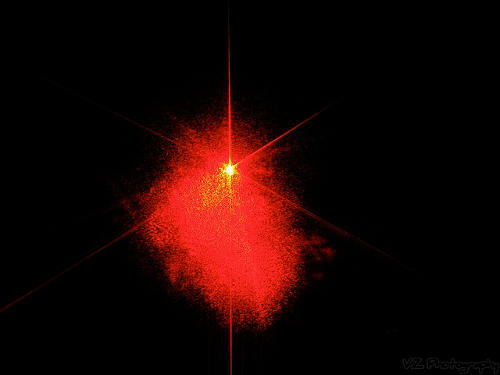
Optical fiber is a transmission medium commonly used in data networks, consisting of a very thin strand of glass or plastic through which pulses of light (laser) representing the transmitted data are sent. “Optical fiber lasers are a very important technological innovation that is rapidly moving from research laboratories to various industrial applications,” explains Rosa Ana Pérez Herrera, author of the doctoral thesis that received the highest distinction, Summa Cum Laude, with European Mention from the Public University of Navarre (UPNA).
These types of lasers, which began to be marketed in the last decade, can now be found in applications across diverse fields such as consumer electronics, telecommunications, medical diagnostics, the characterization of components and materials in science, machining, welding, and cutting systems in industrial and military sectors.
The doctoral thesis, “Design and characterization of systems for wavelength multiplexing of sensors using optical amplification,” was supervised by Professor Manuel López-Amo Sainz, Chair of Electronic Technology, in the Department of Electrical and Electronic Engineering at the Public University of Navarre (UPNA).
The research has involved the design and experimental demonstration of a series of lasers for use in fiber optic sensors, ranging from a few centimeters to 50 kilometers in length. “By injecting light from our lasers into the fiber optic sensors, we can easily measure parameters such as temperature and tension, or detect various types of gases, at both near and far distances, and with high resolution,” he explains.
The main objective of the different configurations studied was to reduce fluctuations in output power and thus improve the quality of the multi-fiber laser. The lasers developed in this research are applicable to both telecommunications and sensor multiplexing networks.
In her research, she has also developed novel sensor multiplexing networks that utilize optical amplification. Among the various configurations proposed, the design of amplified networks capable of self-restoration in the event of fiber optic failures and self-referencing techniques stands out. This allows for distinguishing between sensor-induced losses and unwanted system fluctuations, resulting in safer and more robust sensor networks that can withstand potential network disruptions.
Rosa Ana Pérez Herrera earned her degree in Telecommunications Engineering in 2004 from the University of Cantabria. She is currently an assistant professor in the Department of Electrical and Electronic Engineering at the Public University of Navarre (UPNA), an institution she has been affiliated with since 2005, when she received a predoctoral research training grant. She has conducted research stays at the University of Porto, the London School of Mathematical Sciences and Engineering, and the University of Parma. In her scientific output, she has made 18 contributions to conferences held in various countries, as well as 12 publications in international journals.
Source: Public University of Navarre