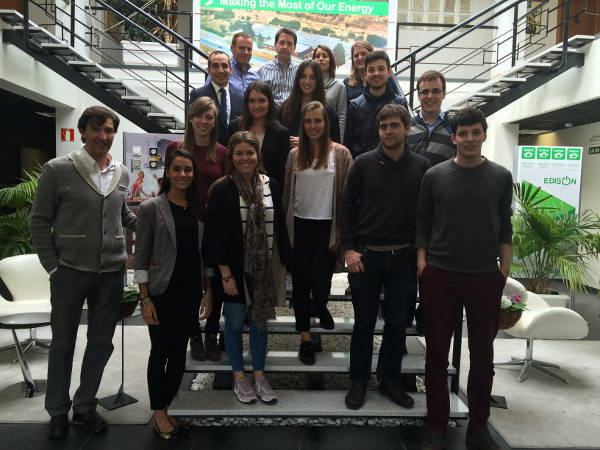
Starting from the initial premise that the connectivity needs we have in our workspaces are constantly increasing and that the volume of connected devices will increase exponentially in the next 5 years, students will have to conceptualize what a work environment capable of responding to the connectivity, security and flexibility needs derived from new work trends would look like.
“This is a challenging project. On the one hand, we must be aware that we will have countless devices—some already invented and others yet to come—that will need to be connected, recharged, and, of course, protected. On the other hand, we are looking for increasingly intelligent and comfortable, but also flexible, workspaces,” explains Xavier Badia, head of future retail offerings at Schneider Electric. “We are excited to see disruptive and innovative projects from the students who, in just a few years, will be designing the offices of the future,” he adds.
For his part, Eduardo Domingo, Director of Development at the Higher Technical School of Architecture of the University of Navarra, added that "the idea fits perfectly with the teaching method of the School, in which we prioritize carrying out real projects with companies and facilitating contact between students and them, knowing that it is the best formula for the labor market integration of our students."
The initiatives will be evaluated by a joint jury made up of professors from the Higher Technical School of Architecture of the University of Navarra and professionals from Schneider Electric.