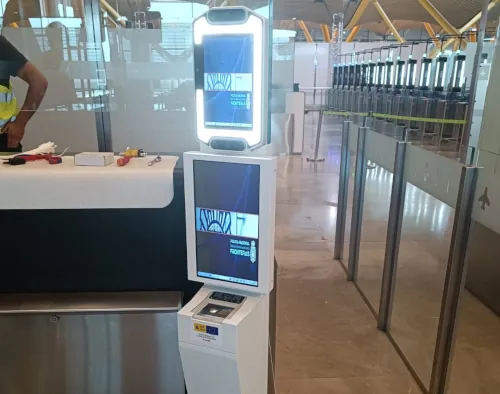
The Spanish Ministry of the Interior selected Thales, in collaboration with Zelenza, as the winning bidder in a joint venture, to supply and implement more than 1,500 Manual Control Points (MCPs) that allow for the biometric registration of non-European citizens crossing the external borders of the Schengen Area. These systems have been progressively deployed at airports, ports, and land border crossings throughout Spain.
Zelenza has played a key role in the operational deployment and support phase of the system, being responsible for the installation, maintenance, and support services necessary to ensure the sequential implementation of the EES at the various border crossings. The company was present at the official launch of the system at the European level and will continue to actively participate in the remaining airports and ports along Spain's borders.
Critical services for the operation of the EES system
Within the project, Zelenza has contributed its expertise in managing complex, high-availability technological environments. Specifically: 24/7 helpdesk and single point of contact; Level 2 software and hardware support and maintenance, ensuring system operational continuity; management and control of equipment and spare parts stock, including warehousing and inventory; provision of specialized logistics services tailored to the project's needs; technical and operational training for the teams involved; and equipment relocation and transport services, ensuring proper installation and commissioning. The contract, financed through the European Union's Internal Security Fund, is part of the EU strategy to strengthen integrated border management, improve the security of the Schengen Area, and modernize control processes through the use of advanced biometric technologies, fully complying with the requirements of the General Data Protection Regulation (GDPR).
The Entry and Exit System, which will be fully operational on April 12, will gradually replace manual passport stamping, allowing for the recording of data such as facial images, fingerprints, and entry and exit dates and locations. This will facilitate the detection of irregular stays, document fraud, and other security threats, while also streamlining the flow of travelers. With this collaboration, the company strengthens its position as a specialized technology partner in strategic security projects at the national and European levels, backed by robust operational capabilities and extensive experience in managing critical infrastructure.