 Even before the pandemic, the brick-and-mortar retail sector was undergoing significant changes, as the battle intensified to attract people back to stores instead of online shopping. As shoppers return to malls and high streets, this trend shows no signs of slowing down, with retailers seeking to offer unique, interactive, and contactless experiences that complement their digital offerings.
 Toni Viñals, CEO of nsign.tv, states: "The retail sector is facing a stage of reinvestment in its business models in physical establishments with the desire to achieve a return to normality by offering consumers optimal shopping experiences that are safer and more interactive so that the customer journey is as attractive as possible."
Scott Pickus, marketing director at Dynascan Technology, states: “After more than a year of closures and limited store access, retailers are inevitably feeling the pressure to restore foot traffic to their physical locations.” While online shopping has alleviated some retailers’ revenue losses, a physical presence is more crucial than ever to maintain brand loyalty and boost revenue.
“We’re seeing sustained demand for retail window displays. The goal remains the same: to get customers into the store, but the pressure to create vibrant window displays is increasing in the wake of COVID.”
 To attract customers to their stores, retailers are opting for multiple interactions and touchpoints designed to enhance the customer journey, with digital signage and eye-catching window displays playing a key role for many. Supermarkets, for example, are targeting promotions based on different areas of their stores or using screens to manage queues. Elsewhere, digital signage at points of sale serves to inform and educate customers. Digitalization is also helping retailers keep their customers entertained during their visit to the store.
Pickus adds: “Digital signage in shop windows is one of the most effective and cost-efficient ways to attract visitors into stores, as it allows retailers to instantly communicate with and update the public on new promotions, sales, and trends. This is exceptionally useful in sectors such as fast fashion, where styles are constantly changing, and restaurants, where new menu additions and daily specials can be visually displayed.”.
A vivid example of this is the center concept that furniture retailer Ikea has in Vienna. The store features extensive digital signage, kiosk terminals, full app integration, a hotel, a restaurant, and a rooftop terrace to offer a completely new shopping experience.
The digitization of the customer journey and the role of digital touchpoints in the store are particularly interesting. More than 100 displays have been installed across the store's five floors to bridge the gap between traditional retail in a limited space and e-commerce. Most of the digital touchpoints are digital signage designed to inspire and inform about products. Interactivity is paramount in the restaurants, which now feature self-ordering kiosks similar to those found in quick-service restaurant chains. A new feature at Ikea is the window displays and checkout areas on every floor, designed to attract, entertain, and inform customers.
This level of digitization is also helping retailers to quantify and analyze their customers' behavior from the moment they decide to enter the store until the end of the purchase process.
 Personalized Preferences:
Creating a consistent and personalized shopping experience in physical and digital stores remains a challenge, but audiovisual technology is providing a solution. Viñals adds: “Audiovisual systems are being used for a wide variety of functions that allow consumers to experience products and obtain personalized information, as well as access promotions and specially priced products in a visually impactful way. From click-and-collect displays to lift-and-learn experiences or interacting with touchscreens to navigate the retailer’s website and select the desired product for immediate in-store purchase, these are all positive experiences facilitated by audiovisual systems.”
Pickus agrees that: “A digital medium allows retailers to match the speed of their in-store ads with that of their online shopping platform. Data collected from online engagement can even be used to tailor in-store messaging and content based on online trends and demand. Good content is always key. Eye-catching and dynamic content helps capture and engage viewers in a way that static images or printed posters simply cannot.”
"From stand-up, learn-level point-of-sale displays and interactive mirrors to digital mannequins, the audiovisual sector is providing retailers with powerful new tools to attract customers and enhance the traditional in-store shopping experience with digital elements to bridge the gap with online storefronts and offer shoppers an incentive to buy in-store.".
Looking ahead, the future looks bright for this sector, as Viñals explains: “We continue to see an increase in digitization processes from small to large retailers. In 5 or 10 years, every store and business will have screens to inform, communicate, or interact with its customers, employees, and visitors. We have an incredible future ahead of us. Furthermore, the coexistence of digital systems in stores (brands and retailers) will continue to be a market trend, with the goal of coordinating the offline and online consumer experience into a single, seamless user experience.”.
ISE
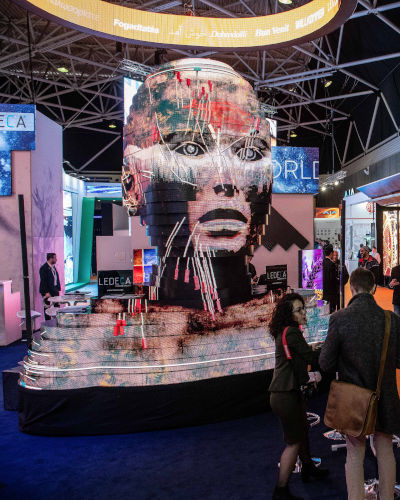
2022 will host exhibitors showcasing the latest technologies for the retail sector. The Digital Signage and DOOH area in Hall 6 will be a major attraction, exhibiting all types of signs and displays, from transparent and flexible units to those controlled by touch, voice, and gestures. This hall will feature suppliers covering the entire digital signage ecosystem, including digital signage software, media players, and display controllers.
The Digital Signage Summit, organized in collaboration with invidis consulting and chaired by its CEO, Florian Rotberg, will also return this year. This event will explore the business, technology, and market strategy of digital signage and DOOH.
There will also be a section dedicated to retail in Hall 6, showcasing case studies from innovative retailers, both large and small. Attendance is free.
Mike Blackman, CEO of Integrated Systems Events, explains: “As a physical, in-person event, we are uniquely positioned to bring all the elements of the industry together under one roof. We are eager to see everyone. In preparation for Barcelona, we have worked hard to ensure that ISE 2022 offers a safe, enjoyable, and highly valuable experience for the industry to showcase innovations and be inspired by the best the market has to offer. We look forward to seeing you there.”
Integrated Systems Europe (ISE) 2022 will be held at the Fira de Barcelona Gran Via from May 10 to 13, 2022.