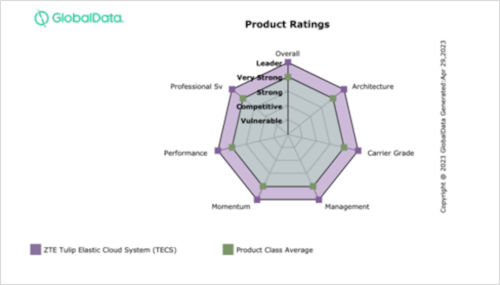
According to GlobalData, ZTE's TECS products offer advantages in terms of advanced architecture. The dual-engine platform facilitates unified deployment and management of containers, virtual machines, and bare metal resources. The architecture supports on-demand switching between virtual machines and containers, flexibly adapts to containerized service models, evolves to cloud-native environments, and scales capacity on demand and evolves by leveraging existing resource pools and reducing time to market.
NEO, a new computing architecture.
ZTE's NEO smart cloud card builds a new computing architecture centered on the Data Processing Unit (DPU). This innovative approach offloads and accelerates computing, networking, storage, and security tasks, effectively reducing the CPU workload. Consequently, overall system performance is improved, finding broad applicability in both CT (communication technology) and IT (information technology) cloud scenarios.
In the cloud, NEO is used to offload computing power and manage containers, meeting the requirements of cloud-native applications with flow tables and high forwarding demands. In edge scenarios, ZTE's Multi-Access Edge Computing (MEC) solution, based on NEO cloud cards, offers plug-and-play functionality, deep integration, and enhanced security. This solution facilitates the deployment of diverse resources across the operator's network. It also addresses the varied needs of businesses and powers vertical industrial applications.
In both private and public cloud environments, NEO cards are used for bare metal cloud management. This implementation allows these resources to possess the performance characteristics of physical machines while retaining the versatility typically associated with virtual machines. This enables businesses to quickly migrate to the cloud and leverage the advantages of both physical and virtual infrastructures.
GlobalData has noted that ZTE's Cloud Infrastructure Intelligent Analysis System (CIIA) is at an industry-leading level. CIIA provides users with a comprehensive operation and maintenance solution for their cloud assets, including capabilities such as risk identification, fault diagnosis, quality optimization, resource management, and a northbound interface. Furthermore, it incorporates artificial intelligence across multiple scenarios, facilitating the advancement of operational and maintenance capabilities toward Level 4 network autonomy.