The perception that electromagnetic pollution is harmful to health has taken root in the population. The potential long-term effects of low-intensity fields are being investigated, and there is much controversy surrounding this issue. The ongoing debate about the potential health risks caused by the increasing proportion of fields originating from mobile phones makes many people feel insecure. Strictly speaking, from a scientific point of view, the electromagnetic fields present in domestic and work environments comply, in the vast majority of cases, with the international limits defined for the effective protection against environmental damage.
Electromagnetic pollution is causing concern. There are two main aspects that are causing irritation among the population. First, the news is full of reports stating that mobile communication networks are becoming denser every day. In addition to radio and TV transmissions, terrestrial or satellite, there are new, more powerful services, WLAN networks, and wireless networks that use radio frequencies. Furthermore, there seems to be a lack of information about the precise relationship between electromagnetic fields and health or biophysical effects.
 The measures provide certainty
Narda Safety Test Solutions (STS) has designed high-quality "Area Monitors" as a specific solution to this problem, providing accurate and reliable results. Narda's specialists have combined all their knowledge and over 80 years of experience to develop these systems. This is particularly important because the scenarios involving electromagnetic radiation are highly varied, and each case requires a different approach that takes into account its specific characteristics. The practical application of our specialists' in-depth knowledge eliminates errors and prevents misleading results.
A similar case study is the monitoring of environmental pollution.
The idea behind Area Monitors can be compared in many ways to the monitoring of particulate matter and nitrous oxide in the air, which is carried out in many cities with high traffic density. Environmental institutions (such as UBA in Germany) have created monitoring centers that measure air quality several times a day. The results are immediately available to all citizens on the institution's website, with color-coded maps, graphs, and tables. In the late 1990s, thanks to advances in medicine and considering the increasing levels of traffic, residents of large cities were already aware of the health risks posed by air pollution. Over the years, continuous monitoring of levels and the ability to access the results have lessened the sense of danger. If tolerable limits are exceeded, the system immediately raises an alarm, and corrective actions are implemented, such as reducing car use or even prohibiting traffic in certain areas.
Safety and transparency in the places that need it most.
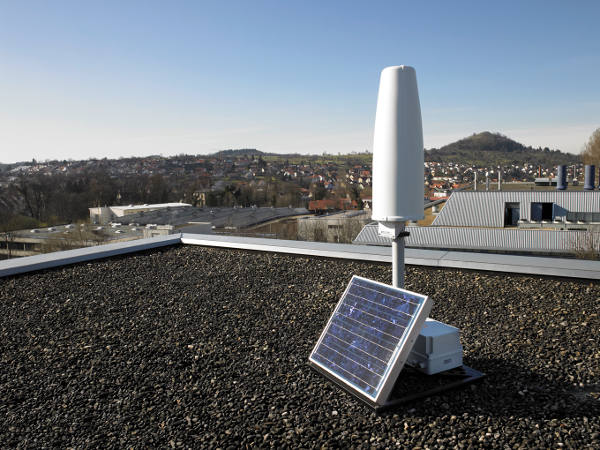
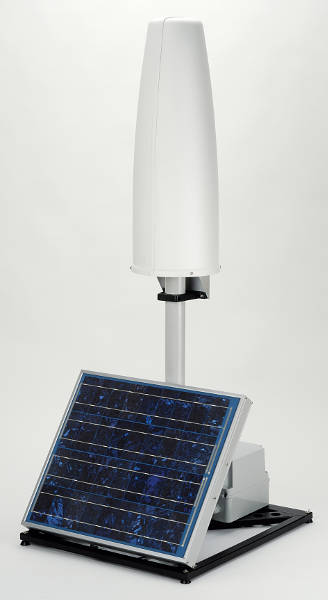
Area Monitors are robust devices that continuously monitor electromagnetic field strength, 24/7. This is especially important in schools, residential areas, and busy public spaces, particularly those near mobile communication antenna masts. These clearly visible sources of electromagnetic radiation often fuel people's fear of invisible electromagnetic pollution. In addition to local data storage, the built-in modem in Area Monitors allows data to be transmitted to an online platform, where it is available in real time to anyone. All data is saved in the format recommended by ITU (International Telecommunication Union) standards. When any violation of the specified thresholds is detected, the system immediately generates an alarm.
Who uses these monitoring stations?
Base station operators, mobile network providers, and technicians in political and administrative institutions are the primary users of Area Monitors. They are often motivated by a desire to provide scientific evidence that reduces doubt, skepticism, and anxiety regarding the potential health risks of electromagnetic fields. Providing regular records of EM field values can also expedite the approval of new installations. Standardized Area Monitor reports facilitate the transition from emotional debate to a more constructive dialogue based on solid evidence. Other important applications of Area Monitors include scientific studies, trials, and surveys conducted by universities, academic institutions, and other organizations in this relatively new field.
Features and Equipment
Narda offers two monitor models: the AMB-8059 (for broadband applications) and the AMS-8061 (for selective applications). Together, they cover the full range of applications, from checks near transformers and high-voltage lines to monitoring modern communications equipment such as base stations and terrestrial and satellite radio and TV transmitters. Both models can detect and store measurement results without requiring local intervention, as they are solar-powered. They also include a rechargeable battery, essential in low-light conditions, providing up to 80 days of autonomy. Among other features, the "EMF Observatory" software allows access to field values from anywhere, at any time, using a simple PC. It is also possible to create a web-based, continuous monitoring system for a large area using multiple Area Monitors.
Learn more