The LoRaWAN wireless network has greater range than most low-power wireless technologies, greater resistance to interference, and is ideal for applications including sensor circuits/networks, security systems, smart homes, smart metering, industrial control, and smart cities.
Semtech's four new LoRaWAN development modules are suitable for LPWAN (Low Power Wide Area Network) specifications, for battery-powered IoT networks and applications, and for enabling connection to LoRaWAN gateways. Amsterdam chose this protocol to develop "The Things Network" project, an open network designed to enhance IoT connectivity.
 This specification is ideal for connecting battery-powered nodes. It supports full-duplex communication with data rates ranging from 0.3 kbps to 50 kbps, and achieves a range of 2-5 km in densely populated urban environments and up to 15 km in sparsely populated areas.
Semtech's LoRa modulation is a derivative of chirp-spread-spectrum (CSS) technology, which utilizes the entire allocated bandwidth to transmit a signal, spreading it across a wider spectrum. This means the system can operate even with a signal having a low signal-to-noise ratio (SNR), giving LoRaWAN excellent channel noise immunity.
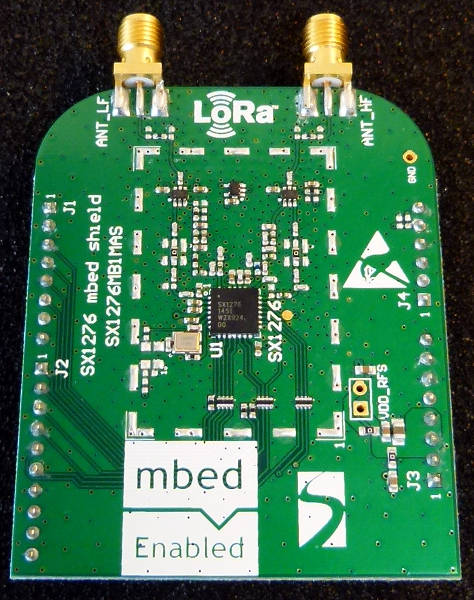
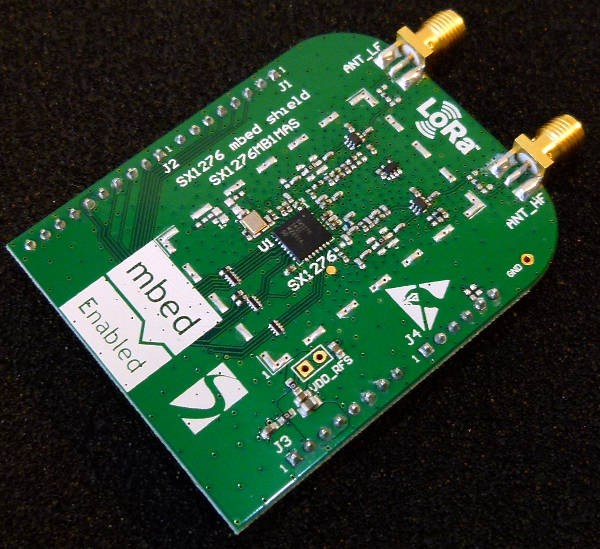
All Semtech LoRaWAN development kits utilize the SX1272/6 RF transceivers, which offer a wide communication range with extreme interference tolerance, and Peregrine Semiconductor PE4259 UltraCMOS RF antenna switches. Available models include: 868MHz ISM band; 169/868MHz dual-band; 433/868MHz dual-band; and a 433/868MHz dual-band transceiver evaluation module in an mbed shield format.