
At the time of writing, LTE device certification has not yet begun. The main certification bodies (GCF [ref.1], PTCRB [ref.2]) are working to introduce conformance testing systems for the protocol, reserve factors (RF), and radio resource management, with a target date of December 2010. However, with devices already on sale in some markets, this leads us to the following question: will these devices be able to pass conformance testing once they have been introduced to the market?
With Category 3 LTE devices capable of supporting high data speeds (100 Mbps downlink, 50 Mbps uplink), will the backhaul network capacity be sufficient? In the long term, as the number of LTE users increases, sharing bandwidth in the radio network among all users in the cell will become a significant factor, with overcrowded cells that don't perform as well. Furthermore, as the number of active users increases, the performance of next-generation cellular networks will suffer due to a higher signal-to-noise ratio.
With a potentially global mobile data network, the expectation of global roaming for users must be addressed. While technically feasible, the cost of roaming services for consumers needs to be tackled. Furthermore, flat-rate data plans are already a reality for operators, generating revenue by providing increasingly larger and variable data volumes.
With LTE being the next-generation technology option for CDMA2000 network operators (e.g., Verizon Wireless), working with high-speed 3GPP2 CDMA2000 packet data services is a requirement. The fusion of 3GPP and 3GPP2 network topologies at the LTE radio network interface is an interesting development that will require careful testing to ensure it functions as expected.
Maintaining voice services using an IP network in parallel with the network switching circuit will be a challenge for network operators. The agreement announced at the 2010 Mobile World Congress by major network operators to standardize VoLTE (Voice over LTE) means that this issue will soon be addressed. However, this technology, which uses 3GPP's IMS (IP Multimedia Subsystem), has yet to be deployed on a large scale.
How to meet the challenge
: To meet the demanding requirements of LTE terminals, it is essential to divide the design into subsystems and build a testing plan that allows each part of the design to be thoroughly characterized before testing the complete device. Without this modular approach, diagnosing problems can occur so late in the program that it becomes difficult to manage in the final launch phases, including field trials and conformance testing.
Measurement Requirements
Regardless of whether the device design starts from scratch, evolves from a previous design, or uses the integration of third-party components, various performance measurements need to be carried out. Some of these, such as maximum output power, power control, and receiver sensitivity, will be familiar from previous technologies, but due to the transmission schemes used (OFDMA in the downlink, SC-FDMA in the uplink), new measurement equipment will be required to perform these tests.
 Other measurements are specific to LTE. With its OFDMA transmission system, for example, the magnitude of the vector error (EVM) per subcarrier becomes an essential test of modulator performance. With the availability of the analog TV spectrum at 700 MHz, LTE will be deployed at lower frequencies than GSM or WCDMA, resulting in much wider bandwidths: 20 MHz/700 MHz = 2.8%, compared to 5 MHz/2100 MHz = 0.24% for typical WCDMA devices. This poses a challenge with some modulation architectures, resulting in higher EVM at the band edges, so special attention must be paid to this during the design stage.
Due to the dynamic nature of some tests, such as power control, it is necessary to establish the measurement conditions using the signaling protocol. This makes it essential for the test equipment to include the protocols, simulating the Evolution Node B (ENB) base station. Since these measurements are generally performed by (RF) engineers rather than protocol specialists, the test equipment used should be simple to set up, allowing the engineers to focus on the measurement being performed.
Testing Protocol
One of the main challenges for the protocol creator will be ensuring that the response state change requirements are met. Although the LTE specifications have reduced the number of states a terminal can be in (RRC_IDLE and RRC_CONNECTED), the time it takes to switch between them will be a significant part of the latency budget when data needs to be sent.
In RRC_IDLE mode, the electronic device will operate in a low-power state as much as possible to ensure long battery life, with the receiver periodically activated to check for paging messages. The device should wake up when scheduled to transmit data and quickly synchronize its uplink.
Testing protocols often involve significant effort in generating test cases and creating protocols, making access to testing facilities crucial for efficiency. To successfully conduct testing, it's essential to be able to test each sub-layer, both at the user and control planes. Test protocol features are critical when tracking failures occur. Typically, this includes recording the message date and decoding. However, it's important that this information is available for each sub-layer, enabling detailed tracing of signaling message flows, from MAC PDUs to RRC messages, thus ensuring that timing requirements are met.
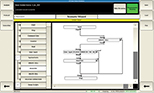
The ability to create test scenarios for each layer requires detailed control of the testing equipment, but this must be as user-friendly as possible to avoid a steep learning curve. The graphical description of the test, as provided by Aeroflex 7100 Scenario Wizard, offers the clearest method for defining new tests (Figure 1).
Performance Testing:
Once the RF, baseband, protocols, and application layer have been integrated, the overall performance of the device must be fully characterized. During this stage, it will be necessary to locate and eliminate bottlenecks to maximize data throughput under both normal and extreme temperature and supply voltage conditions. Power consumption, thermal characteristics, electromagnetic compatibility (EMC), emissions, and susceptibility must be measured under full load conditions. Generally, this will involve the use of 2x2 downstream multiple-input multiple-output (MIMO).
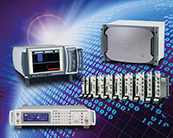 The ability to optimize cell handoff and minimize data interruption must be evaluated, as well as the ability to switch between different radio access technologies while maintaining data connectivity. Compact, flexible, and modular instruments are already available from multiple vendors. For example, Aeroflex's LTE products meet all the necessary characteristics for characterizing the behavior of LTE devices (Figure 2).
Although the LTE physical layer uses a cyclic prefix to add resistance to multipath effects, it must be tested to ensure its proper functioning. Deferring these tests until the trial phase adds risk to development. Fortunately, test equipment vendors provide tools for simulating real-world signal conditions in the laboratory, including simulators, coloration, and noise generators.
An important parameter of LTE device performance is its ability to achieve and maintain synchronization with the downlink signal. LTE's OFDMA regime uses subcarriers spaced at 15 kHz intervals. The receiver must be precisely tuned to these carriers, even under the Doppler effect. Lack of synchronization produces interference between subcarriers, reducing the signal-to-noise ratio (SNR).
To characterize device behavior, the ability to simulate Doppler shift in the laboratory is again crucial.
Conclusion:
The next generation of mobile devices will need to deliver a mobile broadband experience that meets the hopes and expectations of network operators. New LTE devices will need to be tested using a layer-by-layer approach, culminating in an end-to-end test scenario that utilizes real-world signal conditions. Ensuring consistent performance across the cell will be the most challenging aspect, especially as the number of users in the cell increases, along with the level of signal noise.
Rigorous and efficient testing of LTE devices requires comprehensive testing coverage: RF, protocol, and system level. Test equipment vendors are offering this capability with new and improved instruments, test equipment, and systems already available.
Achieving high-performance, low-latency data transfer as efficiently as possible (in terms of power consumption and radio frequency spectrum usage) is the primary goal of introducing LTE technology. This goal will only be achieved through extensive testing during the development and deployment phases.
References
1. Global Certification Forum
www.globacertificationforum.org
2. PTCRB www.ptcrb.com