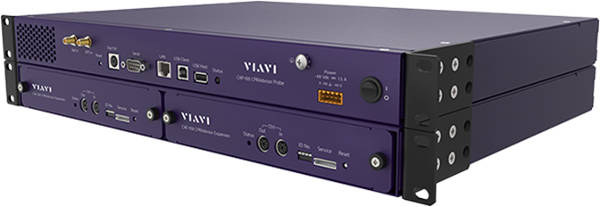
As a highly scalable solution, CPRIAdvisor supports a macro cell with a smaller number of fronthaul fiber connections; a large centralized radio access network (C-RAN); or a distributed antenna system (DAS) with hundreds of fronthaul connections. Depending on the network configuration, the system can save mobile service providers up to 50% in time and cost compared to current monitoring and troubleshooting practices.
Service providers are expanding and migrating from a typical distributed radio access network (RAN) architecture to a complex radio access network (C-RAN) topology. In C-RAN, baseband units (BBUs) are co-located at a remote facility and connected via fiber connections, based on Common Public Radio Interfaces (CPRI) or Open Base Station Architecture Initiative (OBSAI) standards, to a substantial number of remote radios (RRHs) dispersed throughout the network.
Where C-RAN provides operational and network efficiency, it also creates an opportunity for mobile service providers to improve the quality of experience by proactively monitoring the spectrum used by subscribers and performing proactive maintenance and remote troubleshooting of service-affecting issues such as RF interference more effectively.
In addition, CPRIAdvisor enhances RF visibility by continuously monitoring the mobile spectrum. This enables remote access for faster maintenance and troubleshooting.
“As service providers diversify their access networks to expand capacity and accommodate new services like IoT, they need scalable and flexible methods for monitoring performance,” said Cavazos, Director of the Test and Measurement Industry at Frost & Sullivan. “The ability to use RF over CPRI technology to monitor and troubleshoot the network, while increasing spectrum efficiency with a C-RAN architecture, helps mobile operators keep costs under control and preserve QoE.”.