The case of localized and indoor cultivation
Before exploring how to develop cloud-connected, localized growing systems, it's important to understand the potential advantages of indoor growing. The three main benefits are:
1. Increased Product Availability:
Global demand for fruits, nuts, vegetables, and greens that are not native to a specific region can be met more quickly and efficiently if these crops are grown locally in that region. This will also help reduce food miles: while this won't necessarily make operations less carbon-intensive, it will certainly help increase food security and the availability of products that would otherwise be transported long distances from elsewhere. Other secondary benefits include extending the growing season, making a particular food crop available year-round, and the ability to maintain efficient global food production despite the Earth's erratic weather patterns.
2. Reducing Habitat Destruction.
An increase in CEA or non-cereal indoor crops could also reduce habitat destruction. While this may be controversial, there are compelling reasons why agriculture is often overlooked as a threat to habitats and the environment, with most attention focused on land development and deforestation by the timber industry. According to the WWF (World Wide Fund for Nature), "the Earth loses 18.7 million acres of forest every year" based on these three main factors, and "around 50% of the world's habitable land has been converted to cropland." Major land uses include grazing and sheltering livestock, large-scale farming operations, and growing vegetables and grains for human consumption, with more than a third dedicated to producing crops for livestock feed, such as maize, barley, oats, sorghum, and soybeans. It is becoming increasingly clear that agricultural techniques that consume large amounts of land are unsustainable.
3. Healthier Diets.
In addition to reducing the amount of land needed for traditional farming techniques, environmental sustainability (ES) and indoor growing can help promote healthier diets. It is an established medical fact that, although humans are omnivores, they do better on a diet that leans toward a mix of vegetables, fruits, and nuts with reduced meat consumption. The widespread adoption of this diet will lead to a significant reduction in feed production for livestock and thus enable a fundamental shift toward creating a sustainable lifestyle for the world's population. Furthermore, this could reduce the number of livestock raised, which could decrease the need for food transportation and reduce greenhouse gas (GHG) emissions. According to the Food and Agriculture Organization of the United Nations (FAO), global livestock farming produces GHG emissions that account for 14.5% of all anthropogenic, or human-induced, GHG emissions.
Vertical farming and large-scale indoor agriculture are in their infancy. While the most common approach is to deploy indoor structures, such as greenhouses, across large areas of land, there is a growing trend toward constructing custom-built vertical farming structures, including repurposed factories or warehouses that house multiple floors. This allows for a more efficient and pragmatic use of real estate and land for growing non-cereal crops. Vertical farming is also well-suited for raising poultry as a potentially more viable source of meat.
There are several prerequisites for conducting large-scale indoor and outdoor cultivation. Reproducing and maintaining native conditions requires the grower to regularly monitor parameters such as heat, artificial lighting, humidity, soil moisture, and, in the case of hydroponics/aeroponics, water nutrients. Serious growers will have multiple buildings housing enclosed environments, each of which must be optimized for these growing conditions. This necessitates the use of cloud-connected sensors to continuously measure environmental conditions over time and report the data to a central monitoring station.
Best practices for system deployment
The first step is to create a record of native or non-native external conditions that will be used as a reference point to make the necessary environmental adjustments as needed.
Next, a decision must be made regarding the type of network to be deployed. With the increasing availability of IoT for sensor connectivity, it makes sense to deploy a network governed by a central hub or gateway that communicates with a local controller or computer (see Figure 1). The controller is used to upload the data to the cloud for further analysis. The cloud can be proprietary or offered as a service by an established or emerging provider.
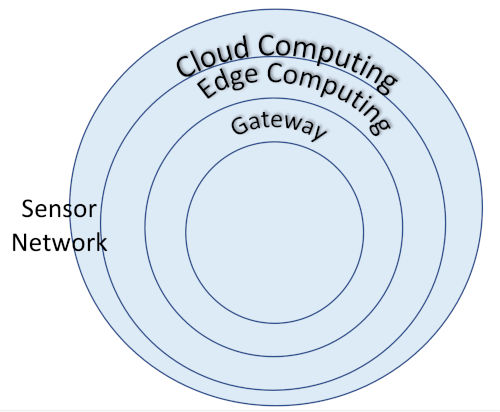 A farmer may decide that instantaneous reactions to sensor data are unnecessary. In such cases, the cloud can issue commands or actions within an acceptable timeframe. However, if minimal or zero latency is required between the time sensor data is sent and the central computer issues an action or command, the grower can take the intermediate step of using an edge controller between the gateway and the cloud to accelerate the time from analysis to action. Ultimately, the more precise the environmental control, the better the crop will grow.
Edge computing implementation can be divided into back-end and front-end sections, each playing a vital role in optimizing closed-environment crop production. The back-end encompasses both edge computing and cloud computing elements, while the front-end comprises the sensor network and gateway. An ecosystem of hardware vendors and system integrators will emerge to supply all the necessary components to support this solution architecture for a growing number of IoT implementations and use cases across diverse industries. The sensor network is particularly important, as it will be positioned as close as possible to the crop, monitoring its environment and collecting data for transmission to the gateway. It is also crucial that each of the numerous individual sensor nodes be simple, reliable, easy to maintain, operate with minimal power to extend battery life, and communicate with the gateway and, ultimately, the cloud service provider via various wireless connectivity methods.
The preferred wireless connectivity element will be Bluetooth® Low Energy (BLE) or the new 802.11ah low-power Wi-Fi® standard. This will ensure that solutions can operate in unlicensed bands and communicate over typical indoor growing distances of 10 to 100 meters (m). The 802.11ah standard has the longest range, up to 1 kilometer (km). BLE and Wi-Fi 802.11ah data rates are 10 kilobits per second (Kbps) to 10 Mbps and 50 Kbps to 100 Kbps, respectively, providing ample bandwidth for the various data parameters being measured.
It is essential that the sensor node also have robust security. As in any business, many farmers or large conglomerates will be involved in indoor cultivation or the large-scale CEA industry. Any information that can help a supplier gain a competitive advantage over another means higher revenue and profits. The desire and ability to hack a wireless network to acquire data that provides this advantage are widely accepted, recognized, and understood. The best way to mitigate the risk is with a hardware-based solution that can encrypt and authenticate both the data and the node. Firmware or software approaches are widely recognized as vulnerable to hackers.
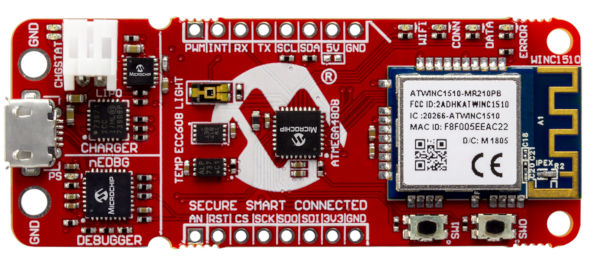 Designers and manufacturers of sensor nodes will base their offerings on silicon solutions that facilitate user-friendly, modular, and upgradeable finished system designs, with low power consumption, robust security, and the flexibility to support the necessary wireless connectivity options. These vendors also actively collaborate with leading cloud service providers. If the solution is to be cloud-agnostic, the vendor must be able to configure it to communicate with a proprietary cloud offering all the required capabilities.
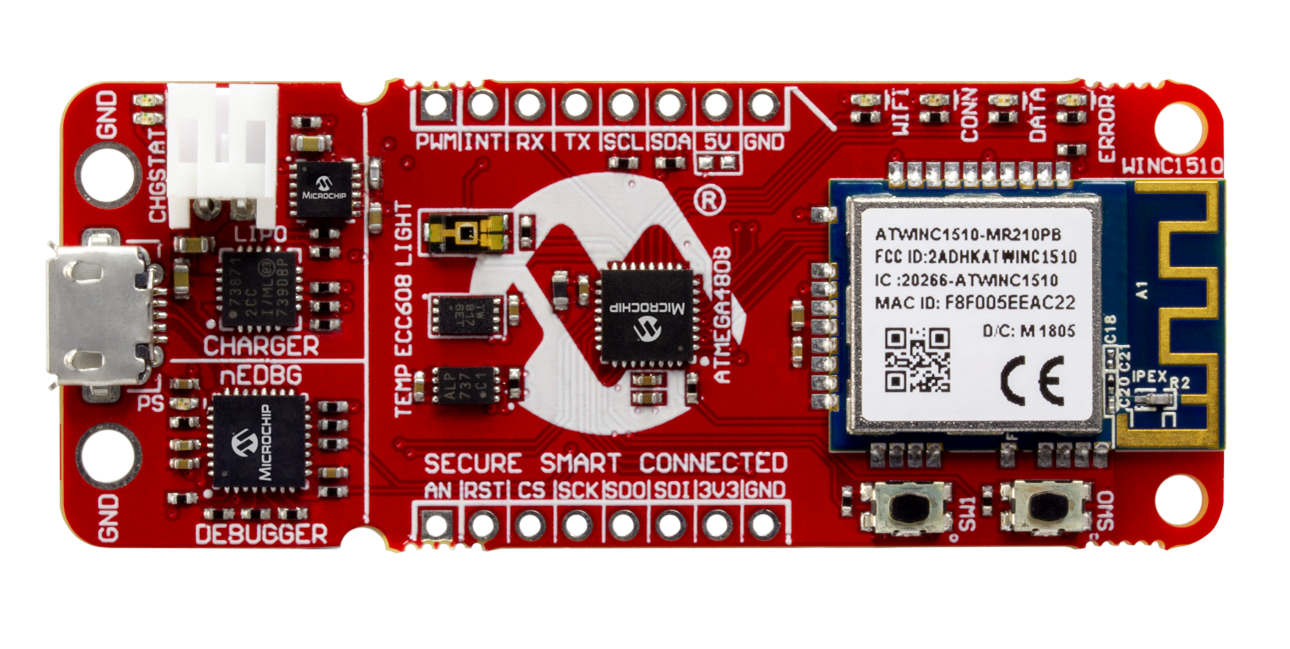
An example of this type of solution is the Google Cloud IoT Core development platform offered by Microchip Technology (see Figures 2 and 3). The development boards combine a microcontroller, a secure element, and a fully certified Wi-Fi network controller to provide the simplest and most efficient way to connect sensor nodes to Google's Cloud IoT Core platform. Users can connect directly to Google Cloud, pre-provisioned with a free sandbox account, or to a virtual sandbox environment to view light and temperature data. Additional sensors can be optionally connected using widely available MikroElektronika Click™ add-on boards, which facilitate the integration of additional capabilities into a design.
 A Better Way to Feed the Planet: Environmental Controlled
Environments (ECEs) and indoor farming offer the promise of safer, more reliable, and more efficient global food production in a significantly smaller geographic footprint than traditional farming methods allow. Realizing this promise requires environmental control technology that, at scale, can ensure a stable indoor growing environment for non-native crops. Among the most important of these technologies is the sensor network that collects and transmits data from environmental monitoring sensors to and from the cloud for processing and analysis. Rapidly deployable solutions have been introduced with leading cloud providers to meet these requirements, providing simple and flexible ways to support a variety of ECEs and indoor farming applications and use cases.
Controlled Environment Agriculture (CEA): A technology-based approach to food production. The goal of CEA is to protect and maintain optimal growing conditions for a crop throughout its development. Production takes place in an enclosed growing structure, such as a greenhouse or building. Plants are typically grown using hydroponic methods to deliver the appropriate amounts of water and nutrients to the root zone. CEA optimizes the use of resources such as water, energy, space, capital, and labor. CEA technologies include hydroponics, aquaculture, and aquaponics. Controllable variables include: Temperature (air, nutrient solution, root zone); humidity (%RH); carbon dioxide (CO2); light (intensity, spectrum, range); nutrient concentration (parts per million, or PPM, and electrical conductivity, or EC); fertilizers; and nutrient pH (acidity). CEA facilities can range from fully automated greenhouses with computer controls for irrigation, lighting and ventilation, to low-tech solutions such as plastic films or covers, called cloisters, which are placed over crops in the field, and plastic-covered tunnels.